Quranic Answer
Title: Embracing Mortality: The Transformative Power of Contemplating Death Introduction Death, an inevitable truth awaiting every individual, often evokes a complex array of emotions, from fear and sadness to acceptance and introspection. The discourse surrounding death is not only pivotal in philosophical and psychological realms but also holds significant importance within cultural and religious narratives. In particular, the Holy Quran provides a profound lens through which believers can understand the significance of mortality and the transient nature of life. Through various verses, believers are encouraged to reflect on their existence and prepare for the Hereafter. This article delves into the Quranic perspective on death, emphasizing its role as a motivator for personal growth and meaningful living rather than a source of despair. The Quranic Perspective on Death The Holy Quran presents death as an integral aspect of life. A notable verse, Surah Aal-E-Imran (3:185), states: 'Every soul will taste death...' This assertion serves as a reminder of the mortality that binds all human beings, regardless of status, wealth, or achievement. Recognizing that life is finite encourages believers to reflect on their actions and priorities. Rather than viewing death as a frightening end, it is portrayed as a natural phase that invites contemplation and introspection. The Motivation Derived from Mortality In Surah Az-Zumar (39:30), Allah tells His Messenger, 'Indeed, you will die and indeed, they will die.' This verse underscores the universality of death, affirming that no individual is exempt. The acknowledgment of death can initially provoke fear; however, within the context of the Quran, it emerges as a vital motivator. By contemplating one's mortality, individuals are often propelled to make the most of their existence, striving for character improvement and a deeper connection with their faith. Life is a Continuous Journey of Improvement When one recognizes that life is temporary, the urgency to act becomes apparent. This awareness compels believers to engage in self-reflection, leading to a journey of self-improvement. The concept of preparing for the Hereafter becomes paramount, guiding individuals to evaluate their deeds and intentions. In this light, death serves not as an end, but as a catalyst for a more purposeful existence. Focus on Values and Relationships Contemplating death can profoundly influence how individuals prioritize their values. It highlights the importance of nurturing relationships, fostering kindness, and contributing positively to society. In understanding that our interactions and actions leave a legacy that may outlive us, believers are encouraged to act with compassion and empathy. The Quranic message emphasizes the significance of good deeds, echoing the concept that the quality of one’s life is ultimately measured by the impact one has on others and the intention behind their actions. Utilizing Time Wisely The transient nature of life prompts individuals to embrace the present and utilize their time wisely. Each moment lost is an opportunity that cannot be reclaimed, and the realization of mortality can lead to a more intentional approach to daily living. When faced with the reality of death, individuals often find themselves evaluating their choices, leading to a desire to engage in activities that uplift not only themselves but also others. This proactive approach can foster a culture of gratitude and mindfulness, ultimately contributing to a more fulfilling life. A Platform for Joy and Growth While contemplating death may initially seem daunting, it can serve as a platform for joy and growth. By understanding life through the lens of mortality, individuals often discover a renewed sense of purpose and an appreciation for the beauty of existence. This perspective encourages individuals to celebrate life, treasures connections with others, and seeks knowledge and self-betterment. The juxtaposition of life and death enriches the human experience, urging individuals to seize opportunities and embrace their spiritual journeys. Daily Reminders of Death as Motivation Incorporating daily reminders of death into one’s life can foster an atmosphere of motivation and purpose. By consciously reflecting on mortality, individuals are encouraged to engage in actions that promote good, contribute positively to society, and pursue spiritual growth. This practice not only enhances one’s personal life but also creates a ripple effect that can inspire others to acknowledge the importance of their actions and the legacy they leave behind. Conclusion Contemplation of death is an essential component of the human experience, one that can guide believers toward a more meaningful and fulfilling life. The teachings of the Quran reveal that rather than succumbing to despair, individuals can harness the truth of mortality as a source of motivation for self-improvement, kindness in relationships, and enhanced appreciation for the present moment. Ultimately, recognizing the impermanence of life invites individuals to live with intention, leaving behind a legacy characterized by goodness, love, and devotion. Through the lens of faith, the contemplation of death emerges not as a dismal end, but as a profound call to embrace life’s beauty and to strive for an existence grounded in purpose and connection.
Related Verses
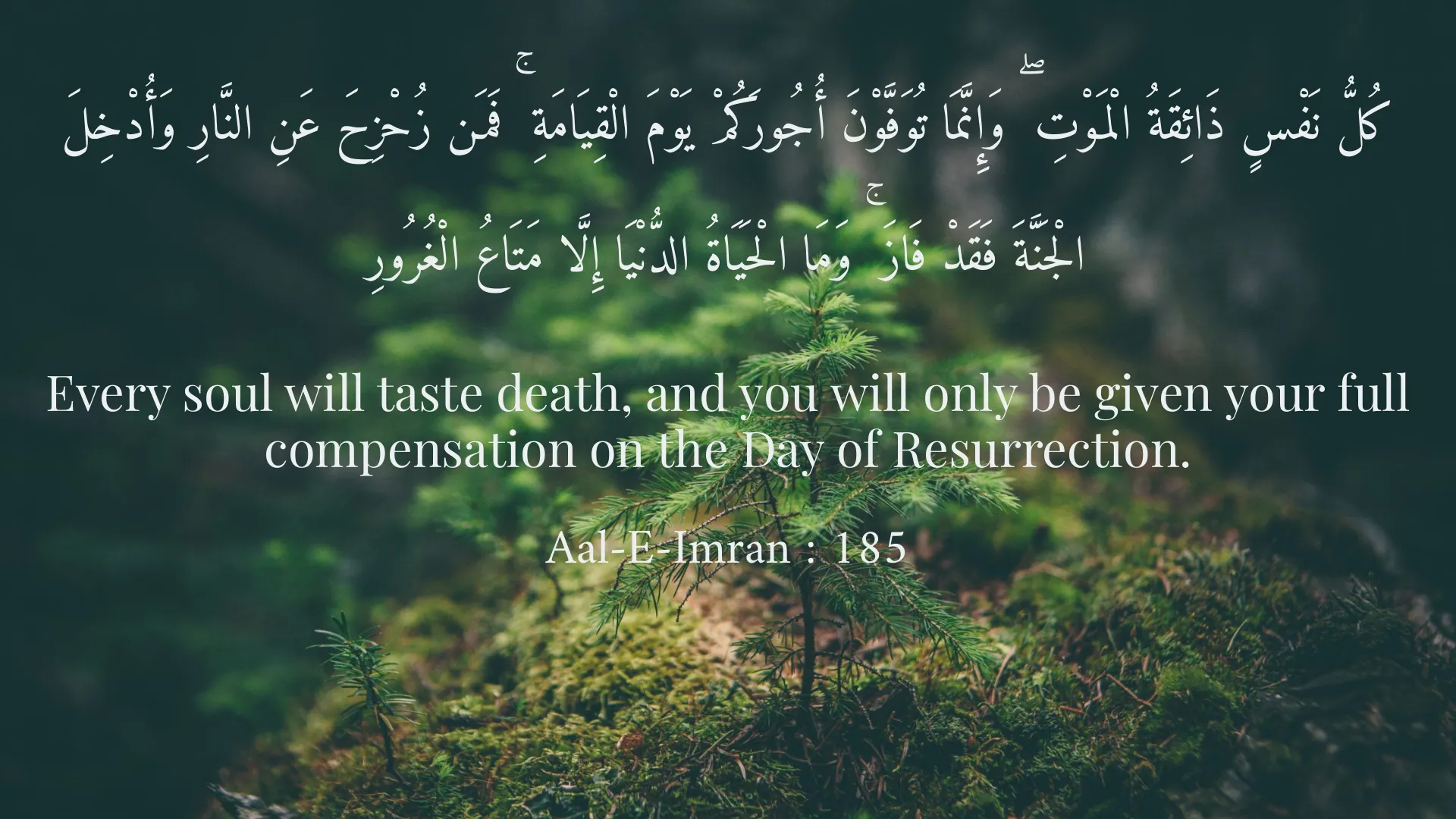
كُلُّ نَفْسٍ ذَائِقَةُ الْمَوْتِ ۖ وَإِنَّمَا تُوَفَّوْنَ أُجُورَكُمْ يَوْمَ الْقِيَامَةِ ۚ فَمَن زُحْزِحَ عَنِ النَّارِ وَأُدْخِلَ الْجَنَّةَ فَقَدْ فَازَ ۚ وَمَا الْحَيَاةُ الدُّنْيَا إِلَّا مَتَاعُ الْغُرُورِ
Every soul will taste death, and you will only be given your full compensation on the Day of Resurrection.
Aal-E-Imran : 185
إِنَّكَ مَيِّتٌ وَإِنَّهُمْ مَيِّتُونَ
Indeed, you will die, and indeed, they will die.
Az-Zumar : 30
Short Story
One day, a man named Hasan was pondering about death and his life. He recalled the Quranic verses that stated that death should not scare us, but rather inspire us to reassess our lives. He decided to make the most out of every moment and treat those around him with kindness. Soon he realized that by understanding the truth that death is an inseparable part of life, he found greater peace.