Quranic Answer
Title: Accountability in the Holy Quran: The Concepts of Sin and Intention Introduction In the realm of spirituality, the concepts of sin, intention, and accountability hold a foundational position in shaping an individual's moral landscape. In the Holy Quran, these concepts are intricately woven into the fabric of Islamic teachings, providing a comprehensive framework for understanding right and wrong. The Quran acknowledges that sin transpires not only through our actions but also in our thoughts and intentions. This holistic approach emphasizes the importance of both our inner and outer lives, pointing to a divine accountability that ensures justice and mercy. Sin and Its Definition Sin is typically understood as an act or thought that contravenes divine commandments and ethical norms. In Islamic theology, there are major categories of sins: major sins (Kabair) that can endanger one's faith and minor sins (Sagha'ir) that, while still sinful, do not carry the same gravity. However, what is most noteworthy in Islamic sources, particularly in the Holy Quran, is the notion that both actions and thoughts can experience scrutiny. It is vital to grasp that sin in Islam is comprehensive, encompassing not only overt misdeeds but also the negative inclinations and intentions harbored in the human mind. The Verse of Capacity: Surah Al-Baqarah 2:286 In Surah Al-Baqarah, verse 286, the Quran presents a crucial insight into divine expectations and human limitations. The verse states, "Allah does not burden a soul beyond that it can bear..." This touching proclamation reassures believers that Allah's commands are not overwhelming and that they align with human faculties and capacities. The broader implication of this verse is striking; it underlines that Allah takes into account the inner workings of our minds, the limitations we face, and how we navigate through our intentions. Thus, a person’s intentions are not dismissed but considered essential in matters of accountability. The Significance of Intention in Islam Intention (Niyyah) holds a significant place in Islamic thought, serving as a precursor to all actions. The Prophet Muhammad (peace be upon him) emphasized the importance of intention when he stated, "Actions are judged by intentions, and everyone will be rewarded according to what they intended." This Hadith elucidates that a person's sincerity in their intentions can weight their deeds more favorably in the eyes of Allah. Positive, noble, and sincere intentions pave the way for good actions, while ill-intended thoughts may lead one astray if left unchecked. Therefore, the consciousness of our intentions can guide our everyday actions and the overall direction of our spiritual growth. The Role of Knowledge in Accountability The understanding that Allah is fully aware of the thoughts and intentions of human beings reassures the believer about divine justice. Importantly, if a person contemplates sinful acts within the confines of their thoughts but refrains from executing them, they are not immediately punished. According to Islamic teachings, such internal struggles are acknowledged by Allah, who perceives the difference between mere thoughts and actionable desires. It is also emphasized that Allah's mercy plays a fundamental role; indeed, He possesses the power to erase unintentional sins wrought by human error and ignorance. Transition From Thought to Action: A Dangerous Threshold While pondering sinful thoughts may not incur immediate punishment, the journey from thought to action can often be precarious. If an intention morphs into decision-making and leads to overt actions that contravene divine guidance, the ramifications are profound. Islamic teachings urge believers to be cautious and to engage in self-reflection to prevent negative thoughts from becoming intentions that materialize into actions. In this regard, the necessity of self-discipline and moral fortitude emerges as vital attributes for navigating the complexities of life. Allah’s Mercy: A Pivotal Concept A reassuring aspect of Islamic theology is the notion of divine mercy. It is widely recognized that Allah's mercy encompasses all of creation and serves as a means of welcoming believers back to the path of righteousness — even those who have strayed. The Quran states that "My mercy encompasses all things" (Surah Al-A’raf 7:156), reiterating the belief that sins, mistakes, and unintentional transgressions can be forgiven if one seeks repentance sincerely. This characteristic of divine mercy contributes to Islamic teachings by emphasizing the potential for redemption and the hopeful message that no one is beyond Allah’s reach. The Importance of Caution and Mindfulness In light of the divine scrutiny of intentions and the potential pitfalls of negative thinking, Islam fosters a culture of mindfulness, encouraging believers to remain vigilant in their thoughts and actions. Engaging in regular self-reflection, prayer, and seeking genuine knowledge can help individuals maintain awareness of their intentions. The process of turning inward allows one to identify harmful thoughts before they escalate, reinforcing the bond between spirituality and ethical living. Hence, believers are encouraged to cultivate a strong sense of accountability towards themselves and Allah. Conclusion In conclusion, the concepts of sin and accountability as elucidated in the Holy Quran highlight that the life of a believer is rooted not only in external actions but also in the internal landscapes of the heart and mind. The relationship between intention and actions is profound, affecting how individuals navigate the complexities of morality and spirituality. Allah’s compassionate nature allows humans to err and learn, suggesting a path to redemption through sincere repentance and self-awareness. Ultimately, it is through the harmony of intention and action, along with the consciousness of the divine mercy that individuals can aspire to lead a righteous life, enriched by faith and guided by principles that uphold justice and ethics.
Related Verses
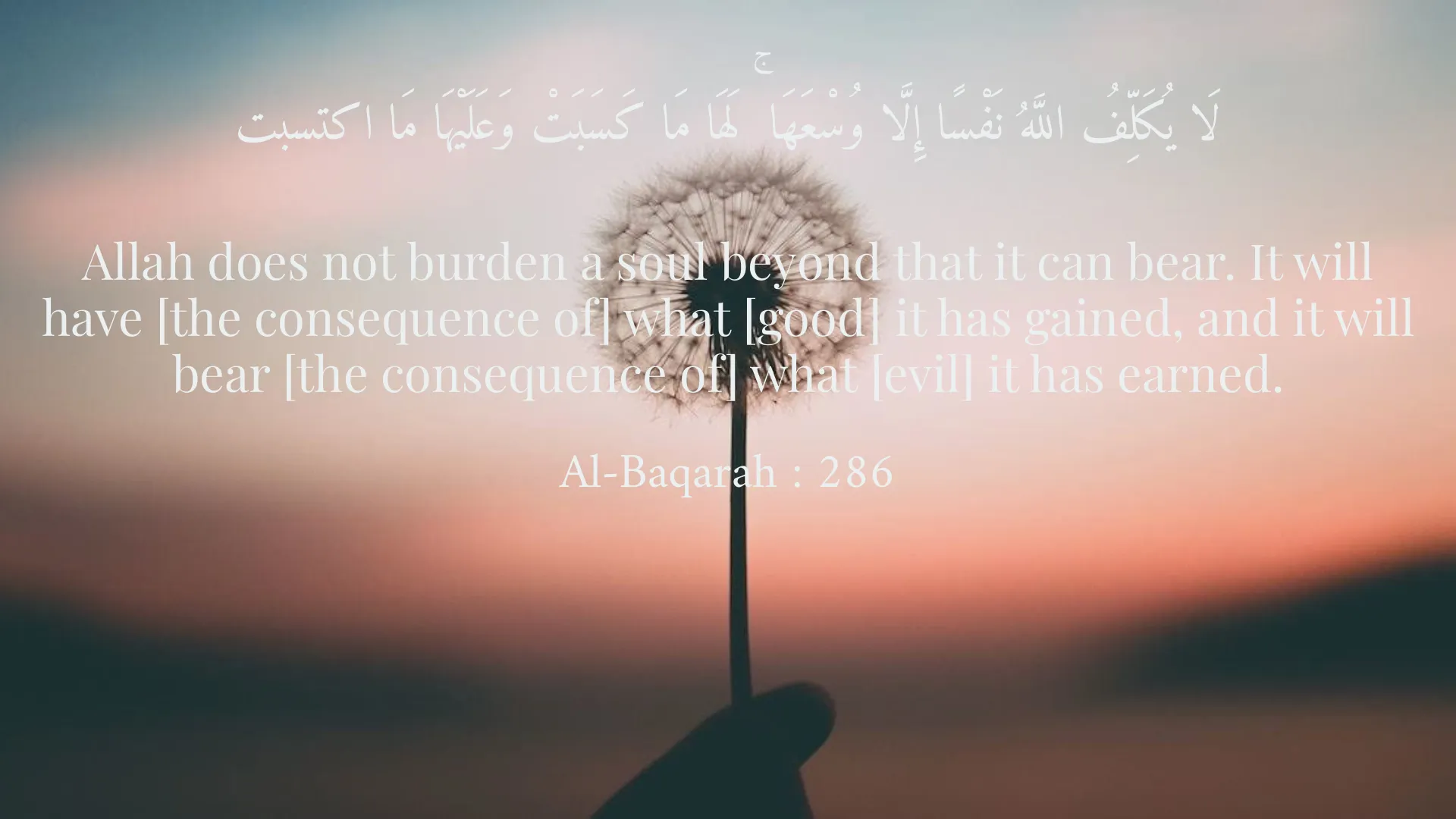
لَا يُكَلِّفُ اللَّهُ نَفْسًا إِلَّا وُسْعَهَا ۚ لَهَا مَا كَسَبَتْ وَعَلَيْهَا مَا اكتسبت
Allah does not burden a soul beyond that it can bear. It will have [the consequence of] what [good] it has gained, and it will bear [the consequence of] what [evil] it has earned.
Al-Baqarah : 286
يَا نِسَاءَ النَّبِيِّ لَسْتُنَّ كَأَحَدٍ مِّنَ النِّسَاءِ ۖ إِنِ اتَّقَيتُنَّ فَلَا تَخْضَعْنَ بِالْقَوْلِ كَخُضُوعِ الْمَغْرُورَاتِ
O wives of the Prophet, you are not like anyone among women. If you fear Allah, then do not be soft in speech, lest one in whose heart is a disease should covet, but speak with appropriate speech.
Al-Ahzab : 30
ثُمَّ أَنشَأْنَاهُ خَلْقًا آخَرَ ۖ فَتَبَارَكَ اللَّهُ أَحْسَنُ الْخَالِقِينَ
Then We developed him into another creation. So blessed is Allah, the best of creators.
Al-Mu’minun : 14
Short Story
In a distant time, there was a man named Nabil who always blamed himself for his sinful thoughts. One day, he went to a sage and asked him if thinking about sin would lead to punishment. The sage replied, "Nabil, thinking is one thing, but if it does not turn into action, you should not blame yourself. Allah is full of mercy and forgiveness. From now on, think positively and take positive steps in your life." These words settled in Nabil's heart, and he decided to change his life with good intentions.