Quranic Answer
The question of the source of true peace is one of humanity's deepest and most fundamental existential inquiries. Throughout history, humans have constantly sought to achieve a stable state of tranquility and contentment. From the perspective of the Holy Quran, the answer to this question is articulated with clarity and directness. The Quran explicitly and repeatedly emphasizes that true and lasting peace—the kind of peace that neither dissipates with worldly fluctuations nor changes under the influence of events and calamities—is achieved solely and exclusively through a profound connection with the Creator and remembrance of Him. This peace is precisely the 'sakinah' and 'tranquility of the heart' that true believers experience in the light of faith and righteous deeds. One of the clearest verses in this regard is Surah Ar-Ra'd (13:28), which states: "الَّذِينَ آمَنُوا وَتَطْمَئِنُّ قُلُوبُهُم بِذِكْرِ اللَّهِ ۗ أَلَا بِذِكْرِ اللَّهِ تَطْمَئِنُّ الْقُلُوبُ" (Those who have believed and whose hearts are assured by the remembrance of Allah. Unquestionably, by the remembrance of Allah hearts are assured). This noble verse unequivocally presents the remembrance of Allah (dhikr Allah) as the primary and exclusive source of peace for hearts. This remembrance is not merely about repeating words; rather, it signifies the constant presence of God in one's thoughts, actions, and intentions. When a person comes to believe that a supreme, wise, and merciful power encompasses all matters of the universe, seeing and hearing them at every moment, their heart is freed from anxieties stemming from unknown futures, fear of failure, and grief over worldly losses. This faith reassures them that even in the most challenging circumstances, they are not alone and have a supporter and helper who is absolutely capable. The Holy Quran also outlines paths to achieve this peace. "Patience" (sabr) and "prayer" (salat) are two crucial pillars in this pursuit. In Surah Al-Baqarah (2:153), we read: "يَا أَيُّهَا الَّذِينَ آمَنُوا اسْتَعِينُوا بِالصَّبْرِ وَالصَّلَاةِ ۚ إِنَّ اللَّهَ مَعَ الصَّابِرِينَ" (O you who have believed, seek help through patience and prayer. Indeed, Allah is with the patient). Patience, meaning steadfastness in the face of divine trials and tribulations, and prayer, meaning a direct and heartfelt connection with God, are tools that empower individuals when facing hardships and prevent their souls from turmoil. A person who practices patience knows that every difficulty has an end and that every hardship is accompanied by ease (Surah Ash-Sharh: 5-6). A person who prays shares their heavy burdens with their Creator and feels lightened. These are practical manifestations of 'dhikr Allah' that lead to peace. Furthermore, the concept of 'reliance on God' (tawakkul) is another cornerstone of achieving Quranic peace. When a person exerts their utmost effort and then entrusts the outcome to the Most High and Wise God, they are liberated from the heavy burden of worries and anxieties. This reliance does not imply weakness or lack of effort; rather, it means maximum effort combined with complete trust in divine providence. The Quran refers to the importance of tawakkul in several verses. For example, in Surah At-Talaq (65:3), we read: "وَمَن يَتَوَكَّلْ عَلَى اللَّهِ فَهُوَ حَسْبُهُ" (And whoever relies upon Allah – He is sufficient for him). This assurance that Allah is sufficient for all matters is the greatest source of peace when facing life's challenges. Some might claim that peace can be attained through wealth, power, fame, material pleasures, or even scientific and artistic achievements. However, human experience and the teachings of the Quran demonstrate that these offer only temporary and superficial forms of tranquility. A wealthy person worries about losing their wealth, a famous person about maintaining their fame, and material pleasures are fleeting, often leaving a sense of emptiness after they subside. In contrast, the peace derived from religion and connection with God is an inner, deeply rooted peace that persists even amidst life's storms. This is because this peace is not dependent on external factors but stems from a profound worldview and an unbreakable connection with the source of existence. Moreover, Islam, by providing ethical and behavioral frameworks, helps individuals choose the right path in life. Avoiding sins, practicing justice, helping the needy, truthfulness, and trustworthiness all contribute to a more stable life free from regret, which is a significant factor in creating peace. Feelings of guilt and remorse are among the greatest inhibitors of peace, and religion, by providing the path of repentance and return to God, enables individuals to be freed from this heavy burden. Therefore, it can be concluded that true peace, the peace that satiates the human heart and soul and remains steadfast in all circumstances, fundamentally and essentially comes through a connection with God and living according to the teachings of the noble religion of Islam. This does not mean that other worldly factors have no impact on momentary comfort, but it highlights the truth that the root and foundation of true peace lie solely in religion and the remembrance of God. Peace without religion is like a building constructed on sand; every storm will demolish it. But peace based on religion is like a strong edifice built on a rock that no turmoil can destroy.
Related Verses
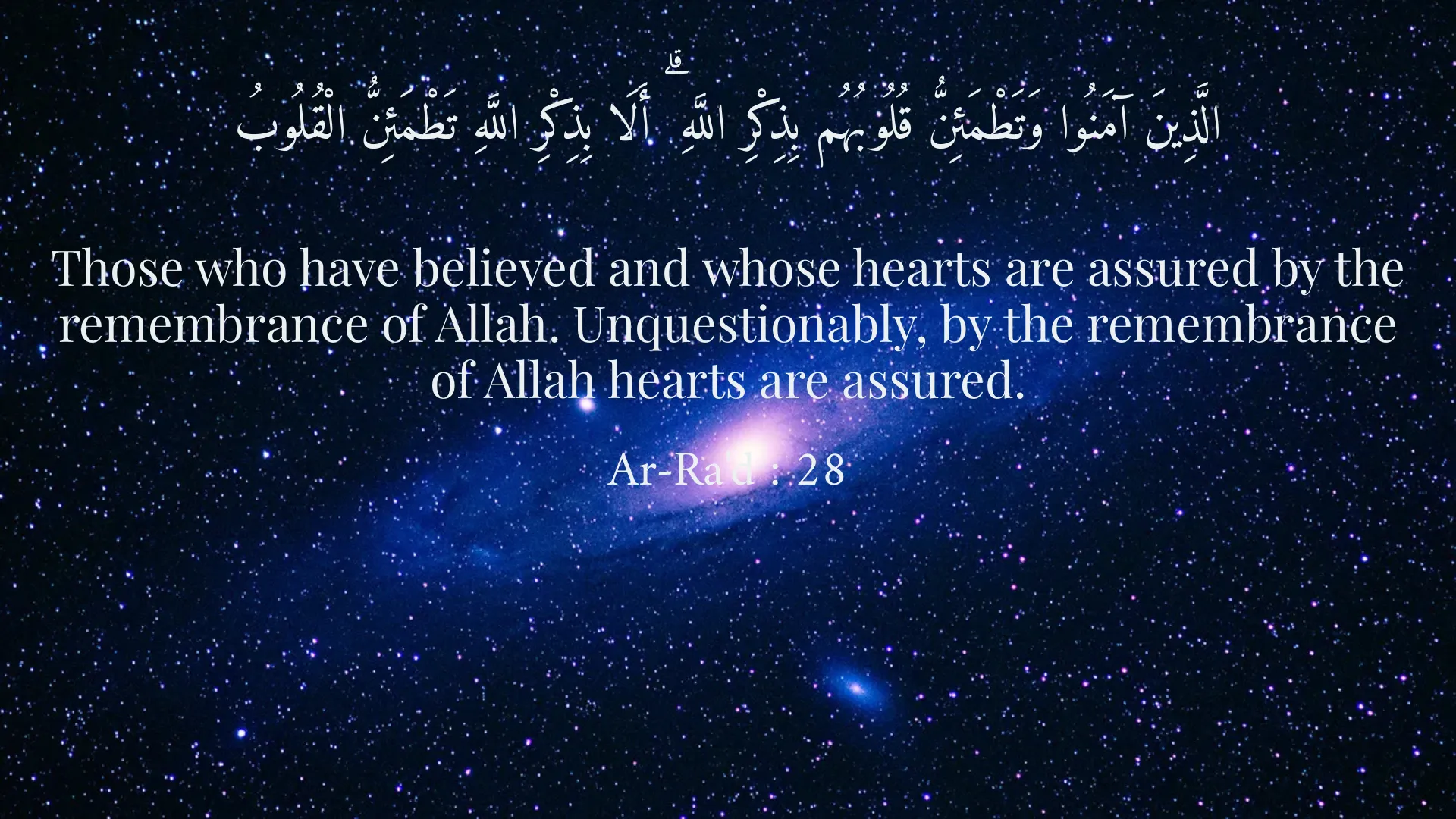
الَّذِينَ آمَنُوا وَتَطْمَئِنُّ قُلُوبُهُم بِذِكْرِ اللَّهِ ۗ أَلَا بِذِكْرِ اللَّهِ تَطْمَئِنُّ الْقُلُوبُ
Those who have believed and whose hearts are assured by the remembrance of Allah. Unquestionably, by the remembrance of Allah hearts are assured.
Ar-Ra'd : 28
يَا أَيُّهَا الَّذِينَ آمَنُوا اسْتَعِينُوا بِالصَّبْرِ وَالصَّلَاةِ ۚ إِنَّ اللَّهَ مَعَ الصَّابِرِينَ
O you who have believed, seek help through patience and prayer. Indeed, Allah is with the patient.
Al-Baqarah : 153
وَمَن يَتَوَكَّلْ عَلَى اللَّهِ فَهُوَ حَسْبُهُ ۚ إِنَّ اللَّهَ بَالِغُ أَمْرِهِ ۚ قَدْ جَعَلَ اللَّهُ لِكُلِّ شَيْءٍ قَدْرًا
And whoever relies upon Allah – He is sufficient for him. Indeed, Allah will accomplish His purpose. Allah has already set for everything a [decreed] extent.
At-Talaq : 3
Short Story
Once upon a time, amidst the people, there lived a very wealthy and powerful king whose every worldly desire was fulfilled. He possessed magnificent palaces, a vast army, and countless treasures, yet despite all this, he couldn't sleep at night and felt no peace in his heart. He was constantly worried about losing his possessions and the conspiracies of his enemies. In the same city, in an unknown corner, lived a simple-hearted dervish who owned nothing but a piece of woolen cloth and a bowl for water. Yet, every morning he awoke with a smile on his face, and every night he laid his head down with a tranquil heart. When the king learned of his state, he summoned the dervish and asked, 'O Dervish, with all my splendor and wealth, I do not have a moment's peace, but you, with all your poverty, how are you so happy and at ease?' The dervish replied with a cheerful face, 'O King, you seek peace in your storerooms and treasuries, while I find it in the remembrance of God and a contented heart. What is within is more lasting than what is gathered outside. My heart is the home of God, and as long as God exists, peace also exists.' The king pondered deeply, realizing that true treasure lies not in wealth and status, but in the heart and faith.