Quranic Answer
The concept of repentance holds a significant place in Islamic theology, illustrating the relationship between humanity and the divine. It represents an essential practice that encourages individuals to return to Allah, seek forgiveness for their misdeeds, and embrace a path towards righteousness. The Holy Quran serves as a comprehensive guide, providing numerous verses that emphasize this fundamental notion. This article explores the implications of repentance, buoyed by the messages found in the Quran, demonstrating how Allah extends His mercy and guidance to all human beings, irrespective of their past actions. Quranic Verses on Repentance The call to repentance is echoed in the Quran, highlighting its universal applicability and importance for every individual. Surah Az-Zumar, verse 53 stands as a testament to Allah's divine invitation, stating, "Say, O My servants who have believed, fear your Lord. For those who do good in this world is good, and the earth of Allah is spacious. Indeed, the patient will be given their reward without account." This verse reinforces the notion that Allah's mercy is not confined to a select few but instead is available to all who sincerely wish to turn back to Him. With the phrase "O My servants who have believed," Allah establishes a connection with all believers, instilling hope that despite the path one may have walked, there exists a chance for redemption. This passage highlights that the requirement for entering the realm of Allah's mercy is sincerity and the willingness to make amends. The mention of goodness in this world signifies that those who earnestly seek to follow the straight path will reap the rewards both in this life and the hereafter. Additionally, Surah At-Tawbah, verse 118 conveys a poignant message regarding the acceptance of repentance. The verse elucidates, "And (He) accepted the repentance of three who were left behind until the earth grew constricted for them, despite its vastness, and their souls became constricted for them." This verse speaks to the plight of individuals who feel overwhelmed by their circumstances—those who may feel isolated due to their past actions. However, it provides reassurance that repentance is always accepted; Allah waits for His servants to return to Him, irrespective of the dire situations they might find themselves in. These verses emphasize that no sin is insurmountable or beyond the mercy of Allah. The message that Allah is willing to accept the repentance of those who turn to Him in sincerity fosters an atmosphere of hope. It assures individuals that one does not have to be perfect to earn divine compassion; rather, acknowledgment of one's flaws and a desire to improve lead to Allah's grace. Repentance as an Open Door The Quran consistently reiterates the message that repentance represents an open door for all individuals. Surah Al-Ma'idah, verse 39 further emphasizes this essential truth: "But whoever repents, believes and does righteousness; for him are promised rewards from his Lord." This passage encapsulates the essence of what it means to truly repent. It necessitates acknowledging one’s errors, affirming belief in Allah, and committing to righteous actions thereafter. In this light, repentance is more than merely seeking forgiveness; it requires a transformational journey towards a better self. The continuous cycle of wrongdoings, seeking forgiveness, and striving for righteousness signifies a path of growth rather than one of stagnation. By accepting the invitation to repent, individuals engage in a process of self-reflection and commitment to genuine change, thereby fortifying their bonds with Allah. The notion of Allah's mercy is further underscored by the understanding that it becomes imperative for individuals to take the initiative to seek forgiveness actively. The Quran reassures believers that the effort exerted in repentance will not be in vain. Allah’s infinite mercy ensures that no matter the degree of one’s sins, any sincere return to Him will be met with compassion. The Universality of Repentance One profound aspect of repentance in Islam is its universality. It transcends cultural and societal boundaries, extending the opportunity for redemption to all human beings. Regardless of one's background or past transgressions, every person is afforded the chance to reconnect with their Creator. The transformative essence of repentance offers a framework where individuals can emancipate themselves from the chains of guilt and regret. This universality is particularly significant in a world fraught with moral dilemmas and challenges. Individuals often grapple with the burden of their past, feeling unworthy of forgiveness. However, the prescribed acts of repentance remind everyone that no one is too far gone to attain Allah's mercy. Indeed, Allah's inclusivity speaks not only of forgiveness but of the empowerment that comes alongside it. Through repentance, individuals reclaim their agency and reinstate hope in their lives, emerging stronger in faith and purpose. Embracing Repentance in Everyday Life The significance of repentance transcends mere words in the Quran; it resonates deeply within the daily lives of individuals. The regular practice of self-assessment and seeking forgiveness aligns with the spiritual rhythm established within Islam. Regular prayer, reflection, and the invocation of Allah's names are integral practices that reinforce the principles of repentance. Seeking guidance from Hadith and the teachings of the Prophet Muhammad (peace be upon him) further illuminates the essential nature of repentance. His teachings emphasize that although humans are inherently prone to error, it is their recognition and voluntary act of returning to Allah that marks the path of righteousness. In fostering a community that prioritizes repentance and support, individuals cultivate an environment where they hold each other accountable and encourage spiritual growth. Conclusion In conclusion, the call to repentance is an invitation imbued with love and mercy from Allah. Through the verses of the Holy Quran, it becomes evident that repentance is a universal message intended for every individual created by Allah. The door to His mercy is wide open, waiting for those who wish to turn back to Him. Every person, irrespective of their past, holds the potential for renewal and a restored relationship with their Creator. In accepting this invitation, individuals embark on a journey of self-discovery, growth, and profound connection to Allah. Repentance is not the end, but the beginning of a revitalized pursuit of goodness and spiritual fulfillment.
Related Verses
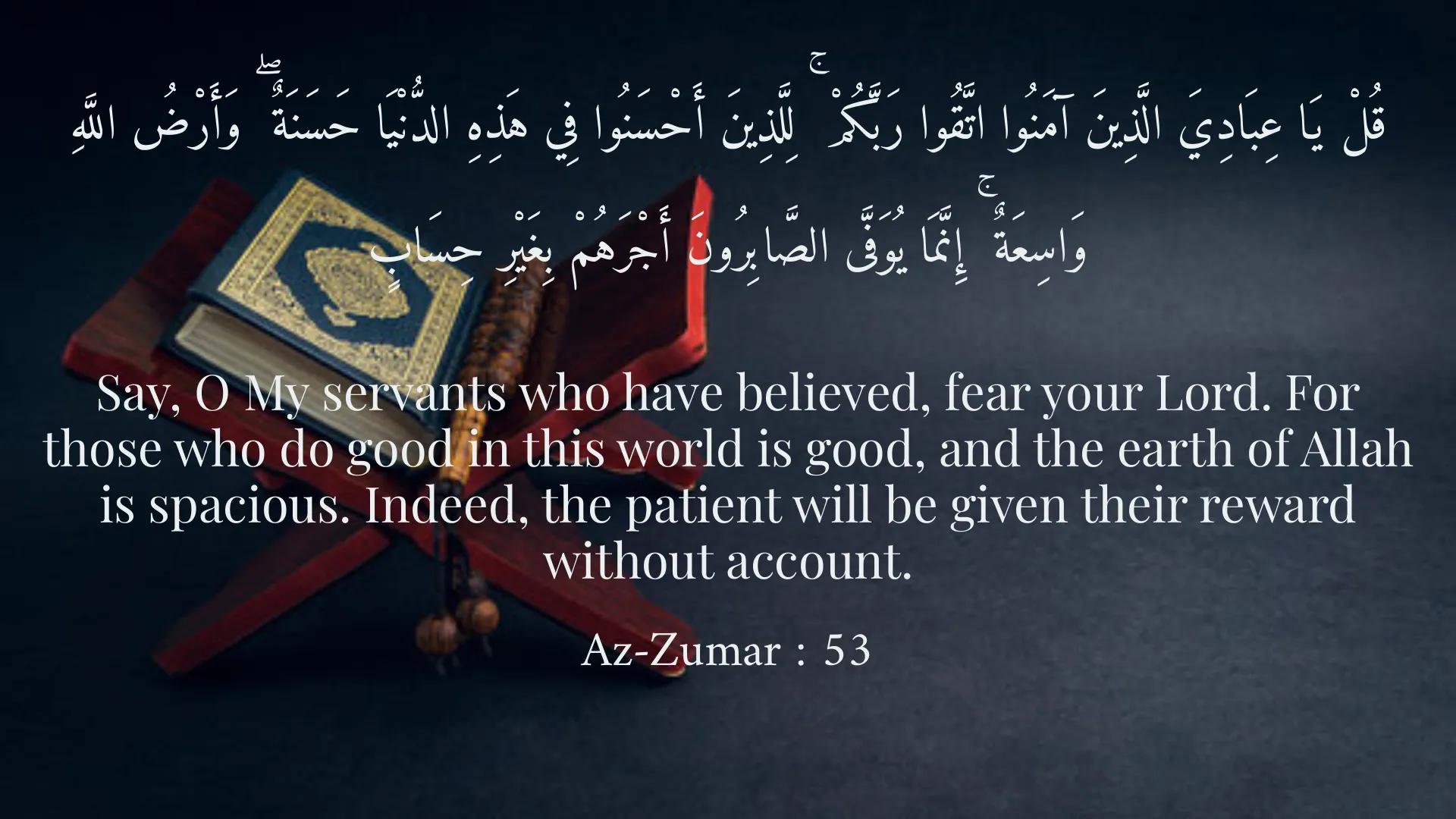
قُلْ يَا عِبَادِيَ الَّذِينَ آمَنُوا اتَّقُوا رَبَّكُمْ ۚ لِلَّذِينَ أَحْسَنُوا فِي هَذِهِ الدُّنْيَا حَسَنَةٌ ۖ وَأَرْضُ اللَّهِ وَاسِعَةٌ ۚ إِنَّمَا يُوَفَّى الصَّابِرُونَ أَجْرَهُمْ بِغَيْرِ حِسَابٍ
Say, O My servants who have believed, fear your Lord. For those who do good in this world is good, and the earth of Allah is spacious. Indeed, the patient will be given their reward without account.
Az-Zumar : 53
وَعَلَى السَّلاَثَةِ الَّذِينَ خُلِّفُوا حَتَّى إِذَا ضَاقَتْ عَلَيْهِمُ الْأَرْضُ بِمَا رَحُبَتْ وَضَاقَتْ عَلَيْهُمْ أَنفُسُهُمْ وَظَنُّوا أَلَّا مَلْجَأَ مِنَ اللَّهِ إِلَّا إِلَيْهِ ثُمَّ تَابَ عَلَيْهِمْ لِيَتُوبُوا ۚ إِنَّ اللَّهَ هُوَ التَّوَّابُ الرَّحِيمُ
And (He) accepted the repentance of three who were left behind until the earth grew constricted for them, despite its vastness, and their souls became constricted for them.
At-Tawbah : 118
وَمَن تَابَ وَأَمَلَ صَالِحًا فَأُولَـئِكَ يُدْخَلُونَ الْجَنَّاتِ تَجْرِي مِن تَحْتِهَا الْأَنْهَارُ خَالِدِينَ فِيهَا أَبَدًا ۖ رَّضِيَ اللَّهُ عَنْهُمْ وَرَضُوا عَنْهُ ۚ ذَٰلِكَ الْفَوْزُ الْعَظِيمُ
But whoever repents, believes and does righteousness; for him are promised rewards from his Lord.
Al-Ma'idah : 39
Short Story
Once in a town, there was a man named Farhad who was dissatisfied with his life. He thought he had committed too many sins and could no longer draw close to Allah. However, one day he went to the mosque with a friend and heard a sermon about repentance. He remembered the verses of the Quran and realized that Allah always offers people a chance to repent. Farhad decided to return to Allah and seek forgiveness for all his sins. After that, he found a greater sense of peace in his life and experienced lightness and contentment.