Quranic Answer
Yes, the Holy Quran explicitly and unequivocally warns about the impact of wealth on human relationships. With a profound and realistic perspective on the nature of possessions and assets, this divine book views wealth neither as an absolute evil nor an unconditional good. Instead, it presents it as a means of testing humanity and a tool that can lead to either prosperity and well-being or decay and corruption. The Quranic warnings in this regard are multi-faceted, encompassing various dimensions of wealth's influence on individuals and society, and consequently on human relationships. Firstly, and perhaps most importantly, the Quran warns against falling into the trap of worldly allurements and preferring them over spiritual and eternal values. The Quran repeatedly emphasizes that worldly life and its adornments, including wealth, are fleeting and temporary, and should not distract humans from their primary purpose of creation: servitude to God and seeking His pleasure. In many verses, wealth and children are described as 'adornments' (زينت) and 'trials' (فتنه). This signifies that excessive attachment to wealth can divert individuals from remembering God and from their duties towards family, relatives, and society. When wealth becomes a person's top priority, they may inadvertently sacrifice their relationships for the sake of acquiring more possessions. This sacrifice can manifest as neglecting the rights of others, severing ties of kinship (silat al-rahim), or even resorting to injustice and oppression to achieve financial goals. The Quran warns that such a tendency can lead to the weakening of emotional and moral bonds, pushing individuals towards individualism and selfishness. Secondly, the Quran warns about the danger of arrogance and haughtiness that can stem from wealth. Those who, without gratitude and without acknowledging the true source of blessings, feel superior solely due to their wealth, often become arrogant and condescending in their human interactions. This pride can lead wealthy individuals to ignore the poor and needy, infringe upon their rights, and even mock them. Such an approach severely weakens social ties and fosters enmity and resentment in the hearts of the underprivileged. The Quran strongly condemns this type of behavior and promises a painful end for those who use wealth as a means of arrogance and corruption. The story of Qarun in the Quran is a clear example of this warning, illustrating how vast wealth led him to pride and rebellion, ultimately resulting in his destruction. This narrative serves as a reminder for everyone not to let wealth become a barrier between them and other people, preventing them from understanding life's realities and the suffering of others. Thirdly, the Quran's warnings extend to the impact of wealth on social justice and economic relationships. The Quran strongly opposes the concentration of wealth in the hands of a select few while the majority remains deprived. This unequal distribution of wealth is the root cause of many societal dysfunctions and injustices that directly affect human relationships. When the class divide deepens, feelings of discrimination, envy, and anger escalate in society, jeopardizing social cohesion. Through emphasizing Zakat, charity (sadaqat), spending in the way of Allah (infaq), and prohibiting usury (riba) and hoarding, the Quran seeks to ensure that wealth circulates within society and is prevented from being concentrated in the hands of specific individuals, thereby building human relationships on the foundation of justice and empathy. Giving importance to the rights of the poor and destitute, establishing fairness and equity in transactions, and avoiding fraud and financial corruption are all Quranic teachings directly related to the health of social and human relationships. Indeed, many disputes and conflicts between individuals and families stem from financial issues and greed, for which the Quran offers remedies through its warnings. Ultimately, the Quran asks humanity to make wealth a means to achieve higher goals and gain divine pleasure, rather than considering wealth itself as the ultimate end. Wealth should be used for the good and welfare of society and to help those in need. Those who spend their wealth in the way of Allah not only receive rewards in the hereafter but also improve their relationships with people in this world, gaining popularity and respect through their good deeds. Conversely, those who hoard wealth and are stingy in spending it, in addition to facing divine retribution, are also deprived of people's affection in this world and may even face their enmity and resentment. Thus, the Quran clearly warns that excessive love for wealth can be the root of many moral and social corruptions, and consequently, destructive to human relationships, unless it is accompanied by faith, piety, and respect for the rights of others. Therefore, the impact of wealth on human relationships entirely depends on an individual's attitude and behavior towards it; it can be constructive or destructive, and the Quran shows the path to salvation through moderation and prioritizing divine and human values.
Related Verses
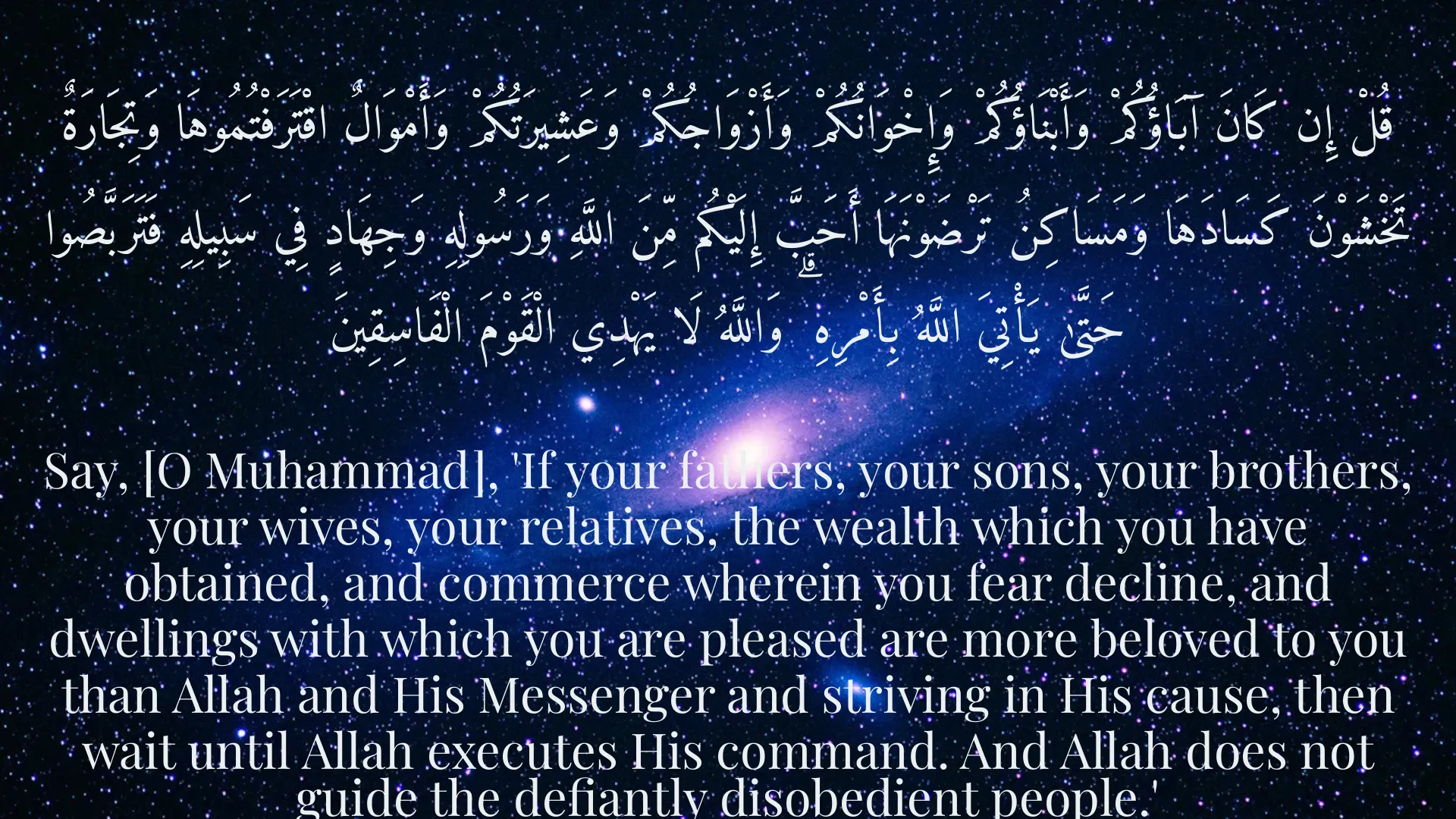
قُلْ إِن كَانَ آبَاؤُكُمْ وَأَبْنَاؤُكُمْ وَإِخْوَانُكُمْ وَأَزْوَاجُكُمْ وَعَشِيرَتُكُمْ وَأَمْوَالٌ اقْتَرَفْتُمُوهَا وَتِجَارَةٌ تَخْشَوْنَ كَسَادَهَا وَمَسَاكِنُ تَرْضَوْنَهَا أَحَبَّ إِلَيْكُم مِّنَ اللَّهِ وَرَسُولِهِ وَجِهَادٍ فِي سَبِيلِهِ فَتَرَبَّصُوا حَتَّىٰ يَأْتِيَ اللَّهُ بِأَمْرِهِ ۗ وَاللَّهُ لَا يَهْدِي الْقَوْمَ الْفَاسِقِينَ
Say, [O Muhammad], 'If your fathers, your sons, your brothers, your wives, your relatives, the wealth which you have obtained, and commerce wherein you fear decline, and dwellings with which you are pleased are more beloved to you than Allah and His Messenger and striving in His cause, then wait until Allah executes His command. And Allah does not guide the defiantly disobedient people.'
At-Tawbah : 24
يَا أَيُّهَا الَّذِينَ آمَنُوا لَا تُلْهِكُمْ أَمْوَالُكُمْ وَلَا أَوْلَادُكُمْ عَن ذِكْرِ اللَّهِ ۚ وَمَن يَفْعَلْ ذَٰلِكَ فَأُولَٰئِكَ هُمُ الْخَاسِرُونَ
O you who have believed, let not your wealth or your children divert you from remembrance of Allah. And whoever does that - then those are the losers.
Al-Munafiqun : 9
وَيْلٌ لِّكُلِّ هُمَزَةٍ لُّمَزَةٍ
Woe to every slanderer and backbiter
Al-Humazah : 1
الَّذِي جَمَعَ مَالًا وَعَدَّدَهُ
Who collects wealth and [continuously] counts it.
Al-Humazah : 2
يَحْسَبُ أَنَّ مَالَهُ أَخْلَدَهُ
He thinks that his wealth will make him immortal.
Al-Humazah : 3
Short Story
In Saadi's Golestan, it is narrated that a wealthy man had a friendship with a dervish. The rich man used to give money to the dervish and supported him. One day, the rich man acquired immense wealth, and his business prospered. With this newfound fortune, he gradually distanced himself from the dervish and his old friends, instead associating with other wealthy individuals. The dervish, heartbroken, said: 'My friend, before this, your wealth was little, but your heart was generous; now that your wealth has increased, your heart has become narrow!' This story reminds us that wealth can affect pure friendships and relationships, sometimes leading to distance and coldness if one's heart becomes attached to worldly possessions and forgets true values.