Quranic Answer
Ingraining faith in the heart is a profound and continuous process extensively addressed in the Holy Quran. Faith (Iman) is not merely a verbal assertion of belief but a deep conviction that manifests in all aspects of a person's life. The Quran offers numerous pathways for establishing and deepening this conviction within one's being, transforming faith from a mental concept into a living, effective reality. This journey requires consistent effort, perseverance, and reliance upon Allah. One of the most fundamental ways to instill faith is through contemplation and reflection on the divine signs (Ayat). The Quran repeatedly invites humanity to ponder the creation of the heavens and the earth, the alternation of night and day, the creation of human beings, and the unparalleled order of the universe. This profound contemplation of Allah's power, wisdom, and mercy enables an individual to grasp the Creator's grandeur with their entire being, thereby increasing their heartfelt belief in His Oneness and absolute power. Every phenomenon in the universe, from the smallest particles to the vastest galaxies, bears witness to Allah's infinite existence, knowledge, and power. This contemplation transforms faith from a mere intellectual understanding into a heartfelt and intuitive realization, firmly establishing its roots in the depths of the soul. The Quran consistently emphasizes that these signs are comprehensible to those of 'understanding' (Ulul Albab) and 'a people who reflect' (Qawmun Yatafakkarun). Secondly, regular recitation and deep reflection (Tadabbur) on the verses of the Holy Quran are crucial. The Quran is the living and eternal word of Allah, and reading it with attention and contemplation illuminates the heart and strengthens faith. When a believer recites the divine verses and delves into their profound meanings, they hear Allah's guidance, promises, and warnings with the ear of their heart, and this hearing and comprehension lead to an increase in their certainty (Yaqin). The Quran is a healing for hearts and a guide for the path; each time one connects with it, new dimensions of divine wisdom and grandeur are revealed. Sustained engagement with the Quran not only enhances one's knowledge and understanding over time but also nourishes the soul and fills the heart with divine light. Verse 2 of Surah Al-Anfal beautifully articulates this truth, stating that when Allah's verses are recited to them, the faith of believers increases. Consistent remembrance of Allah (Dhikr) also plays a pivotal role in solidifying faith. Dhikr means remembering Allah with both the heart and tongue at all times and in all situations. This continuous remembrance keeps Allah at the forefront of the heart and mind, protecting it from heedlessness and satanic whispers. Verse 28 of Surah Ar-Ra'd explicitly states: “Unquestionably, by the remembrance of Allah hearts are assured.” This tranquility is the fruit of constant presence and attention to Allah, resulting in assurance and steadfastness in faith. Dhikr is a form of spiritual exercise that, over time, strengthens Allah's place deep within one's being and makes one resilient against adversities and doubts. Through Dhikr, an unbreakable connection is established with the source of power and tranquility. Performing righteous deeds (Amal Salih) and sincere acts of worship ('Ibadah) form another pillar of ingraining faith. Faith and righteous deeds are two sides of the same coin and are inseparable. Prayer (Salat), fasting (Sawm), charity (Zakat/Sadaqah), pilgrimage (Hajj), and other good deeds are not merely religious obligations but practical exercises for strengthening faith. When a person performs these acts with complete sincerity and heartfelt attention, their soul is refined, their will is strengthened, and their connection with Allah deepens. Salat is an opportunity for direct communion and supplication with the Creator; Sawm is self-discipline and training in piety; Zakat is purification of wealth and strengthening the spirit of sacrifice. These acts transform faith from an abstract concept into a tangible experience, manifesting its impact in daily life. Avoiding sins and seeking forgiveness (Istighfar) are also vital in this process, as sins like rust settle on the heart, preventing the light of faith from shining, while Istighfar purifies the heart, preparing it to receive divine blessings. Patience (Sabr) and gratitude (Shukr) are also key components in this process. Patience in the face of difficulties, calamities, and temptations is a sign of the depth of faith. A true believer trusts in Allah's plan during hardships, knowing that nothing happens without divine wisdom. This very patience strengthens their faith. On the other hand, gratitude for blessings makes one continuously feel indebted and obliged to the Lord, preventing arrogance and rebellion, and prompting greater humility and reliance. The Holy Quran repeatedly emphasizes the importance of patience and gratitude in a believer's life. Seeking Allah's help and supplication (Du'a) is another significant path. Faith is a divine gift that Allah bestows upon His servants. Therefore, a believer should always ask Allah to strengthen their faith and beautify it in their heart. Verse 7 of Surah Al-Hujurat states: “But Allah has endeared to you faith and has made it beautiful in your hearts.” This verse indicates that the belovedness and beauty of faith in the heart are a grace from Allah, and we should ask Him to grant us this grace. Continuous and humble supplication strengthens one's connection with the Creator and makes the heart receptive to divine bounties. Finally, choosing righteous companions and avoiding corrupting environments also significantly impacts ingraining faith. Humans are social beings and are influenced by their environment and those around them. Associating with faithful and pious individuals reminds one of Allah, encourages them on the right path, and prevents them from falling into error. Conversely, companionship with the heedless and those whose faith is weak can gradually have negative effects on one's heart and soul. In conclusion, ingraining faith in the heart is a comprehensive and multifaceted process that requires attention to various aspects of life, from contemplation and reflection to worship and righteous deeds, as well as reliance and continuous connection with Allah. This journey gradually brings inner peace and assurance, making one resilient against the challenges of life.
Related Verses
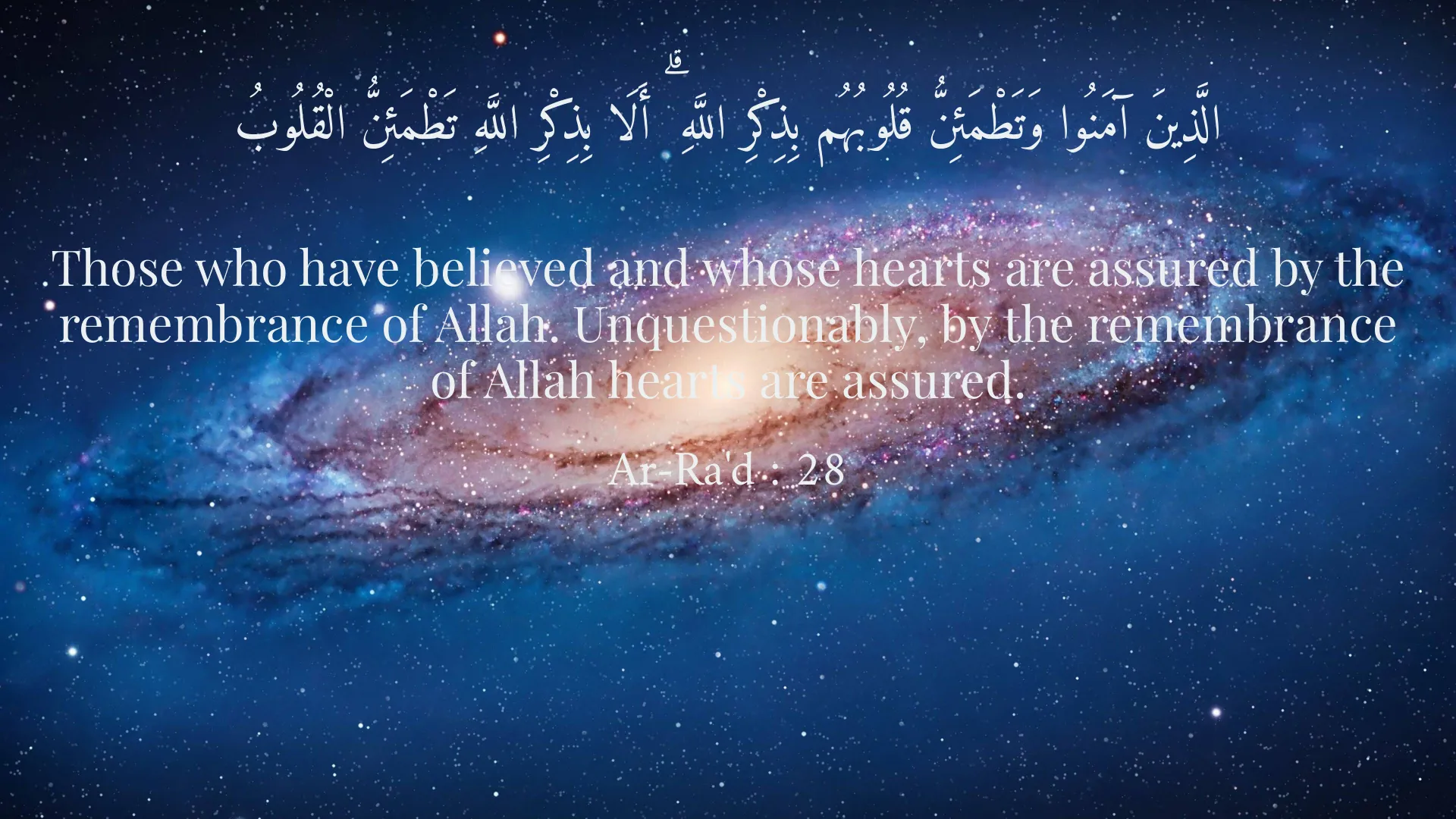
الَّذِينَ آمَنُوا وَتَطْمَئِنُّ قُلُوبُهُم بِذِكْرِ اللَّهِ ۗ أَلَا بِذِكْرِ اللَّهِ تَطْمَئِنُّ الْقُلُوبُ
Those who have believed and whose hearts are assured by the remembrance of Allah. Unquestionably, by the remembrance of Allah hearts are assured.
Ar-Ra'd : 28
إِنَّمَا الْمُؤْمِنُونَ الَّذِينَ إِذَا ذُكِرَ اللَّهُ وَجِلَتْ قُلُوبُهُمْ وَإِذَا تُلِيَتْ عَلَيْهِمْ آيَاتُهُ زَادَتْهُمْ إِيمَانًا وَعَلَىٰ رَبِّهِمْ يَتَوَكَّلُونَ
The believers are only those who, when Allah is mentioned, their hearts tremble, and when His verses are recited to them, it increases them in faith; and upon their Lord they rely.
Al-Anfal : 2
وَلَٰكِنَّ اللَّهَ حَبَّبَ إِلَيْكُمُ الْإِيمَانَ وَزَيَّنَهُ فِي قُلُوبِكُمْ وَكَرَّهَ إِلَيْكُمُ الْكُفْرَ وَالْفُسُوقَ وَالْعِصْيَانَ ۚ أُولَٰئِكَ هُمُ الرَّاشِدُونَ
But Allah has endeared to you faith and has made it beautiful in your hearts and has made hateful to you disbelief, wickedness and disobedience. Those are the rightly guided.
Al-Hujurat : 7
Short Story
They say that in ancient times, there was an ascetic man who went to the mosque every day and outwardly appeared to be absorbed in worship. People praised him greatly and envied his faith. But in the same town, there was a simple-hearted and unpretentious baker who baked bread every day and served God's creation with all his heart, always having the remembrance of God on his lips. One day, the ascetic dreamt that a voice told him: "O ascetic, although you spend much time in the mosque, your heart sometimes flies towards worldly matters. But that baker, though he works in the marketplace, his heart is with Us every moment, and his faith is deeply rooted within him." The ascetic woke up and realized that true faith is not in the abundance of outward worship, but in the sincerity of intention, the presence of the heart, and service to creation, which takes root in one's being and illuminates it with God's light. After that, the ascetic also strove to strengthen faith within himself and to pay attention to his inner self rather than just his outward appearance.