Quranic Answer
In life, we all experience moments when our wishes and desires seem to dissipate into thin air, leaving us with feelings of disappointment and uncertainty. This phenomenon is an integral part of the human experience, one that challenges our beliefs, our understanding of destiny, and ultimately, our faith. The reality is that while we may wish for certain outcomes, the unfolding of events is often far beyond our control. It is during such times that the teachings of the Holy Quran offer solace, guidance, and a deeper understanding of the divine will at work in our lives. The Holy Quran, regarded as the literal word of God by Muslims, serves as a beacon of hope and wisdom in times of turmoil. It is filled with verses that not only highlight the existence of challenges in life but also encourage individuals to remain steadfast in their faith. One particularly poignant verse can be found in Surah Al-Imran, verse 165, which states: "Did you think that you would enter Paradise while Allah has not yet made evident those among you who strive and made evident those who are steadfast?" Here, Allah reminds us that the journey towards our aspirations and the ultimate goal of entering Paradise is not devoid of struggles. Instead, it requires effort, endurance, and sometimes, acceptance of outcomes that are not aligned with our desires. This verse compels us to reflect on our understanding of success and fulfillment. It is a reminder that many of the aspirations we hold dear may not manifest as we envisioned. However, rather than succumbing to despair, we are encouraged to embrace resilience and to fight through the adversities we face. The struggles we encounter serve a greater purpose — they are opportunities for growth, reflection, and spiritual elevation. In tandem with the insights provided by Surah Al-Imran, Surah Al-Baqarah offers further reassurance to those grappling with unfulfilled wishes. In verse 286, Allah states: "Allah does not burden a soul beyond that it can bear..." This profound verse serves as a reminder that every challenge, no matter how daunting it may seem, is tailored to our capabilities. God, in His infinite wisdom, knows our strengths and weaknesses. He allows us to face challenges commensurate with our ability to overcome them, which means that no situation is beyond the realm of our resilience. Understanding this perspective is crucial for us to manage our expectations and find peace in moments of unfulfilled desire. Instead of reacting with frustration or hopelessness, we need to remind ourselves that our journey is governed by a magnificent strategy known only to God. It is possible that what we wish for is either not good for us at that moment, or might not be beneficial at all. Furthermore, God may have something far greater in store for us — something that is aligned with our ultimate purpose in life. In light of these verses, the importance of prayer and supplication becomes even more evident. Engaging in regular prayer allows us to establish a deeper connection with the Creator and seek His guidance in our moments of desperation. Through the act of turning to God in prayer, we not only find comfort but also reaffirm our trust in His divine plan. It is through prayer that we can express our hopes and desires, while also surrendering those desires to the will of God. Moreover, prayer serves as an avenue for reflection and introspection. When we take the time to pray, we are also encouraged to engage in self-reflection, asking ourselves whether the wishes we hold so tightly align with our values and principles. Are they rooted in genuine pursuit of happiness, or are they driven by societal expectations? This moment of contemplation can reveal new insights and perspectives, allowing us to redefine our aspirations. Additionally, when we approach our unfulfilled wishes with the mindset of trust, we can begin to perceive our challenges through a different lens. The realization that our desires may not come to fruition can transform from a source of sadness into a focus for gratitude. We can be grateful for the existence of the larger plan orchestrated by God without our full comprehension of it. Finding gratitude in our struggles can help us cultivate a positive outlook, empowering us to embrace our circumstances rather than resist them. Furthermore, sharing our experiences with others can also be a source of strength. When we communicate about our unachieved desires with friends, family, or a broader community, we can foster connections that remind us we are not alone in our struggles. It builds a support network that encourages us to uplift one another in times of need. By listening to the stories of others and sharing our own, we can find solace in the collective human experience. This shared experience builds empathy and understanding, allowing us to confront our challenges together. Ultimately, accepting that our wishes may not always be fulfilled leads to spiritual growth and deeper self-awareness. It encourages us to place our faith in God's infinite wisdom, understand the transient nature of life, and embrace a path filled with unforeseen possibilities. Our lives are full of ups and downs, and while we may not always have control over specific outcomes, we do have power over our responses, attitudes, and actions. In conclusion, the reality of unfulfilled wishes is a common thread in the tapestry of life, yet it is also a chance for learning, growth, and reflection. The teachings of the Holy Quran guide us through these tumultuous times, reminding us of the importance of resilience, prayer, and gratitude. By embracing these principles, we can transform challenging circumstances into stepping stones on our journey toward enlightenment and spiritual fulfillment. Every setback may indeed pave the way for greater opportunities and blessings that we have yet to discover. So let us hold on to hope and trust in the wisdom of God, for even amid disappointment, a more profound plan is often unfolding before our eyes.
Related Verses
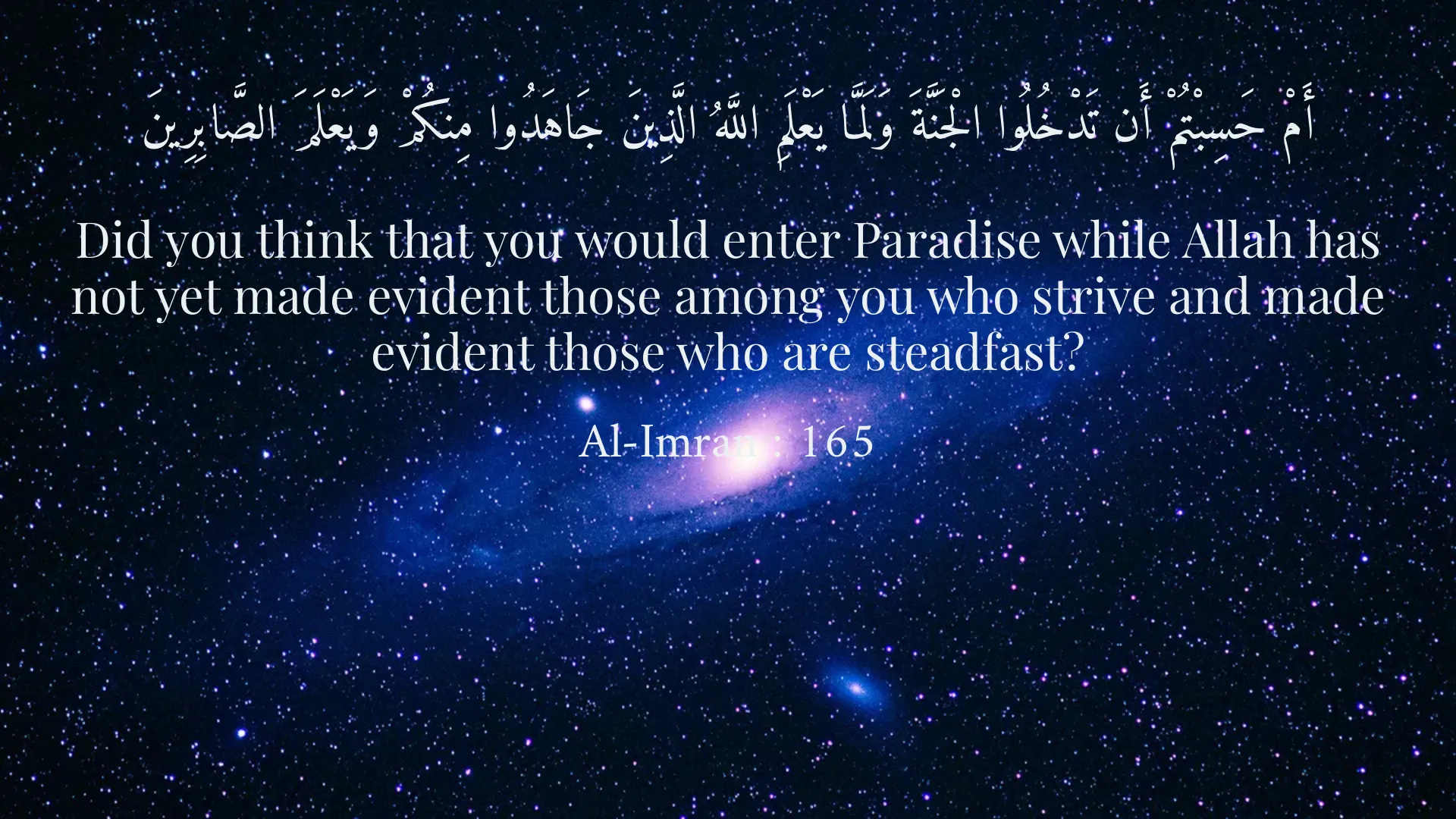
أَمْ حَسِبْتُمْ أَن تَدْخُلُوا الْجَنَّةَ وَلَمَّا يَعْلَمِ اللَّهُ الَّذِينَ جَاهَدُوا مِنكُمْ وَيَعْلَمَ الصَّابِرِينَ
Did you think that you would enter Paradise while Allah has not yet made evident those among you who strive and made evident those who are steadfast?
Al-Imran : 165
لَا يُكَلِّفُ اللَّهُ نَفْسًا إِلَّا وُسْعَهَا...
Allah does not burden a soul beyond that it can bear...
Al-Baqarah : 286
Short Story
One day, a young man named Amir harbored great wishes, but none of them came true. One day, feeling hopeless, he turned to the verses of the Quran and realized he must trust in divine destiny. After some time of effort and patience, he found peace and new doors of blessings opened in his life.