Quranic Answer
Supplication, or Dua, in Islamic culture and the verses of the Holy Quran, is not merely an act of worship but the very essence of servitude and a direct, unmediated bridge between the Creator and His creation. Achieving a deeper understanding of Dua goes beyond mere verbal repetition; it necessitates presence of heart, profound knowledge, and practical application. The Holy Quran repeatedly calls humanity to Dua and promises its acceptance, provided that the supplication adheres to specific conditions and etiquettes. This underscores the unparalleled significance of Dua in the spiritual and daily life of a believer. To attain this deeper understanding, the first crucial step is recognizing Almighty Allah and His perfect attributes. When a person comprehends that their Lord is All-Hearing, All-Knowing, All-Powerful, Merciful, and Forgiving, their Dua will emanate from a place of hope and certainty. Verse 186 of Surah Al-Baqarah explicitly states: “And when My servants ask you concerning Me, [tell them] that I am indeed near. I respond to the invocation of the supplicant when he calls upon Me. So let them respond to Me [by obedience] and believe in Me that they may be [rightly] guided.” This foundational verse promises divine proximity and the acceptance of Dua, stipulating obedience to His call and belief in Him as prerequisites for guidance. This implies that Dua must originate from the heart of a true believer who possesses complete faith in Allah’s promises. Deep understanding of Dua also necessitates sincerity (Ikhlas) and purity of intention. Dua should not be offered for showing off or for purely worldly motives, but rather solely for Allah's pleasure and the seeking of true good. In Surah Ghafir, verse 60, Allah states: “And your Lord says, ‘Call upon Me; I will respond to you.’ Indeed, those who disdain My worship will enter Hell [rendered] contemptible.” This verse reveals that Dua itself is an act of worship, and abandoning it is considered arrogance. Therefore, the purer the intention and the greater the focus on Allah and His Names and Attributes, the deeper the Dua becomes. When we raise our hands to Him with all our being, with humility and earnestness, and supplicate from the depths of our hearts, our connection with Him transcends mere words and transforms into a profound conversation and a state of heartfelt presence. Another dimension to achieving a deep understanding is recognizing Allah's infinite greatness and power. Making Dua is, in essence, an admission of one's own weakness and need, and an affirmation of Allah's absolute power and self-sufficiency. When a person reaches the realization that no power except Allah can untangle their affairs and there is no refuge except in Him, their Dua takes on a different hue. In Surah Al-A'raf, verse 55, it is mentioned: “Call upon your Lord in humility and secretly. Indeed, He does not like aggressors.” This verse emphasizes the importance of 'tadarru' (expressing extreme helplessness and need) and 'khufyah' (privately and without ostentation) in Dua, both of which are signs of profound humility and sincerity. Such an approach signifies a true recognition of one's place before the Almighty, fostering a sense of complete reliance and utter devotion that elevates the supplication from a simple request to a spiritual communion. Patience and perseverance in Dua are also key components of deep understanding. Sometimes, Duas may not be answered immediately, but this should not lead to despair. A true believer knows that Allah acts according to His wisdom and divine decree, and sometimes a delay in acceptance or a change in its form (e.g., averting a calamity instead of granting a specific wish) is itself a manifestation of divine mercy. Continuous Dua, even when an apparent result is not achieved, demonstrates complete trust in Allah and steadfastness on the path of servitude. This perseverance strengthens one's spirit and increases reliance on Allah (Tawakkul), making the person more resilient in the face of life's adversities. It teaches a profound lesson in submission and contentment with Allah's decree, transforming the act of asking into an act of enduring faith. Furthermore, Dua must be accompanied by righteous deeds. The Holy Quran frequently associates faith with good deeds. A Dua that is accompanied by effort, fulfilling obligations, and abstaining from prohibitions will undoubtedly have greater efficacy. A healthy spiritual life, lawful earnings, and avoidance of sins create a conducive environment for the acceptance of Dua. For instance, the Dua of someone who earns unlawfully or turns away from divine obligations is less likely to be accepted. This signifies that Dua is not merely a verbal request but a holistic state of an individual's life and relationship with their Lord. When a person walks on the path pleasing to Allah, their Duas too find a clear path towards acceptance. Ultimately, a deep understanding of Dua means transforming it from a merely ritualistic act into a way of life. When Dua becomes as regular as breathing, meaning a person, at every moment—whether in joy or sorrow, success or failure—perceives themselves in the presence of Allah and converses with Him, then they have truly achieved a genuine understanding of Dua. This understanding brings a sense of peace, security, and constant divine presence into one's life, freeing them from despair and hopelessness. Dua, at its core, is not only for fulfilling material needs but also for spiritual growth, purification of the soul, and attaining proximity to Allah. This continuous process purifies the human heart and guides the soul towards perfection. A deep understanding of Dua means accepting the reality that we are always in need of Allah and that He always hears us, and that whenever we call upon Him with sincerity and humility, He responds, perhaps in a different form than what we expect, but always for our ultimate good and benefit. This path to deep understanding is a spiritual journey that unfolds new dimensions with every sincere and heartfelt supplication. This journey strengthens faith, increases reliance, and leads an individual towards pure servitude and a life filled with peace and contentment. Dua is not merely a means to achieve a request; it is an end in itself—an end that is the continuous connection with the source of existence.
Related Verses
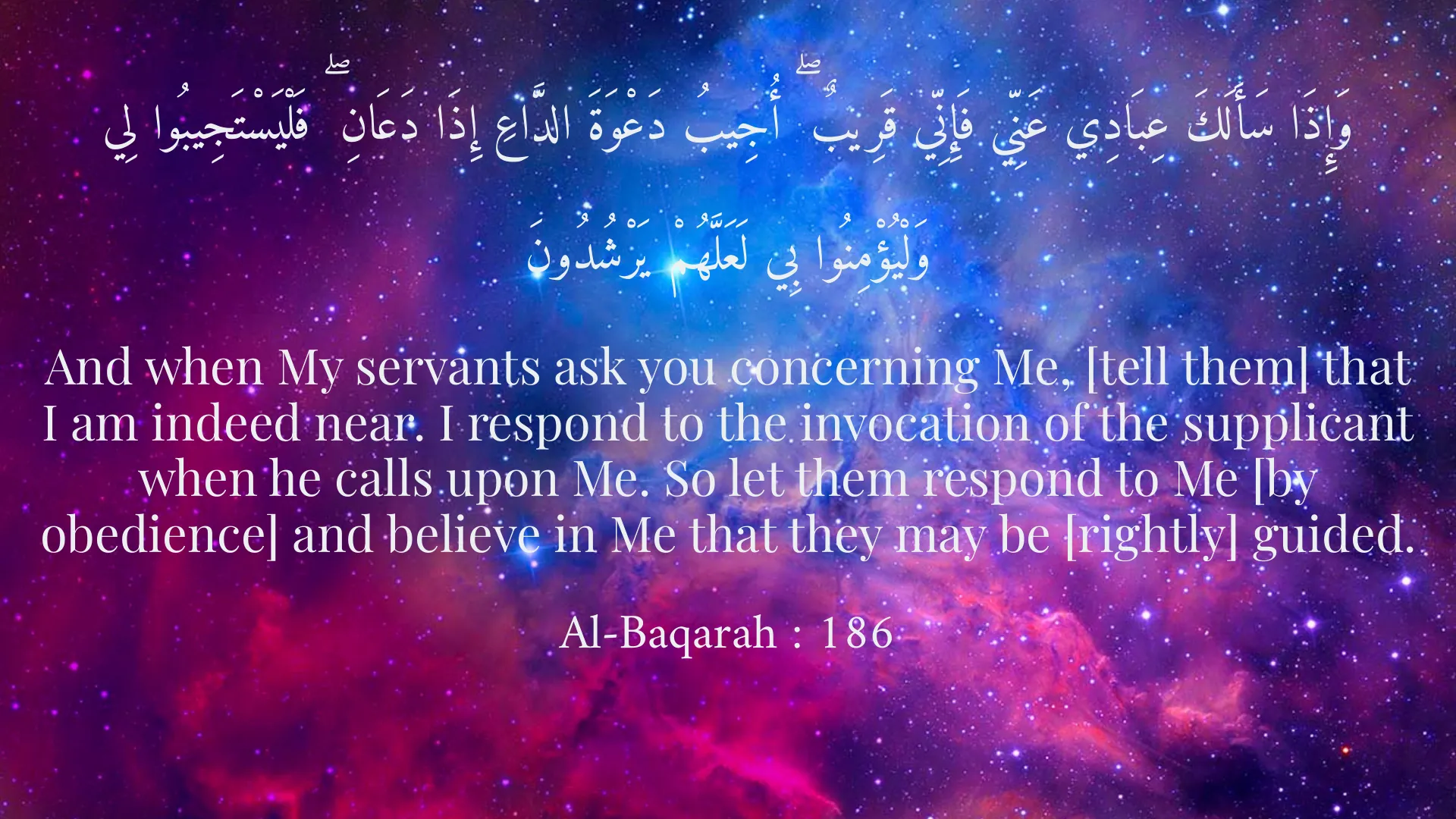
وَإِذَا سَأَلَكَ عِبَادِي عَنِّي فَإِنِّي قَرِيبٌ ۖ أُجِيبُ دَعْوَةَ الدَّاعِ إِذَا دَعَانِ ۖ فَلْيَسْتَجِيبُوا لِي وَلْيُؤْمِنُوا بِي لَعَلَّهُمْ يَرْشُدُونَ
And when My servants ask you concerning Me, [tell them] that I am indeed near. I respond to the invocation of the supplicant when he calls upon Me. So let them respond to Me [by obedience] and believe in Me that they may be [rightly] guided.
Al-Baqarah : 186
وَقَالَ رَبُّكُمُ ادْعُونِي أَسْتَجِبْ لَكُمْ ۚ إِنَّ الَّذِينَ يَسْتَكْبِرُونَ عَنْ عِبَادَتِي سَيَدْخُلُونَ جَهَنَّمَ دَاخِرِينَ
And your Lord says, 'Call upon Me; I will respond to you.' Indeed, those who disdain My worship will enter Hell [rendered] contemptible.
Ghafir : 60
ادْعُوا رَبَّكُمْ تَضَرُّعًا وَخُفْيَةً ۚ إِنَّهُ لَا يُحِبُّ الْمُعْتَدِينَ
Call upon your Lord in humility and secretly. Indeed, He does not like aggressors.
Al-A'raf : 55
Short Story
It is narrated that in ancient times, there was a pious and wise man who would go to his orchard every day. Before he began his work, he would spend a moment in solitude, supplicating to his Lord. His companions asked him why he always prayed before starting work. He smiled and said, "I know that this land and its seeds bear fruit only with the help of God, not by my own ability. My prayer is not for immediate results, but to remind myself of my constant need for the eternal divine power. In this remembrance, my heart finds peace and my soul is purified." And so, he found blessings in his work and life, sensing God's presence beside him at every moment, for his prayer was not just words, but the very state of his being.