Quranic Answer
Your question about balancing intellect ('Aql') and heart ('Qalb') is one of the most fundamental and profound inquiries in human and spiritual growth, addressed beautifully and meticulously in the Holy Quran. In the Quranic perspective, intellect and heart (which the Quran often refers to as 'Qalb' and its derivatives) are not opposing forces; rather, they are complementary, requiring harmony and balance to achieve true perfection and divine knowledge. This balance is the essence of wisdom and genuine insight, guiding humanity on the path of truth and the straight way. It helps individuals make sound decisions when facing life's challenges, ensuring these choices are both logical and stem from their deepest being. Indeed, a balanced life is almost impossible without the synchronization of these two essential components of human existence, potentially leading to extremism or negligence in various aspects of life, whether in daily decisions or spiritual and ethical stances. For true felicity, humanity needs the simultaneous guidance of intellect and the enlightenment of the heart to choose the right path and remain steadfast upon it. 'Intellect' ('Aql') in the Quran is a tool for comprehending divine signs within the universe and within oneself, for pondering creation, and for distinguishing truth from falsehood. The Quran repeatedly invites people to reflect, deliberate, use their intellect, and seek understanding. Verses such as "Afala ta'qiloon?" (Do you not reason?) or "Liqawmin ya'qiloon" (For a people who reason) indicate that employing the power of intellect is essential and emphasized for attaining faith and certainty. Intellect helps individuals grasp the astonishing order of existence, the wisdom inherent in divine laws, and the signs of God's power. This intellectual understanding strengthens the foundations of faith and prevents blind adherence. Intellect is like a lantern that illuminates the path, assisting humanity in choosing the right way and avoiding misguidance. Without intellect, understanding profound religious and philosophical concepts would be difficult, and one might easily fall prey to temptations and deceptions. Intellect is responsible for analysis, logical reasoning, and problem-solving. This ability enables us to make rational decisions and plan in the material world. The Holy Quran frequently advises humans to use their faculty of reason to attain knowledge of the truth. This knowledge applies not only to worldly matters but also to God and His greatness. By reflecting on divine signs, such as the creation of the heavens and the earth, the alternation of night and day, and the diversity of creatures, humans come to know the existence of a wise and powerful Creator. Such deep contemplation strengthens their faith and guides them toward perfection. In essence, intellect forms the foundation of divine knowledge and a profound understanding of Quranic teachings, allowing individuals to choose their life's path with complete insight and awareness, safeguarding them from deviation and error. Intellect helps us distinguish between good and bad, right and wrong, and benefit and harm, and thus, human responsibility and free choice are also built upon their ability to reason. On the other hand, the 'heart' ('Qalb') in the Quranic view is the center of spiritual perception, faith, emotions, intentions, and even inner insight. The Holy Quran considers the heart to be the place where faith resides, finds tranquility, and humbles itself. Verse 28 of Surah Ar-Ra'd: "Allatheena amanoo wa tatma'innu quloobuhum bidhikri Allahi 'ala bidhikri Allahi tatma'innu alquloobu" (Those who have believed and whose hearts are assured by the remembrance of Allah. Unquestionably, by the remembrance of Allah hearts are assured), clearly expresses the heart's role in spiritual peace and serenity. The heart can be 'saleem' (sound and pure from diseases) or 'mareedh' (diseased, filled with doubt, hypocrisy, arrogance, envy). True insight and perception come not merely from the eyes but from the heart, as stated in verse 46 of Surah Al-Hajj: "Fa innaha la ta'ma alabsaru wa lakin ta'ma alquloobu allatee fee assudoor" (For indeed, it is not eyes that are blinded, but blinded are the hearts which are in the breasts). This verse indicates that true perception and deep understanding stem from the heart's soundness and awakening. The heart is the seat of faith, love, awe, and hope. It is this emotional and intuitive force that gives meaning to human life and guides one toward goodness and noble values. Without the heart, human life becomes dry and spiritless, proceeding solely based on pure logic, which can lead to selfishness and indifference towards others. The heart can be a source of inspiration and insight in cases where intellect alone cannot grasp the truth. This existential dimension of humanity calls one to spirituality and proximity to God. Nurturing the heart through remembrance of God (dhikr), prayer (salat), recitation of the Quran, and good deeds purifies it from impurities and bestows insight. A sound heart is humanity's inner compass, keeping one on the right path and helping them comprehend realities beyond dry logic through intuition and inner vision. It guides individuals to listen to their inner voice in decision-making, in addition to their intellect. A pure and vibrant heart is a source of mercy, compassion, and humanity, without which even the most logical decisions might lack soul and meaning. How to achieve balance? The Holy Quran teaches us that the balance between intellect and heart is achieved through the strong connection of both to the absolute truth (God). This connection involves three essential steps: 1. Reflection and Contemplation (Function of Intellect): One must ponder the creation of the heavens and the earth, the signs of God in existence, and the verses of the Quran. This deep reflection awakens the intellect and directs it towards a divine orientation. Verses 190-191 of Surah Al Imran are a prime example of this connection: "Inna fee khalqi alssamawati wa alardi wa ikhtilafi allayli wa alnnahari laayatil liooli alalbabi. Allatheena yadhkuroona Allaha qiyaman wa qu'oodan wa 'ala junoobihim wa yatafakkaroon fi khalqi alssamawati wa alardi rabbana ma khalaqta hadha batila subhanaka faqina 'adhaba alnnar" (Indeed, in the creation of the heavens and the earth and the alternation of the night and the day are signs for those of understanding. Those who remember Allah while standing or sitting or [lying] on their sides and reflect upon the creation of the heavens and the earth, [saying], 'Our Lord, You have not created this in vain; exalted are You [above such a thing]; then protect us from the punishment of the Fire.'). This verse clearly shows that those of understanding (Uli al-Albab) both remember God (a function of the heart) and reflect on creation (an intellectual function). This harmony between remembrance (heart) and reflection (intellect) leads humans to knowledge and insight. Reflection and contemplation not only help humans understand truths but also smooth the path of life for them. This intellectual understanding helps one avoid ignorance and superstitions, allowing them to choose the correct path with full insight. Through deep and logical thinking, one can achieve a comprehensive understanding of the world and their place in it, which helps them make more informed decisions in life. Without this rational reflection, one might be trapped in the darkness of ignorance and blind imitation. 2. Remembrance of God (Function of Heart): As the verse from Surah Ar-Ra'd shows, the heart finds tranquility through the remembrance of God. Dhikr (verbal and heartfelt remembrance of God), prayer (salat), recitation of the Quran, and supplication (dua) polish the heart and cleanse it from impurities. A pure and tranquil heart gains greater capacity for perception and intuition and can better receive divine guidance. The remembrance of God brings peace to the heart and frees it from worldly anxieties and worries. This inner peace provides a fertile ground for the intellect to function better, as an intellect entangled in agitation and emotion cannot judge properly. Dhikr connects the heart to the primary source of wisdom and knowledge, which is God, and protects it from any deviation or arrogance. Dhikr is not merely repeating words but a heartfelt presence that strengthens the spiritual connection with the Creator. This connection fills the heart with divine light, preparing it to receive inspirations and unseen guidance. By strengthening the heart through dhikr and acts of worship, individuals will be able to resist temptations and carnal desires and make decisions that are not only logical but also ethically and spiritually sound. This function of the heart helps individuals remain steadfast on the path of truth and prevents them from deviating towards false paths. 3. Adherence to Revelation and Sharia: The Holy Quran is a guide that shows the path to balance. Acting upon divine commands and Quranic ethics protects the intellect from error and the heart from diseases. Divine revelation guides the intellect towards truths and purifies the heart through faith and piety. This adherence brings a sense of assurance and peace that is the ultimate result of balance. Sharia provides a framework within which intellect and heart can operate in harmony. For example, intellect dictates that justice is good, and Sharia provides practical ways to implement justice and guides the heart towards love and compassion. This is how one can lead a balanced and purposeful life. Divine revelation not only provides information and instructions to the intellect but also influences hearts, cleansing them from ignorance and arrogance. This adherence to divine teachings helps individuals avoid falling into the trap of misguidance and personal whims, and move towards perfection with full awareness. Sharia sets boundaries that save both the intellect from wandering and the heart from extremism and negligence, thus providing a clear path for human growth and elevation. Conclusion: Balance between intellect and heart in the Quran means having faith based on deep understanding and perception, and conduct that stems from sound logic and pure intention. A balanced person is both reflective and mindful; both knowledgeable and pious. This balance bestows insight and wisdom, enabling one to make the best decisions amidst life's complexities and achieve felicity in this world and the hereafter. This path is dynamic and continuous, requiring constant self-awareness, divine knowledge, and righteous deeds. With this approach, intellect and heart are not in opposition but are two wings that enable human flight towards truth and perfection. Achieving this balance not only transforms individual life but also positively impacts social relationships and the surrounding environment, helping individuals move towards noble human goals with peace and confidence. This equilibrium guarantees inner peace and guides humans through all stages of life.
Related Verses
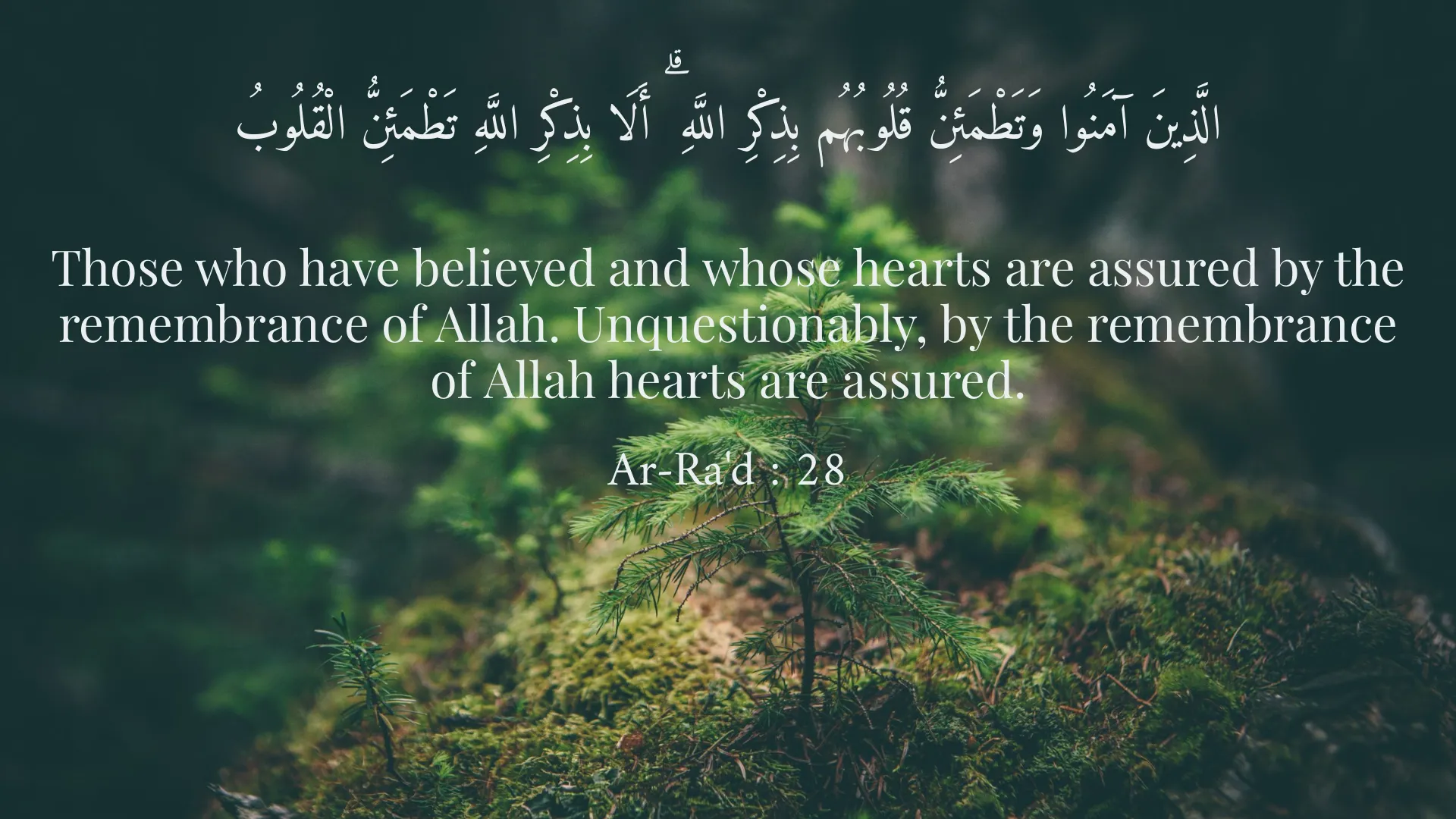
الَّذِينَ آمَنُوا وَتَطْمَئِنُّ قُلُوبُهُم بِذِكْرِ اللَّهِ ۗ أَلَا بِذِكْرِ اللَّهِ تَطْمَئِنُّ الْقُلُوبُ
Those who have believed and whose hearts are assured by the remembrance of Allah. Unquestionably, by the remembrance of Allah hearts are assured.
Ar-Ra'd : 28
إِنَّ فِي خَلْقِ السَّمَاوَاتِ وَالْأَرْضِ وَاخْتِلَافِ اللَّيْلِ وَالنَّهَارِ لَآيَاتٍ لِّأُولِي الْأَلْبَابِ
Indeed, in the creation of the heavens and the earth and the alternation of the night and the day are signs for those of understanding.
Al-Imran : 190
الَّذِينَ يَذْكُرُونَ اللَّهَ قِيَامًا وَقُعُودًا وَعَلَىٰ جُنُوبِهِمْ وَيَتَفَكَّرُونَ فِي خَلْقِ السَّمَاوَاتِ وَالْأَرْضِ رَبَّنَا مَا خَلَقْتَ هَٰذَا بَاطِلًا سُبْحَانَكَ فَقِنَا عَذَابَ النَّارِ
Those who remember Allah while standing or sitting or [lying] on their sides and reflect upon the creation of the heavens and the earth, [saying], 'Our Lord, You have not created this in vain; exalted are You [above such a thing]; then protect us from the punishment of the Fire.'
Al-Imran : 191
أَفَلَمْ يَسِيرُوا فِي الْأَرْضِ فَتَكُونَ لَهُمْ قُلُوبٌ يَعْقِلُونَ بِهَا أَوْ آذَانٌ يَسْمَعُونَ بِهَا ۖ فَإِنَّهَا لَا تَعْمَى الْأَبْصَارُ وَلَٰكِن تَعْمَى الْقُلُوبُ الَّتِي فِي الصُّدُورِ
Have they not traveled through the earth and have hearts by which to reason and ears by which to hear? For indeed, it is not eyes that are blinded, but blinded are the hearts which are in the breasts.
Al-Hajj : 46
Short Story
In the city of Shiraz, there lived a young man named Farid, known for his sharp mind and critical intellect. He often prided himself on his logical arguments, believing that intellect alone was the key to all truths. One day, he approached an old dervish, renowned for his inner peace and profound wisdom. Farid challenged him, saying, "O wise one, what is the path to true understanding? Is it through the relentless pursuit of knowledge, or the quiet contemplation of the heart?" The dervish smiled gently and replied, "My son, imagine a ship sailing the vast ocean. Intellect is the sturdy mast and strong sails that catch the wind, propelling the ship forward with purpose and direction. But the heart, my dear Farid, is the compass; a compass that guides the ship through the darkest nights and fiercest storms, ensuring it stays on course towards its true destination. Without the compass, even the mightiest sails will wander aimlessly; and without the sails, the compass remains still. True understanding blossoms when the mind, ever seeking knowledge, is humbly guided by the serene wisdom of a purified heart." Farid pondered these words deeply. From that day on, he not only sought knowledge but also nurtured his heart with remembrance of God and kindness towards others, realizing that true wisdom lies in the harmonious journey of both intellect and intuition.