Quranic Answer
In the rich teachings of the Holy Quran, a profound and effective approach to individual growth and perfection is presented, fundamentally rooted in focusing on oneself and one's unique path before God. Comparing oneself to others often opens doors to envy, arrogance, despair, or dissatisfaction – emotions that are primary obstacles to true growth and inner peace. The Quran, by emphasizing individual accountability, gratitude for divine blessings, purification of the soul (Tazkiyah al-Nafs), and striving for excellence (Ihsan) in every action, shows a way for humans to progress on the path of elevation and flourishing without needing to measure themselves against external benchmarks or the achievements of others. One of the most crucial principles emphasized in the Quran is the concept of "individual accountability." Every human being will be questioned on the Day of Judgment solely for their own deeds and intentions, not for the deeds of others or their relative success compared to them. Allah states in Surah Al-An'am, verse 164: "And no bearer of burdens will bear the burden of another." This verse clearly indicates that each person's path of growth is unique to them, and the burden of responsibility rests solely on their shoulders. Therefore, focusing on correcting and improving one's personal actions is more beneficial than any unnecessary comparison with others. True growth occurs when an individual is honest with themselves, recognizes their weaknesses, and strives to overcome them, rather than feeling false superiority or unwarranted inferiority by looking at others. This inward focus frees one from the endless cycle of comparison. Another principle repeatedly emphasized in the Quran is "Tazkiyah al-Nafs," or the purification of the soul and inner self. In Surah Ash-Shams, verses 9 and 10, it is stated: "He has succeeded who purifies it, and he has failed who corrupts it." Real growth begins from within; from cleansing the heart of moral vices such as envy, malice, arrogance, and replacing them with virtues like humility, love, generosity, and patience. This process of purification is entirely internal and personal, bearing no relation to the performance or status of others. One should strive to be a better version of their past self, not to be better than someone else. This focus on internal self-improvement takes an individual out of the exhausting cycle of competition and pointless comparisons, guiding them toward lasting peace and progress. "Gratitude" (Shukr) is also a fundamental Quranic principle for achieving growth without comparison. In Surah Ibrahim, verse 7, it is stated: "If you are grateful, I will surely increase you [in favor]." When a person focuses on the blessings Allah has bestowed upon them, rather than what others possess and they do not, doors of growth and blessings open up for them. Gratitude helps individuals see what they have and enjoy it with inner contentment, instead of looking with regret at what they lack or what others have. This positive outlook directs an individual's energy toward their own progress and frees them from the trap of comparisons that usually lead to dissatisfaction and regret. Furthermore, the concept of "Ihsan" (benevolence and performing deeds in the best possible manner) in the Quran is a criterion for growth rooted in sincere intention and excellent performance, not in competition with others. Allah loves those who do good and rewards them. Ihsan means performing your action as if you see Allah, and if you do not see Him, then know that He sees you. This level of quality and sincerity in action not only leads to better outcomes but also contributes to an individual's spiritual and moral growth, as they strive for the pleasure of their Lord and their own perfection, not for others' admiration or to surpass them. Another important point is understanding the "differences and diversity" in divine creation. Allah has created human beings with varying abilities, talents, and circumstances. In Surah Ar-Rum, verse 22, we read: "And among His signs is the creation of the heavens and the earth and the diversity of your languages and your colors. Indeed, in that are signs for those of knowledge." These differences are signs of Allah's power and wisdom and do not imply absolute superiority or inferiority. Every individual has their unique path and mission. Accepting this diversity helps an individual focus on their strengths and unique path instead of blind imitation or regretting what others have. This understanding leads to the growth of self-confidence and inner self-sufficiency, freeing individuals from the trap of unfair comparisons. Ultimately, growth without comparison, from the Quranic perspective, means an inner journey whose goal is the pleasure of Allah, purification of the self, gratitude, and continuous effort to become the best version of oneself, without regard for external appearances or competition with others. This path leads to inner peace, contentment, and true, sustainable progress, as it places the criterion for success not in superiority over others, but in proximity to the absolute divine perfection. Focusing on these Quranic principles empowers individuals to confidently and honorably walk their own path, independent of any external comparison, and reach the pinnacle of flourishing.
Related Verses
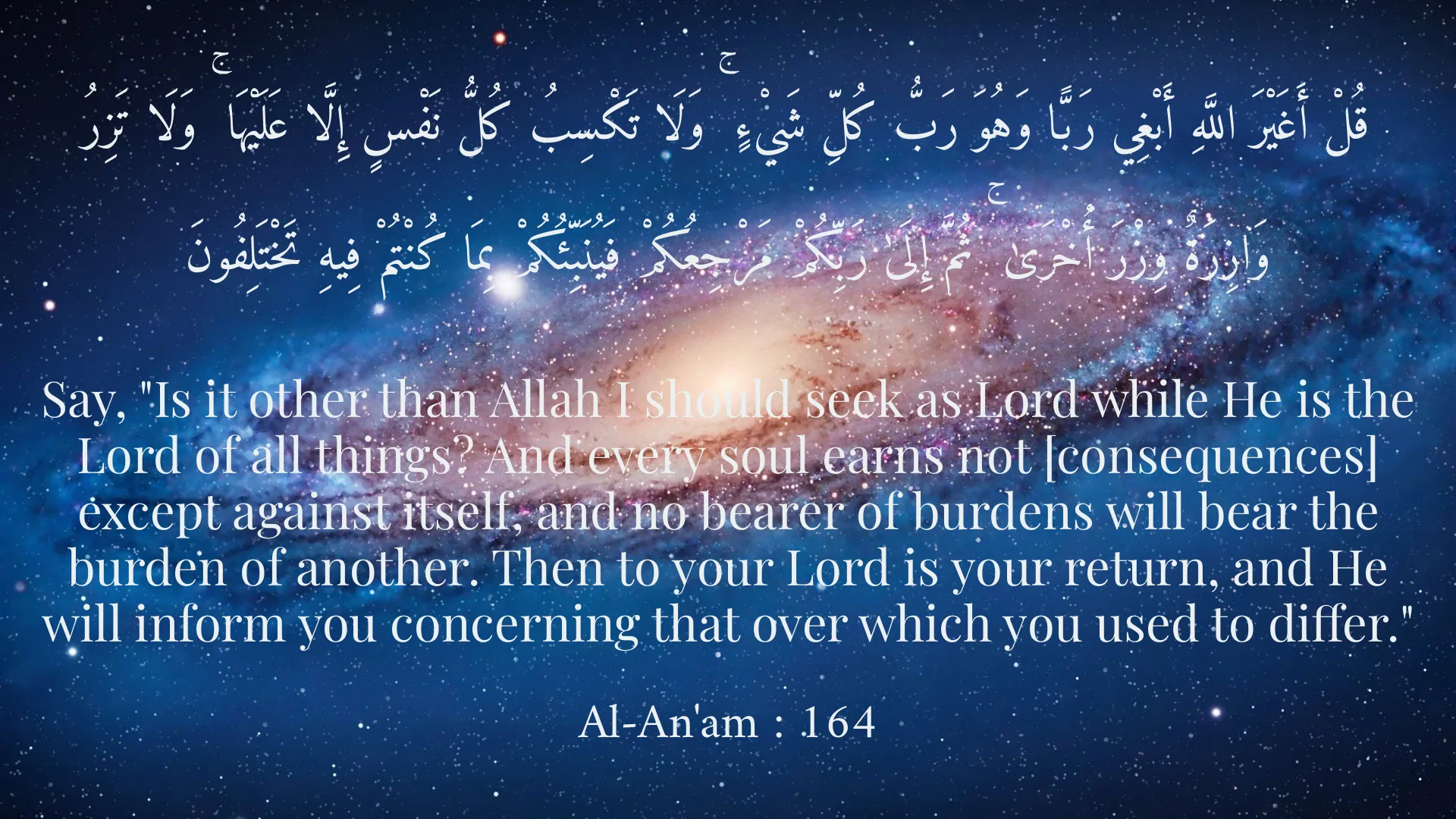
قُلْ أَغَيْرَ اللَّهِ أَبْغِي رَبًّا وَهُوَ رَبُّ كُلِّ شَيْءٍ ۚ وَلَا تَكْسِبُ كُلُّ نَفْسٍ إِلَّا عَلَيْهَا ۚ وَلَا تَزِرُ وَازِرَةٌ وِزْرَ أُخْرَىٰ ۚ ثُمَّ إِلَىٰ رَبِّكُمْ مَرْجِعُكُمْ فَيُنَبِّئُكُمْ بِمَا كُنْتُمْ فِيهِ تَخْتَلِفُونَ
Say, "Is it other than Allah I should seek as Lord while He is the Lord of all things? And every soul earns not [consequences] except against itself, and no bearer of burdens will bear the burden of another. Then to your Lord is your return, and He will inform you concerning that over which you used to differ."
Al-An'am : 164
قَدْ أَفْلَحَ مَن زَكَّاهَا
He has succeeded who purifies it,
Ash-Shams : 9
وَقَدْ خَابَ مَن دَسَّاهَا
And he has failed who corrupts it.
Ash-Shams : 10
وَإِذْ تَأَذَّنَ رَبُّكُمْ لَئِن شَكَرْتُمْ لَأَزِيدَنَّكُمْ ۖ وَلَئِن كَفَرْتُمْ إِنَّ عَذَابِي لَشَدِيدٌ
And [remember] when your Lord proclaimed, 'If you are grateful, I will surely increase you [in favor]; but if you deny, indeed, My punishment is severe.'
Ibrahim : 7
Short Story
It is narrated that a king once asked a dervish, 'Why do you, with all your poverty, possess more joy and peace than I, the king, who has the world at my disposal?' The dervish smiled and replied, 'O King! You see your wealth outside yourself, and your heart is constantly striving to accumulate and guard it, hence you are not at ease. But I have found my wealth and contentment within myself. I have no need for comparison, nor fear of loss. True growth lies in nurturing what you possess within, and cleansing your heart from greed and desire for what others have. In this way, free from any comparison, you attain peace and perfection.' The king took heed of this wisdom and understood that the true treasure is the treasure of contentment and satisfaction, which lies within the human being.