Quranic Answer
Lasting peace is the deep-seated desire of every human being. In today's tumultuous world, where stress and anxiety often seem an inseparable part of life, finding inner tranquility and serenity is not just a wish but a vital necessity. The Holy Quran, as the divine word and a comprehensive guide for life, clearly outlines paths to achieve this true and enduring peace. This peace is not merely an outward calm or indifference to problems; rather, it is a profound state of inner contentment, heartfelt assurance, and an unbreakable connection with the ultimate source of peace, Allah Almighty. The most fundamental and pivotal Quranic teaching for attaining peace is the "remembrance of Allah" (Dhikr). Allah Almighty states in Surah Ar-Ra'd (13:28): "Those who have believed and whose hearts are assured by the remembrance of Allah. Unquestionably, by the remembrance of Allah hearts are assured." This noble verse identifies the core axis for achieving tranquility. Dhikr is not merely the repetition of words but a heartfelt presence and continuous awareness of Allah's grandeur, mercy, and power. When the human heart connects with the remembrance of Allah, it becomes liberated from worldly anxieties and links itself to an inexhaustible source of power and tranquility. This connection acts like an anchor, keeping the ship of human existence stable and steadfast in the tumultuous ocean of worldly events. Dhikr can encompass reciting the Quran, performing prayers (Salah), supplications (Du'a), contemplating creation, and even simply maintaining a heartfelt awareness of the Divine presence in every moment of life. The deeper this connection, the more enduring the peace. This deep connection truly lightens the burden from an individual's shoulders, replacing it with assurance and certainty. Besides the remembrance of Allah, the Quran also points to other practical tools that play a crucial role in acquiring peace. One such tool is "patience" (Sabr). In Surah Al-Baqarah (2:153), we read: "O you who have believed, seek help through patience and prayer. Indeed, Allah is with the patient." Patience signifies enduring hardships, resilience in the face of adversities, and steadfastness on the path of truth. Understanding that every difficulty has a wisdom behind it, and every hardship is temporary, can bring immense comfort. Patience helps individuals not to surrender to despair and hopelessness when facing challenges, enabling them to view issues with a long-term perspective. Patience broadens one's perspective, enabling them to accept the passage of time and changes in circumstances as a natural part of life. This acceptance itself is a great source of peace, as much unrest arises from resisting realities and not accepting divine decree. "Prayer" (Salah), as the pillar of religion and the believer's ascension, is also a tremendous source of peace. Salah offers an opportunity to disconnect from the clamor of the world and enter the presence of the Lord. In prayer, one communes with their Creator, seeks His help, and renews their spiritual strength. The rhythmic movements, calming invocations, and focus on meanings all contribute to creating a state of inner calm and serenity. Prayer is not merely a religious obligation but a healing balm for the human soul, reducing stress and fostering a sense of security and peace. Regular performance of Salah helps individuals establish a consistent spiritual rhythm in their lives, which in turn leads to emotional and mental stability. Another effective factor in achieving lasting peace is "trust in Allah" (Tawakkul). Tawakkul means complete reliance on divine planning and entrusting one's affairs to Him after having exerted the necessary effort. In Surah At-Talaq (65:3), we read: "And whoever relies upon Allah – He is sufficient for him. Indeed, Allah will accomplish His purpose. Allah has already set for everything a [decreed] extent." When a person knows that the reins of all matters are in the hands of an infinite power, and that He is the best Disposer of affairs, a significant burden is lifted from their shoulders, and unnecessary worries dissipate. Tawakkul does not imply inaction; rather, it means fulfilling one's duty with utmost effort and then entrusting the outcome to God. This perspective minimizes anxiety arising from uncertainties and brings about reassurance. When an individual knows they have done their best and left the rest to God, there is no room for worry or regret, and this brings deep peace. Achieving lasting peace is also contingent upon "contentment" (Qana'ah) and gratitude. The Quran teaches us that this world is transient, and what is with Allah is lasting and more enduring. Excessive attachment to worldly manifestations is the root of many anxieties and disturbances. When an individual is content with what they possess and does not pursue insatiable greed and covetousness, a heavy burden is lifted from their shoulders. Being content with divine decree and striving to express gratitude for blessings, even the smallest ones, opens doors of peace for the human soul. Contentment does not mean depriving oneself of lawful pleasures, but rather not being excessively attached to them and understanding worldly limitations. This perspective frees individuals from the endless race for more, allowing them to enjoy what they have and live in peace. Inner peace is not solely attained through connection with God; the quality of one's interactions with others also plays a significant role. The Quran places great emphasis on "good character" (Husn al-Khuluq) and "service to creation." Helping the needy, forgiveness, compassion, and forbearance towards others not only yield rewards in the Hereafter but also, in this world, imbue human life with a sense of satisfaction, meaning, and purpose, thereby enhancing one's peace. Feeling useful and making a positive impact on the lives of others is a powerful source of spiritual tranquility. This social and ethical approach moves an individual beyond self-centeredness and transforms them into a committed social being, consequently experiencing a greater sense of security and belonging. In essence, lasting peace from the Quran's perspective is a comprehensive and multi-faceted journey that begins in the heart and continues with righteous deeds. Its central axis is the "constant remembrance and presence of Allah" in one's life, strengthened through prayer, supplication, Quranic recitation, and contemplation of divine verses. "Patience" in facing difficulties, "trust" in Allah's absolute power, "contentment" with one's provision, and "benevolence" towards creation are all vital components of this peace puzzle. By adhering to these Quranic teachings, individuals can find a secure anchorage of inner peace for themselves amidst life's storms, and attain true felicity. This peace is a divine gift bestowed upon sincere seekers, helping them experience a life full of blessings and contentment. This path is not one that ends quickly but is a continuous spiritual journey where each step adds to the depth and stability of peace, bringing the individual closer to eternal felicity.
Related Verses
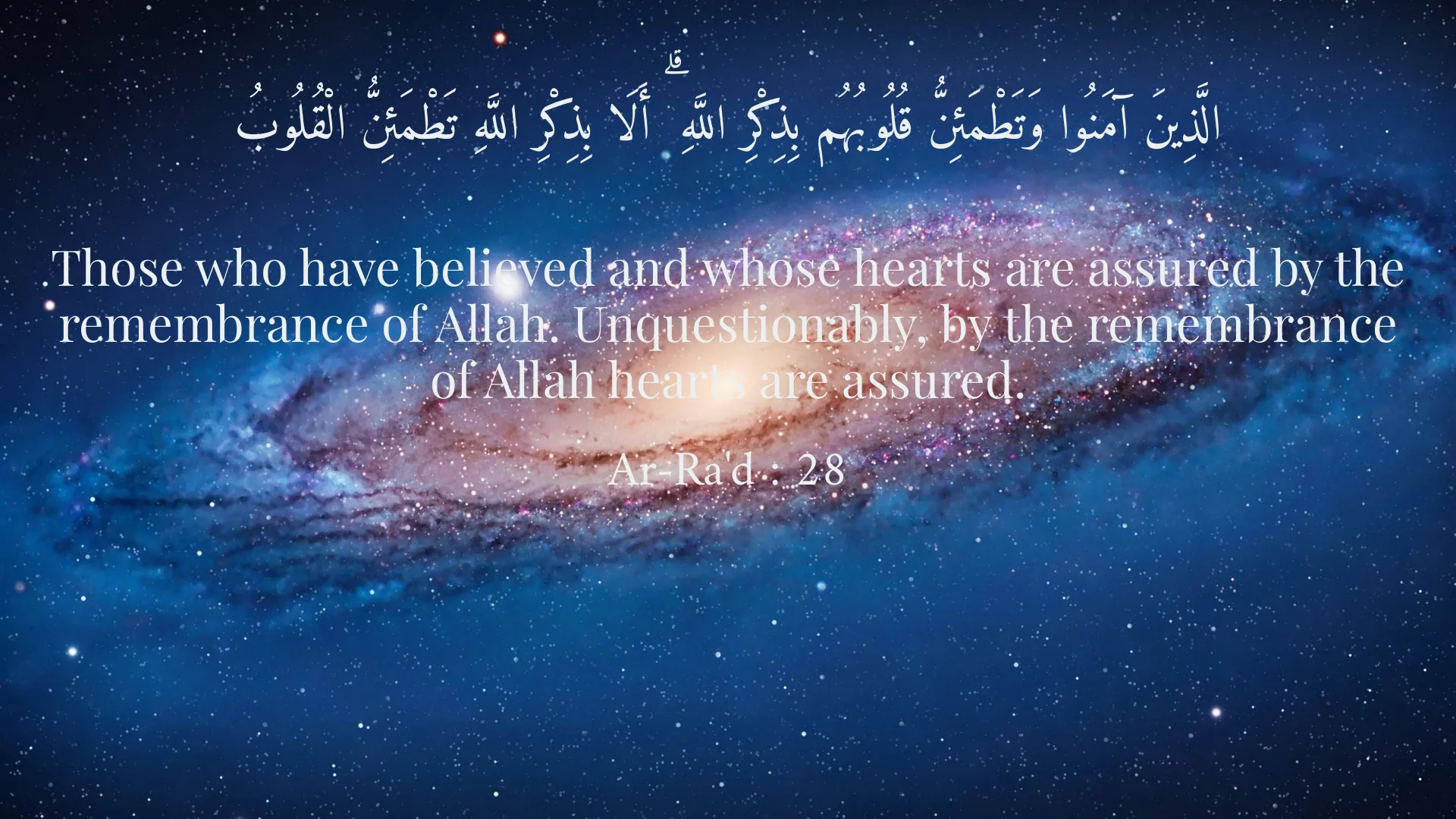
الَّذِينَ آمَنُوا وَتَطْمَئِنُّ قُلُوبُهُم بِذِكْرِ اللَّهِ ۗ أَلَا بِذِكْرِ اللَّهِ تَطْمَئِنُّ الْقُلُوبُ
Those who have believed and whose hearts are assured by the remembrance of Allah. Unquestionably, by the remembrance of Allah hearts are assured.
Ar-Ra'd : 28
يَا أَيُّهَا الَّذِينَ آمَنُوا اسْتَعِينُوا بِالصَّبْرِ وَالصَّلَاةِ ۚ إِنَّ اللَّهَ مَعَ الصَّابِرِينَ
O you who have believed, seek help through patience and prayer. Indeed, Allah is with the patient.
Al-Baqarah : 153
وَمَن يَتَوَكَّلْ عَلَى اللَّهِ فَهُوَ حَسْبُهُ ۚ إِنَّ اللَّهَ بَالِغُ أَمْرِهِ ۚ قَدْ جَعَلَ اللَّهُ لِكُلِّ شَيْءٍ قَدْرًا
And whoever relies upon Allah – He is sufficient for him. Indeed, Allah will accomplish His purpose. Allah has already set for everything a [decreed] extent.
At-Talaq : 3
Short Story
It is recounted that a great king, possessing immense grandeur and majesty, was once seated in his palace, his heart restless from the turmoils of kingship and the fear of losing power. At that moment, he looked out the window and saw a dervish sitting cheerfully by a stream, free from any sorrow, eating a piece of dry bread and murmuring the remembrance of God to himself. The king was astonished by his state and said to his vizier, "Look at this dervish! Though he possesses nothing, his heart is at peace, while I, with all this dominion and wealth, am constantly in fear and trembling. What is the secret of this peace?" The wise vizier replied, "O King, he has entrusted his heart to God and embraced contentment, whereas you have clung to the world, and your greed for more dominion and wealth leaves you no rest. Peace is not in the abundance of possessions, but in detachment from creation and connection with the Creator." The king took heed of this counsel and realized that true peace lies not in attachment to the world, but in liberation from its chains and reliance on the One Creator.