Quranic Answer
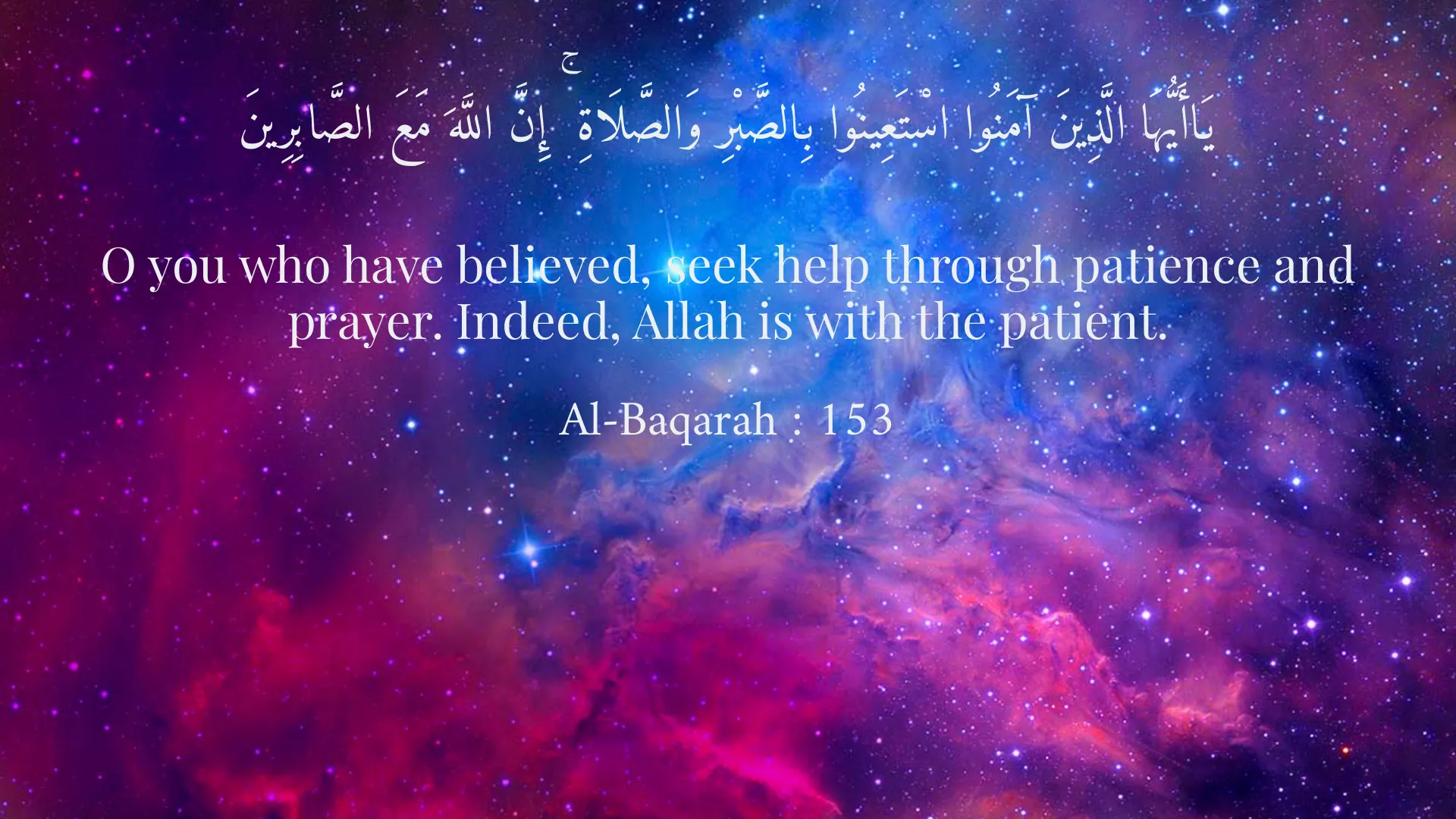
In this busy age, where everyone faces challenges of time scarcity and daily stress, achieving mental peace has become an essential need. The hustle and bustle of daily life often leave individuals feeling exhausted, overwhelmed, and anxious. The relentless demands on our time, whether from work, family obligations, or social commitments, can create a constant state of stress that not only affects our mental health but also our physical well-being. In this context, finding pathways to tranquility becomes crucial. One of the most profound sources guiding millions in their quest for peace is the Holy Quran, which clearly outlines methods to attain tranquility and patience. Specifically, in Surah Al-Baqarah, verse 153, Allah instructs the believers to seek help through patience and prayer. The verse states: 'O you who have believed, seek help through patience and prayer. Indeed, Allah is with the patient.' This profound statement emphasizes the importance of worship, particularly prayer, as a means to cultivate inner peace. In a world rife with distractions and stressors, prayer serves as a direct link to God, providing solace and relief for the troubled heart. It is a time dedicated to reflection, humility, and submission, helping to anchor individuals amidst chaos. In many cultures, the act of prayer is intertwined with rituals and traditions that can further enhance its calming effects. For instance, the physical movements involved in performing prayer, such as prostration and bowing, have been shown to have a grounding effect on one's mental state. These rituals remind practitioners of their dependence on a higher power and their place in the universe, fostering humility and reducing the overwhelming sense of self-importance that often accompanies daily life’s stresses. Additionally, the recitation of phrases such as 'Astaghfirullah,' which translates to 'I seek forgiveness from Allah,' can help ease daily tensions and anxieties. This practice encourages individuals to pour their worries into their prayers, letting go of the burdens they carry. The act of seeking forgiveness serves not only as an avenue for spiritual cleansing but also as a reminder that everyone is fallible and that it is okay to make mistakes. Invoking such phrases can have a soothing effect on the mind, helping to dissipate feelings of guilt, regret, or anxiety. Moreover, another verse in Surah Al-Imran, verse 173, reminds us that 'What befalls you is not but a trial.' This acknowledgment of life’s challenges acts as a pivotal reminder of the transient nature of our struggles and the ultimate purpose behind them. Understanding that difficulties are a natural part of the human experience can foster resilience and encourage a more profound level of acceptance. This perspective invites believers to view their trials as opportunities for growth, urging them to maintain discipline and strive for truth. Incorporating practices beyond prayer, such as meditation, can further enhance one’s ability to attain peace. Mindfulness meditation is a technique that encourages focusing on the present moment, effectively reducing anxiety about the past or future. It is advisable to sit in a quiet location, where distractions are minimal, and dedicate a few minutes to deep breathing. Breathe in deeply and slowly through your nose, allowing your abdomen to expand, then exhale through your mouth, letting go of any negative thoughts or distractions. By concentrating solely on your breath, you cultivate inner awareness and share a vital connection with your mental state. The benefits of meditation are supported by numerous studies and anecdotes alike, indicating that regular practice can lead to improved emotional resilience, greater clarity of thought, and an enhanced sense of well-being. It trains the mind to respond rather than react to stress, fostering a sense of calm even in chaotic situations. The principles of mindfulness closely align with many religious teachings which encourage living in the moment and being aware of one's thoughts and feelings without judgment. Furthermore, creating a personalized routine that includes these spiritual practices can serve as an anchor amidst the demands of daily life. This routine might involve a combination of prayer, meditation, and reflective reading of holy texts, guiding one back to the core principles of faith, patience, and perseverance. Such a structure helps individuals maintain focus, providing a refuge where they can retreat and recharge. Establishing a community for support can also greatly enhance these practices. Surrounding oneself with like-minded individuals who share similar values fosters a sense of belonging and reinforces commitment to the journey toward mental peace. Engaging in group prayers, discussions about faith, or shared meditative practices not only offers encouragement but also provides opportunities for collective growth. It can alleviate feelings of isolation, reminding individuals that they are not alone in their struggles. Moreover, one should not underestimate the importance of maintaining a healthy lifestyle as a complementary approach to achieving mental peace. Regular physical exercise, a balanced diet, and adequate sleep have substantial effects on an individual’s mental state. Physical activity is known to release endorphins, which can alleviate feelings of stress and anxiety, while a nutritious diet fuels the body and mind, ensuring optimal functioning. In conclusion, achieving mental peace is both a spiritual and practical pursuit. By harnessing the teachings of the Quran and integrating spiritual practices such as prayer, meditation, and community support, individuals can cultivate a profound sense of inner tranquility. The dynamic interplay between faith and mental well-being highlights the need for a holistic approach that encompasses both spiritual and physical dimensions of life. In this busy age, dedicating time to these practices offers a cherished opportunity to reconnect with our intrinsic calm, enabling us to navigate life with greater resilience, clarity, and peace.
Related Verses
يَاأَيُّهَا الَّذِينَ آمَنُوا اسْتَعِينُوا بِالصَّبْرِ وَالصَّلَاةِ ۚ إِنَّ اللَّهَ مَعَ الصَّابِرِينَ
O you who have believed, seek help through patience and prayer. Indeed, Allah is with the patient.
Al-Baqarah : 153
مَا أَصَابَكَ مِنْ حَسَنَةٍ فَلِلهِ وَمَا أَصَابَكَ مِنْ سَيِّئَةٍ فَمِن نَّفْسِكَ ۚ وَأَرْسَلْنَاكَ لِلنَّاسِ رَسُولًا ۗ وَكَفَى بِاللَّهِ شَهِيدًا
Whatever good befalls you is from Allah, and whatever evil befalls you is from yourself. And We have sent you, [O Muhammad], as a messenger to the people, and sufficient is Allah as Witness.
Al-Imran : 173
Short Story
One day, a young man named Ahmad was in search of peace in his busy life. He often visited the mosque and focused deeply during his prayers. One day, while praying, he felt that all his tensions and problems were fading away. After prayer, he decided to dedicate more time to worship and supplication. Gradually, he found true peace and joy in his life and was able to face life's challenges better.