Quranic Answer
Bitter and difficult experiences are an unavoidable part of the human journey, and few are safe from the harms of misfortune and painful challenges. Losing loved ones, emotional setbacks, professional failures, or even experiences that evoke a sense of injustice within us can inflict deep wounds on our souls and minds. However, Islam, with its profound and wise perspective on the nature of human existence and the purpose of creation, teaches us that these hardships not only need not lead to despair and annihilation but also hold immense potential for spiritual growth and perfection. The Holy Quran, this guiding book, provides clear solutions and fundamental principles that, by following them, we can find light for a brighter future from the depths of past darkness and attain higher levels of spiritual awakening. The first and perhaps most crucial step on this path is accepting the truth that all sufferings and hardships are part of divine decree and tests from Allah. The Holy Quran explicitly states that humans are tested to gauge their faith and reveal their true essence. In Surah Al-Baqarah, verse 155, Allah says: "And We will surely test you with something of fear and hunger and a loss of wealth and lives and fruits, but give good tidings to the patient." This verse reminds us that calamities are not for punishment but for our purification and elevation. When we understand this Quranic perspective, we no longer see ourselves as victims of circumstances but rather view every challenge as an opportunity to strengthen our faith and patience. This outlook forms the core framework for transforming bitterness into spiritual growth, as it allows us to seek the hidden divine wisdom in every situation. The second step is to practice beautiful patience (sabr jameel). Patience, from a Quranic viewpoint, does not merely mean enduring suffering passively; it encompasses steadfastness, perseverance, and refraining from complaining to others. This patience is accompanied by complete reliance and trust in Allah. Verse 156 of Surah Al-Baqarah, a continuation of the previous verse, indicates that the patient ones are those who, "when disaster strikes them, say, 'Indeed we belong to Allah, and indeed to Him we will return.'" This statement represents the pinnacle of submission and contentment with divine decree. When one understands that everything originates from Allah and returns to Him, they realize that whatever they lose was never truly theirs, and its return to the Creator is pure wisdom. This belief helps an individual transcend despair and find an opportunity to soar in every fall. Patience is the bridge that leads us from the valley of despair to the peak of hope and from the darkness of bitterness to the light of wisdom. Third, pay attention to the divine promise regarding ease after hardship. The Holy Quran in Surah Ash-Sharh, verses 5 and 6, states: "For indeed, with hardship [will be] ease. Indeed, with hardship [will be] ease." This repetition emphasizes the certainty of this promise. This promise is a light in the heart of darkness, giving hope that the more bitter and difficult the experience, the greater the ease and relief awaiting. This belief is a powerful motivator to continue the journey and not stop in the face of challenges. Knowing that every unpleasant ending can be the beginning of a new, more fruitful chapter transforms past bitterness into the sweetness of hope and anticipation, inspiring us to walk with greater resolve on the path of growth. Fourth, turn to repentance (tawbah) and seek forgiveness if personal sins contributed to the bitter experience. If past bitterness stems from our mistakes or sins, the door of repentance is always open. Allah says in Surah Az-Zumar, verse 53: "Say, 'O My servants who have transgressed against themselves [by sinning], do not despair of the mercy of Allah. Indeed, Allah forgives all sins. Indeed, it is He who is the Forgiving, the Merciful.'" This verse is a powerful invitation to return and hope for divine forgiveness. Sincere repentance not only erases sins but also purifies the soul, preparing it for spiritual growth. It is a rebirth that gives a person the chance to learn from the past, start a new path, shed the burden of sins, and move towards Allah with a lighter heart. This process itself is the height of spiritual growth, where an individual builds a bridge to closeness with God from their mistakes. Fifth, contemplate and reflect on the hidden message within the bitter experience. Every event, good or bad, contains a lesson for us. We should ask ourselves: What did this experience teach me? What weaknesses did it reveal in me? What hidden strengths did it awaken? How can I use these lessons to build a better future and draw closer to Allah? This self-awareness and deep reflection are an integral part of the spiritual growth process. This contemplation helps us not just look at the surface of events but to understand their essence and wisdom, building a bridge from them to a deeper understanding of ourselves, the world, and the Creator. Finally, let us remember that spiritual growth is a continuous journey, not a destination. Bitter experiences can be powerful catalysts for this journey. They force us out of our comfort zones, make us look within, challenge our faith, and seek deeper meaning in life. Through patience, reliance on God, repentance, and reflection on divine verses, we can transform every past wound into a guiding star on our path of spiritual growth, soaring from the depths of hardship towards tranquility, insight, and divine proximity. This process transforms us into stronger, more aware individuals, full of faith and hope, who will be a source of inspiration and light not only for themselves but also for those around them and for society.
Related Verses
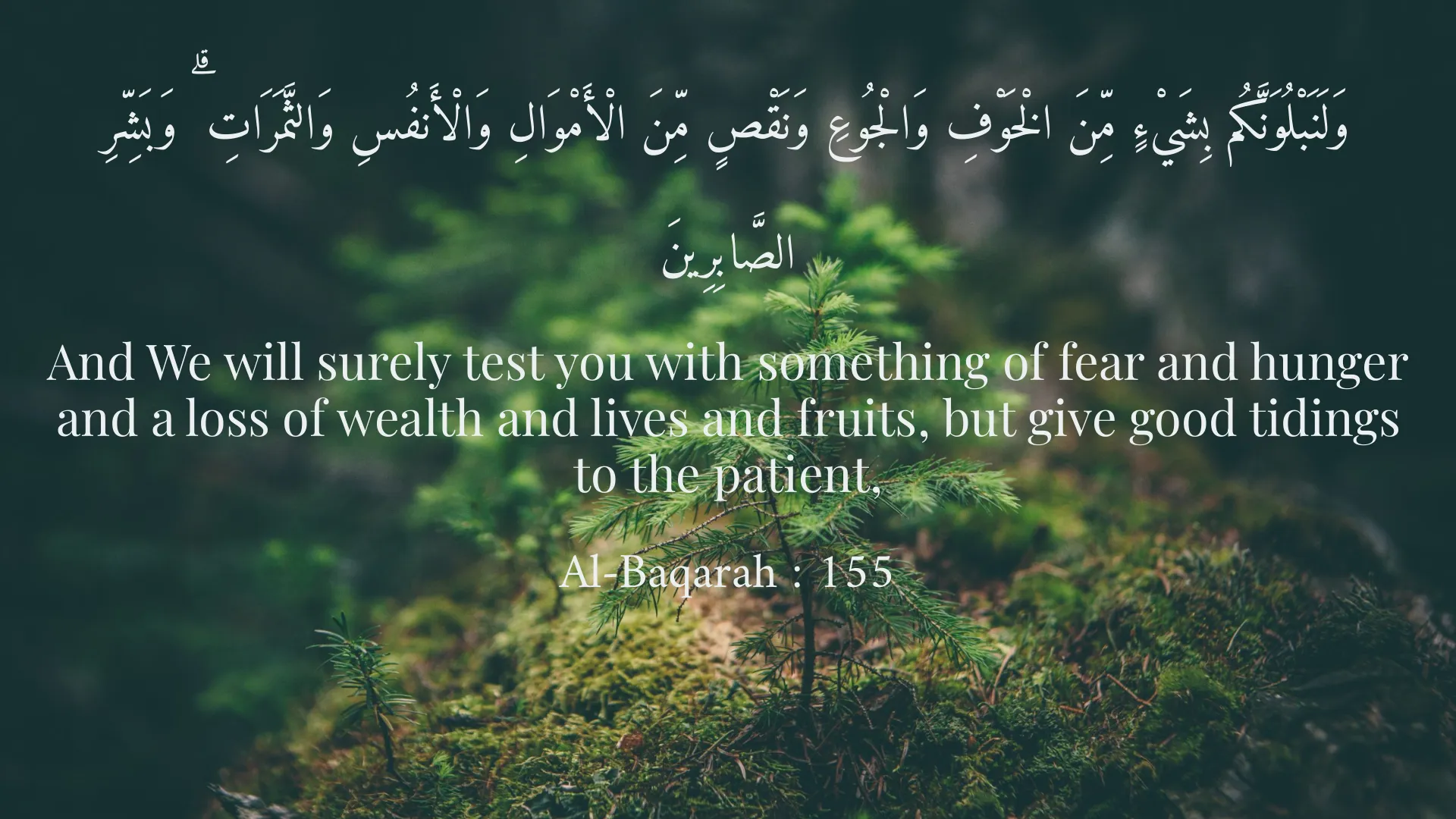
وَلَنَبْلُوَنَّكُم بِشَيْءٍ مِّنَ الْخَوْفِ وَالْجُوعِ وَنَقْصٍ مِّنَ الْأَمْوَالِ وَالْأَنفُسِ وَالثَّمَرَاتِ ۗ وَبَشِّرِ الصَّابِرِينَ
And We will surely test you with something of fear and hunger and a loss of wealth and lives and fruits, but give good tidings to the patient,
Al-Baqarah : 155
الَّذِينَ إِذَا أَصَابَتْهُم مُّصِيبَةٌ قَالُوا إِنَّا لِلَّهِ وَإِنَّا إِلَيْهِ رَاجِعُونَ
Who, when disaster strikes them, say, "Indeed we belong to Allah, and indeed to Him we will return."
Al-Baqarah : 156
فَإِنَّ مَعَ الْعُسْرِ يُسْرًا
For indeed, with hardship [will be] ease.
Ash-Sharh : 5
إِنَّ مَعَ الْعُسْرِ يُسْرًا
Indeed, with hardship [will be] ease.
Ash-Sharh : 6
قُلْ يَا عِبَادِيَ الَّذِينَ أَسْرَفُوا عَلَىٰ أَنفُسِهِمْ لَا تَقْنَطُوا مِن رَّحْمَةِ اللَّهِ ۚ إِنَّ اللَّهَ يَغْفِرُ الذُّنُوبَ جَمِيعًا ۚ إِنَّهُ هُوَ الْغَفُورُ الرَّحِيمُ
Say, "O My servants who have transgressed against themselves [by sinning], do not despair of the mercy of Allah. Indeed, Allah forgives all sins. Indeed, it is He who is the Forgiving, the Merciful."
Az-Zumar : 53
Short Story
Once upon a time, a wealthy merchant named 'Bahram' lost all his precious goods in a fierce storm on his way back from a long journey. His ship sank, and Bahram reached the shore with only wet clothes and a broken heart. The bitterness of this event enveloped him so much that he suffered for days and nights from pain and despair. One day, while he was lamenting in a corner of a mosque, a wise old man, with a kind smile and eyes full of serenity, approached him. The old man, who knew Bahram, said: 'O Bahram, I know your heart has turned bitter from this incident, but have you ever considered that perhaps Allah has lifted a burden from your shoulders so that your heart may be lighter for His remembrance?' Bahram looked at him in surprise and said: 'How can that be? I have lost everything!' The wise old man smiled and continued: 'Perhaps this emptying of your hands will guide you to a filling of your heart. How many are there who, with abundant possessions, have hearts empty of God's remembrance and lack peace. But you are now light, with no attachment save to your Lord.' Bahram did not understand these words at first, but after a period of contemplation and detachment from worldly clamor, he sought out the old man and devoted himself to worship and reflection alongside him. Gradually, the bitterness left his being, replaced by a deep peace and new knowledge. He understood that true wealth is not in possessions, but in the knowledge of God and peace of heart. From then on, Bahram lived a simple life and spent the rest of his days in devotion and serving creation, achieving spiritual growth from this bitter experience that no wealth could buy. He always told others that Allah sometimes takes things from us to give us better things, things made of light and peace that are never found in the worldly market.