Quranic Answer
Achieving true inner contentment is a profound spiritual journey for which the Holy Quran provides comprehensive and clear guidance. This contentment is a state of peace and assurance of the heart that remains resilient against the adversities of the world and transcends material attachments. The Quran clarifies that this tranquility is found not in the abundance of wealth or status, but in a deep connection with the Creator of the universe and adherence to His teachings. The first, and perhaps most crucial, step towards inner contentment is the 'remembrance of Allah (Dhikr)'. In Surah Ar-Ra’d, verse 28, Allah explicitly states: "الَّذِينَ آمَنُوا وَتَطْمَئِنُّ قُلُوبُهُمْ بِذِكْرِ اللَّهِ ۗ أَلَا بِذِكْرِ اللَّهِ تَطْمَئِنُّ الْقُلُوبُ" (Those who have believed and whose hearts are assured by the remembrance of Allah. Unquestionably, by the remembrance of Allah hearts are assured.) This verse indicates that the primary source of tranquility and inner contentment lies in a constant and intimate connection with the Lord. The remembrance of Allah is not merely the repetition of words; it encompasses reflection on divine verses, performing prayers with full presence of heart, supplication, and contemplating His infinite greatness and power. When a person keeps the remembrance of Allah alive in their heart, feelings of loneliness, fear, and anxiety dissipate because they know an absolute power supports them, and nothing happens without His will. This sense of assurance is an unparalleled source of peace that no wealth or power can replace. Continuous communion with Allah through prayer, supplication, and recitation of the Quran not only provides a sense of closeness and support but also allows one to lighten the heavy burden of worldly concerns and connect to a source of infinite power and wisdom. The deeper and more sincere this connection, the more stable and genuine the inner contentment will be. This inner peace enables a person to face life's challenges and tribulations with a divine and calming perspective, embracing divine wisdom and destiny instead of succumbing to despair. The second step is 'patience (Sabr) and reliance upon Allah (Tawakkul)'. Life is full of trials and challenges. In Surah Al-Baqarah, verse 153, we read: "يَاأَيُّهَا الَّذِينَ آمَنُوا اسْتَعِينُوا بِالصَّبْرِ وَالصَّلَاةِ ۚ إِنَّ اللَّهَ مَعَ الصَّابِرِينَ" (O you who have believed, seek help through patience and prayer. Indeed, Allah is with the patient.) Patience means enduring hardships calmly, without despair or complaint, and remaining steadfast on the path of truth. When a person is patient, they do not lose heart in the face of problems; instead of despairing, they seek solutions and do not neglect divine assistance. Complementary to patience is reliance (Tawakkul). In Surah At-Tawbah, verse 51, it is stated: "قُل لَّن يُصِيبَنَا إِلَّا مَا كَتَبَ اللَّهُ لَنَا هُوَ مَوْلَانَا ۚ وَعَلَى اللَّهِ فَلْيَتَوَكَّلِ الْمُؤْمِنُونَ" (Say, "Nothing will ever befall us except what Allah has decreed for us; He is our Protector." And upon Allah let the believers rely.) Tawakkul means entrusting the outcome of matters to Allah after undertaking necessary efforts. The belief that destiny is in Allah's hands and that He wills the best for His servants lifts a heavy burden of worries from a person’s shoulders. When an individual truly relies on Allah, they are freed from anxiety about the future and know that everything that happens is ultimately good, even if it appears unpleasant. This reliance allows a person to fulfill their duties with peace of mind and not fear the outcome, knowing that Allah is the best planner. This perspective not only helps reduce stress but also empowers individuals to adapt to life changes with greater flexibility and feel content in any situation. Thirdly, 'gratitude and appreciation (Shukr)' is vital. The Quran repeatedly emphasizes gratitude for divine blessings. Gratitude shifts a person's perspective from what they lack to what they possess. When an individual sees the small and large blessings in their life and is grateful for them, their heart becomes filled with contentment. This gratitude is a form of acceptance and satisfaction with the current state, even if it is not perfect. For example, in Surah Ibrahim, verse 7, we read: "لَئِن شَكَرْتُمْ لَأَزِيدَنَّكُمْ وَلَئِن كَفَرْتُمْ إِنَّ عَذَابِي لَشَدِيدٌ" (If you are grateful, I will surely increase you [in favor]; but if you deny, indeed, My punishment is severe.) Gratitude not only leads to an increase in blessings but also strengthens feelings of happiness and contentment within a person. This act causes one to focus on the abundance and blessings God has bestowed upon them, rather than on deficiencies, and this focus fills the heart with peace and satisfaction. Finally, 'righteous deeds and benevolence towards others' also play a significant role in achieving inner contentment. When a person performs good deeds and helps others, they gain a sense of worth and purpose. Helping those in need, bringing joy to others, and striving to create good in society all contribute to a sense of self-satisfaction and knowing that one's life is not aimless. These actions not only benefit others but also return to the individual, filling their heart with peace and contentment. In Surah Al-Isra, verse 7, we read: "إِنْ أَحْسَنتُمْ أَحْسَنتُمْ لِأَنفُسِكُمْ ۖ وَإِنْ أَسَأْتُمْ فَلَهَا" (If you do good, you do good for yourselves; and if you do evil, it is for yourselves.) This verse clearly indicates that the outcome of a person's actions returns to them, and doing good is a path to attaining inner peace and contentment. In summary, true inner contentment stems from a balanced life where the connection with Allah is prioritized, challenges are met with patience and reliance, blessings are gratefully acknowledged, and righteous deeds serve society and oneself.
Related Verses
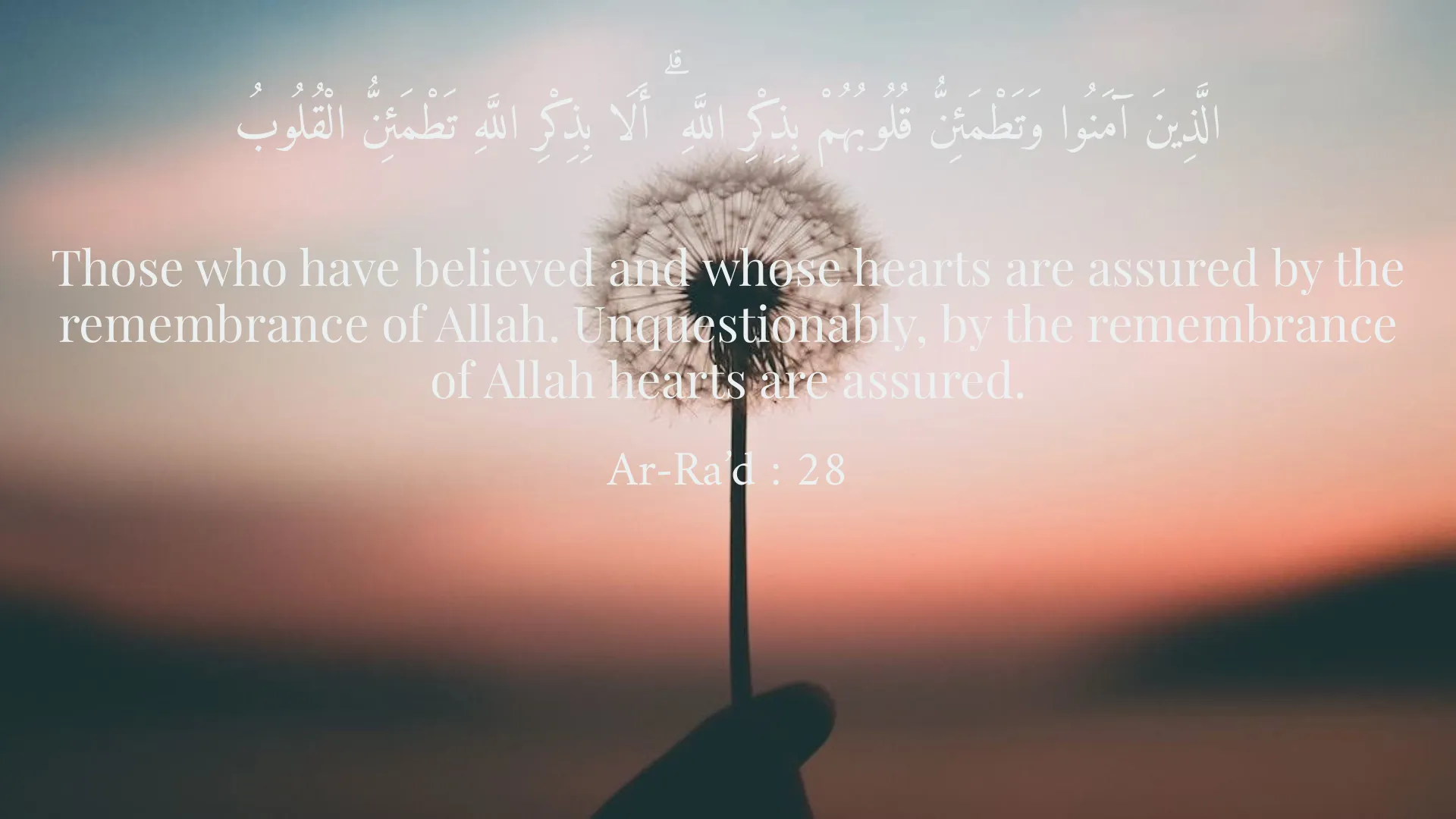
الَّذِينَ آمَنُوا وَتَطْمَئِنُّ قُلُوبُهُمْ بِذِكْرِ اللَّهِ ۗ أَلَا بِذِكْرِ اللَّهِ تَطْمَئِنُّ الْقُلُوبُ
Those who have believed and whose hearts are assured by the remembrance of Allah. Unquestionably, by the remembrance of Allah hearts are assured.
Ar-Ra’d : 28
يَاأَيُّهَا الَّذِينَ آمَنُوا اسْتَعِينُوا بِالصَّبْرِ وَالصَّلَاةِ ۚ إِنَّ اللَّهَ مَعَ الصَّابِرِينَ
O you who have believed, seek help through patience and prayer. Indeed, Allah is with the patient.
Al-Baqarah : 153
قُل لَّن يُصِيبَنَا إِلَّا مَا كَتَبَ اللَّهُ لَنَا هُوَ مَوْلَانَا ۚ وَعَلَى اللَّهِ فَلْيَتَوَكَّلِ الْمُؤْمِنُونَ
Say, "Nothing will ever befall us except what Allah has decreed for us; He is our Protector." And upon Allah let the believers rely.
At-Tawbah : 51
Short Story
It is narrated that in ancient times, there was a very wealthy and powerful king, yet he was always unhappy and restless. He had a wise and pious vizier. One day, the king asked his vizier, 'With all the wealth and power I possess, why do I never find true peace and contentment? I am always searching for something I don't know what it is!' The vizier kindly replied, 'O King, inner contentment is within and cannot be bought with gold and jewels. One day, I was walking on a path and saw a dervish sitting on the ground, wearing old clothes. But his face radiated peace, and he looked at the sky with a smile. I asked him, 'O dervish, what do you possess that makes you so joyful?' The dervish replied, 'I possess nothing but what the Merciful God has bestowed upon me. I have not tied my heart to this world, and I am grateful for everything I have. Every morning when I wake up, just the fact that I can breathe and utter the remembrance of God is enough for me.' The king pondered this story and understood that true contentment lies not in possession, but in gratitude and releasing attachments. From then on, the king also turned to remembrance and gratitude, and gradually tasted the true flavor of peace.