Quranic Answer
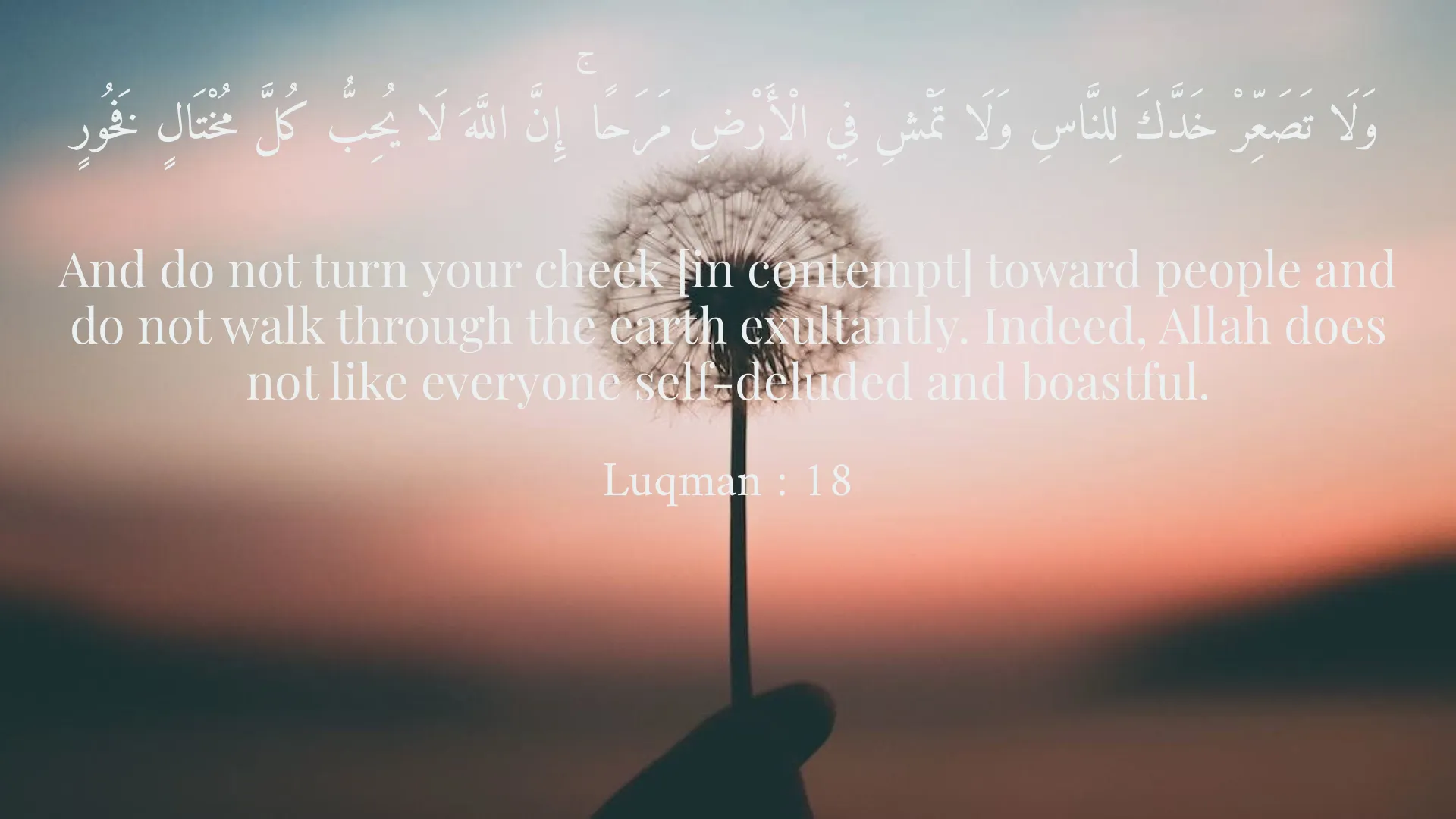
Pride is often viewed as a negative spiritual trait, a vice that can lead individuals down a path of misguidance and ultimately, ruin. While many personalities and cultures may glorify self-confidence and self-assertion, pride transcends these notions and enters the realm of arrogance, fostering discontent and separation from others. Allah, in His infinite wisdom, warns us against the dangers of pride through the teachings of the Holy Quran, emphasizing the importance of humility and compassion towards one another. In this article, we will explore the scriptural foundations regarding pride, its implications on our daily lives, and actionable steps to cultivate a humble spirit in contrast to a prideful heart. The Quran lays down clear directives concerning pride and arrogance. In Surah Luqman, verse 18, Allah issues a profound warning against such behaviors, encouraging believers to treat others with kindness and respect while avoiding arrogance. The verse proclaims, "And do not turn your cheek [in contempt] toward people and do not walk through the earth exultantly. Indeed, Allah does not like everyone self-deluded and boastful." This powerful admonition underscores the fact that Allah harbors no affection for those who indulge in self-satisfaction or boastfulness. The self-deluded may suffer from an inflated sense of self-importance that blinds them to their flaws and shortcomings. The ramifications of pride can be catastrophic, leading individuals to believe they are superior to others, which can result in harmful behavior and the deterioration of relationships. As humans, filled with imperfections and flaws, we must recognize that every success or blessing bestowed upon us originates from Allah. Acknowledging this fundamental truth is critical in our journey to sidestep the pitfall of pride. It operates on the premise that we are merely intermediaries for Allah's will, and any achievements we claim are ultimately His doing. Moreover, in Surah Al-Hijr, verse 39 showcases the severe consequences of pride as illustrated through the story of Iblis. Cast to hell for his arrogance and refusal to submit to Allah’s command, Iblis serves as a stark reminder of the perils inherent in pride. His narrative reveals that such haughty behavior not only jeopardizes one's spiritual journey but can also result in eternal suffering and disconnection from the Divine. To cultivate an attitude of humility, it is imperative to reflect continuously on Allah’s blessings in our lives. One practical method is to keep a daily journal where we can document these blessings. By doing this, we ingrain a mindset of gratitude that allows us to appreciate the countless favors bestowed upon us rather than focusing on self-aggrandizement. Recognizing our limitations and maintaining a humble outlook on ourselves fosters a harmonious balance that prevents the toxicity of pride from taking root in our hearts. Furthermore, Surah Al-An'am, verse 75 recounts the story of the Prophet Abraham, a figure exemplifying humility and servitude toward Allah. His unwavering dedication to humility serves as a guiding star for believers, directing us to embrace submission to Allah’s will over relentless self-importance. His life story emphasizes the importance of spiritual righteousness over worldly achievements, as the most esteemed individuals in the sight of Allah are those who remain humble and conscious of their limits. To successfully evade pride, one must engage in positive daily practices. Initiating the habit of reminding ourselves of Allah's power regularly reinforces the notion that all glory belongs to Him. This approach can take many forms, including prayer, contemplation, and even participation in community service activities. Such engagements foster an understanding of our roles as servants of Allah, underpinning an attitude of generosity towards others rather than competition or contempt. Additionally, surrounding oneself with individuals who embody humility is an effective means of combating pride. When immersed in a community that discourages arrogance and fosters kindness, our character is gradually molded. The importance of accountability in personal growth cannot be understated, as having compassionate friends and mentors can create a supportive environment where humility thrives. Even in mundane tasks and daily interactions, an individual can promote humility by practicing simple acts of kindness. Helping a neighbor in need, engaging with individuals from diverse backgrounds, or volunteering one's time speaks volumes about our character and disposition. Small acts of service can greatly shift our perspective from pride in our accomplishments to a greater appreciation of collective effort and community spirit. In conclusion, pride serves as a significant spiritual obstacle that can lead individuals astray and adversely impact personal relationships. However, the teachings found within the Holy Quran provide clarity and direction, emphasizing the virtues of humility, gratitude, and servitude. By embracing these teachings and reflecting consistently upon Allah's bounties, we can guard ourselves against the destructive nature of pride. Recognizing the transient and humble nature of our existence allows us to engage with others compassionately, thus fostering a spirit of love and understanding. It is through the concerted efforts of cultivating these virtues that we can aspire to live in accordance with Allah's will, leading to a fulfilling and righteous life free from the shackles of arrogance.
Related Verses
وَلَا تَصَعِّرْ خَدَّكَ لِلنَّاسِ وَلَا تَمْشِ فِي الْأَرْضِ مَرَحًا ۚ إِنَّ اللَّهَ لَا يُحِبُّ كُلَّ مُخْتَالٍ فَخُورٍ
And do not turn your cheek [in contempt] toward people and do not walk through the earth exultantly. Indeed, Allah does not like everyone self-deluded and boastful.
Luqman : 18
قَالَ رَبِّ فَبِمَا أَغْوَيْتَنِي لَأُقْعُدَنَّ لَهُمْ صِرَاطَكَ الْمُسْتَقِيمَ
He said, 'My Lord, because You have sent me astray, I will surely sit in wait for them on Your straight path.'
Al-Hijr : 39
Short Story
One day, a person decided to avoid pride. They resolved to do a good deed each day and help others. This behavior reminded them that no one is superior to another, and everyone stands equal before Allah. Over time, they felt their life filled with love and a deeper connection with God.