Quranic Answer
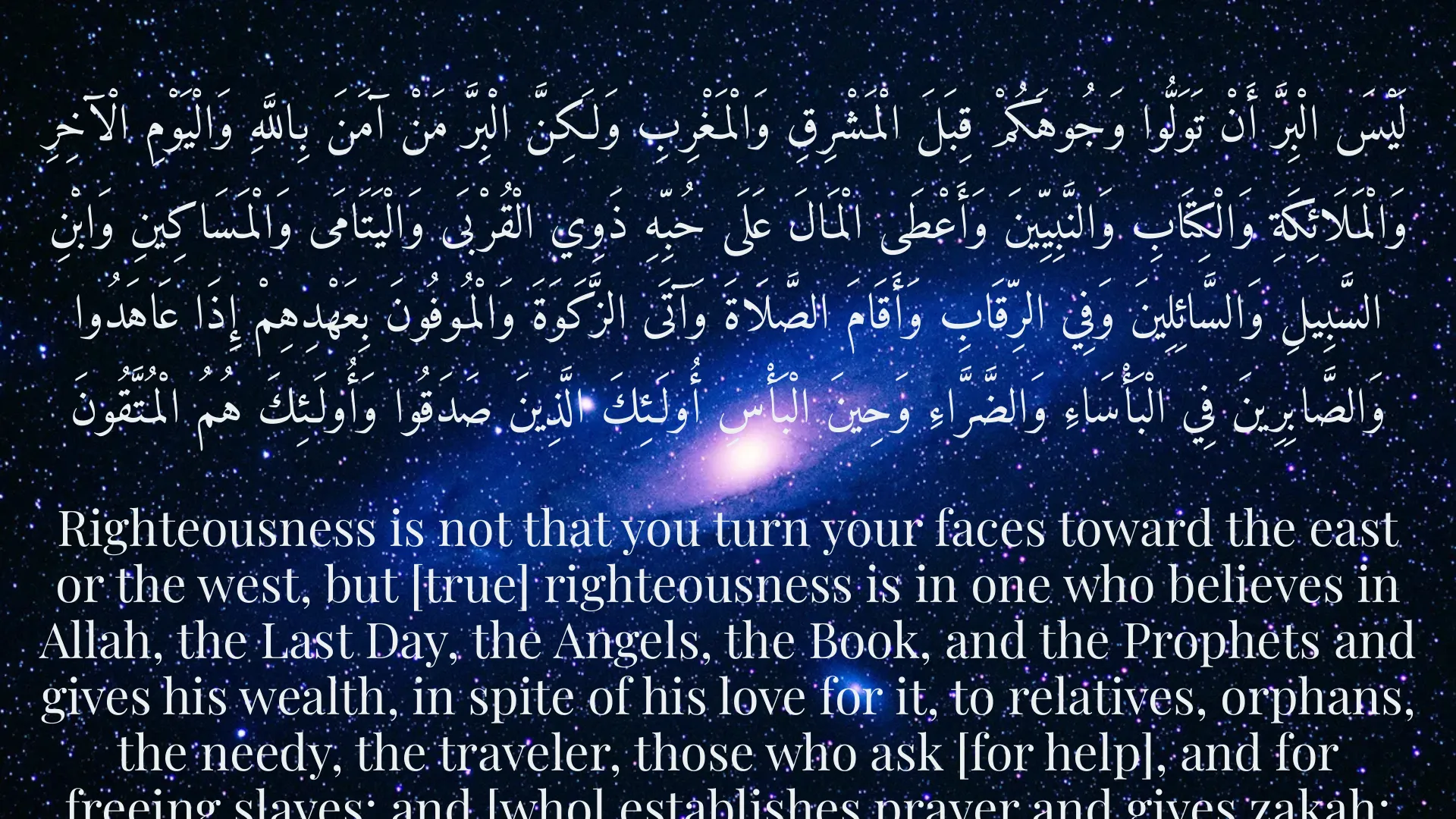
To be a good person, one must first understand the profound influence that moral teachings and ethical guidelines have on human behavior and interaction. In the Muslim tradition, one of the richest sources of such guidance is the Holy Quran, the verbatim word of God as revealed to Prophet Muhammad (peace be upon him). The Quran not only dictates spiritual beliefs but also lays down a comprehensive framework for moral conduct in everyday life. This holistic approach to ethics and morality is essential for anyone aspiring to be a good person. The Quran emphasizes benevolence as a cornerstone of righteous behavior. As illustrated in Surah Al-Baqarah, verse 177, the essence of true righteousness transcends mere rituals and external observances. It encapsulates a deep-seated belief in Allah, the Last Day, His angels, the Holy Books, and the prophets. This verse articulates that being a good person involves an inner transformation that reflects outwardly in our dealings with others, specifically through acts of charity and kindness. It compels us to give from our resources, even when it is difficult, thereby fostering a spirit of generosity and community support. The act of giving not just helps others in need but also enriches the giver's life with purpose and fulfillment. In a world often riddled with selfishness and disconnection, fostering virtues such as honesty and fairness is of paramount importance. The teachings in the Quran require believers to engage in ethical transactions and uphold justice in their dealings. Surah An-Nahl, verse 90 articulates this further by reminding us that Allah commands fairness: "Indeed, Allah commands you to render trusts to whom they are due and, when you judge between people, to judge with justice." By adhering to these principles, individuals cultivate trust and mutual respect in their relationships, creating environments where everyone feels valued and treated equitably. Further to treating others fairly, the Quran places significant emphasis on the rights of parents, emphasizing the importance of kindness and respect. Surah Al-Isra, verse 23 explicitly states, "And your Lord has decreed that you not worship except Him, and to parents, good treatment." In many cultures, parents are held in high esteem, and Islam beautifully reinforces this by making parental respect a divine mandate. A good person recognizes the sacrifices made by their parents and expresses gratitude through acts of kindness and support. This concept not only strengthens family bonds but also helps instill values of empathy and compassion in the next generation. The Quran also encourages fostering goodwill and friendship with neighbors and friends, which significantly contributes to community building. The teachings foster social cohesion, urging individuals to spread kindness and love in their interactions. Building friendships based on mutual respect and understanding enhances social ties and establishes a network of support where individuals can thrive emotionally and spiritually. Being a good person, as instructed by the Quran, goes beyond structured Islamic practices; it constitutes an ethos of compassion, integrity, and altruism. In contemporary society, with its myriad challenges and complexities, these teachings have never been more relevant. Daily interactions often entail navigating misunderstandings, conflicts, and disagreements; thus, employing the principles of justice and fairness can greatly mitigate these issues. A good person acts as a peacemaker, promoting dialogue and understanding rather than discord, thereby contributing to a more harmonious society. Additionally, the Quran emphasizes the significance of community service and social responsibility. Engaging in activities that uplift others, whether through volunteer work, educational support, or simply being there for someone in need, embodies the Quranic principles of charity and goodwill. Such acts not only benefit those on the receiving end but also nurture a sense of belonging and purpose within yourself, reinforcing the idea that we are all interconnected in this grand tapestry of life. To further foster goodness in our lives, self-discipline and continual self-improvement are essential. The journey to being a good person is perpetual and often requires introspection and a commitment to change. One must regularly evaluate their intentions and actions, striving to align themselves with the noble qualities espoused in the Quran. This might involve seeking forgiveness for past mistakes, reaffirming one’s commitment to honesty, or intentionally performing acts of kindness. The beauty of this process is that those who actively pursue goodness will find that such endeavors radiate back into their own lives, leading to peace, happiness, and fulfillment. In conclusion, the path to becoming a good person is a journey paved with the teachings of the Quran and the prophetic traditions. It entails a commitment to fairness, benevolence, respect for parents, and fostering love and kindness towards one another. By internalizing these values, individuals not only contribute to their communities but also enrich their own lives, finding joy and contentment in the service of others. The teachings of the Quran challenge us to rise above our own interests, to be agents of positive change, and to embody the values of compassion and justice in all our dealings. In doing so, we help to create a world that is not only better for others but also for ourselves.
Related Verses
لَيْسَ الْبِرَّ أَنْ تَوَلُّوا وَجُوهَكُمْ قِبَلَ الْمَشْرِقِ وَالْمَغْرِبِ وَلَكِنَّ الْبِرَّ مَنْ آمَنَ بِاللَّهِ وَالْيَوْمِ الْآخِرِ وَالْمَلَائِكَةِ وَالْكِتَابِ وَالنَّبِيِّينَ وَأَعْطَى الْمَالَ عَلَى حُبِّهِ ذَوِي الْقُرْبَى وَالْيَتَامَى وَالْمَسَاكِينِ وَابْنِ السَّبِيلِ وَالسَّائِلِينَ وَفِي الرِّقَابِ وَأَقَامَ الصَّلَاةَ وَآتَى الزَّكَوَةَ وَالْمُوفُونَ بِعَهْدِهِمْ إِذَا عَاهَدُوا وَالصَّابِرِينَ فِي الْبَأْسَاءِ وَالضَّرَّاءِ وَحِينَ الْبَأْسِ أُولَـئِكَ الَّذِينَ صَدَقُوا وَأُولَـئِكَ هُمُ الْمُتَّقُونَ
Righteousness is not that you turn your faces toward the east or the west, but [true] righteousness is in one who believes in Allah, the Last Day, the Angels, the Book, and the Prophets and gives his wealth, in spite of his love for it, to relatives, orphans, the needy, the traveler, those who ask [for help], and for freeing slaves; and [who] establishes prayer and gives zakah; [those who fulfill their] promise when they promise; and [those who are] patient in poverty and hardship and at the time of battle. It is those who have been true, and it is those who are the righteous.
Al-Baqarah : 177
إن الله يأمر بالعدل والإحسان وإيتاء ذي القربى وينهى عن الفحشاء والمنكر والبغي يعظكم لعلكم تذكّرون
Indeed, Allah commands you to render trusts to whom they are due and when you judge between people to judge with justice. Allah instructs you to give to your relatives, and forbids immorality and wrongful aggression. He admonishes you so that you may be reminded.
An-Nahl : 90
وَقَضَى رَبُّكَ أَلَّا تَعْبُدُوا إِلَّا إِيَّاهُ وَبِالْوَالِدَيْنِ إِحْسَانًا ۚ إِمَّا يَبْلُغَنَّ عِندَكَ الْكِبَرَ أَحَدُهُمَا أَوْ كِلَاهُمَا فَلَا تَقُل لَّهُمَا أُفٍّ وَلَا تَنْهَرْهُمَا وَقُل لَّهُمَا قَوْلًۭا كَرِيمًۭا
And your Lord has decreed that you not worship except Him, and to parents, good treatment. Whether one or both of them reach old age [while] with you, say not to them [so much as], 'uff,' and do not repel them but speak to them a noble word.
Al-Isra : 23
Short Story
One day, a man was sitting by the road, watching people pass by. A local manager asked him, 'Why are you sitting here?' The man replied, 'I am looking for kindness. Whenever someone passes by, I try to smile and greet them.' The manager, curious, said, 'Just a smile and a greeting?' The man replied, 'Yes, it can change someone's day.' From that day on, they both worked to promote kindness in their community.