Quranic Answer
Being kind is a prominent trait in human nature that is emphasized in the Quran and Islamic teachings. The concept of kindness extends far beyond mere acts of benevolence; it embodies an ethos that promotes harmony, respect, and compassion among individuals. Kindness serves as a foundation for building a compassionate society, making it essential for both personal growth and collective well-being. In exploring the significance of kindness through the lens of Islamic teachings, we can better understand its profound impact on our lives and society as a whole. ### The Importance of Being Kind to Oneself The journey toward kindness begins with the self. It is often said that one cannot genuinely extend kindness to others without first being kind to oneself. This notion is firmly rooted in Islamic teachings. Allah states in Surah Az-Zumar, verse 53: 'Say, O My servants who have believed, fear your Lord. For those who do good in this world is good, and the earth of Allah is spacious. Indeed, the patient will be given their reward without account.' This verse highlights the importance of self-compassion as a precursor to kindness towards others. By nurturing our well-being, we cultivate an inner landscape filled with patience and gratitude, which then radiates outward. Self-kindness involves acknowledging one’s own needs and giving oneself the grace to experience life in a fulfilling way. It encourages individuals to engage in positive self-talk, practice forgiveness of oneself, and establish healthy boundaries—a practice that is often neglected in the hustle and bustle of daily life. This self-care is not merely indulgent; it is essential for emotional and spiritual health, enabling individuals to foster deeper connections with others. ### The Call to Kindness Towards Others Once we cultivate kindness within ourselves, we inevitably become more capable of extending that kindness to others. The Quran instructs us on how to interact with fellow human beings. In Surah Al-Furqan, verse 63, it reads, 'And the servants of the Most Merciful are those who walk upon the earth humbly, and when the ignorant address them [harshly], they say, 'Peace.' This teaching emphasizes that kindness is closely tied to humility and patience. It calls for individuals to develop a demeanor that reflects respect and understanding, even in the face of hostility or ignorance. This attitude of humility can be transformative. It prompts us to listen rather than react, fostering an atmosphere of peace and understanding. It encourages us to confront challenges with grace, ensuring that our interactions reflect our values as Muslims. Responding to negativity with a calm demeanor can not only diffuse conflict but also inspire those around us to embrace similar behavior. The overall message is clear: treating others with kindness creates a ripple effect that spreads positivity and compassion throughout society. ### Acts of Service: The Core of Kindness Serving others is a vital aspect of kindness that is reinforced throughout Islamic scripture. Allah commands, 'O you who have believed, spend from the good things which you have earned and from that which We have produced for you from the earth' in Surah Al-Baqarah, verse 267. This verse calls upon believers to share their blessings with those in need. Acts of service strengthen our community ties and reinforce the values of generosity and empathy. Engaging in charitable acts, whether through financial assistance or volunteering time at community organizations, is a powerful way to practice kindness. When we dedicate resources to helping those in need, we not only improve the lives of others but also enrich our own lives. Studies show that helping others can lead to increased happiness, decreased feelings of loneliness, and a sense of purpose. In this way, the cycle of kindness is both fulfilling and sustainable, resulting in a more compassionate and understanding community. ### The Role of Prayer and Humility in Worship Finally, prayer and humility in worship serve as essential tools to cultivate kindness within ourselves. Allah assures us in Surah Al-Baqarah, verse 186: 'And if My servants ask you concerning Me, indeed I am near.' These divine assurances remind us of the importance of turning to Allah in our times of need, including the need for compassion and kindness towards others. Through sincere supplication, we can seek guidance to soften our hearts and strengthen our resolve to practice kindness. Worshiping Allah fosters a sense of humility that spills over into our interactions with others. Regular prayer acts as a reminder of our responsibilities towards humanity and cultivates an attitude of gratitude for what we have. Such practices instill a deeper understanding of our connection with the Creator and His creation, consequently enhancing our capacity for kindness. ### Conclusion: Building a Kind Society In conclusion, kindness is a multifaceted virtue that lies at the heart of Islamic teachings. By prioritizing self-kindness, engaging with humility towards others, performing acts of service, and deepening our worship, we can create a more compassionate world. The teachings of the Quran highlight that the essence of kindness is rooted in our relationship with Allah and extended to our fellow human beings. As we navigate the complexities of life, let us not forget the transformative power of kindness—it can heal wounds, foster understanding, and bridge divides. It is a trait that, if embraced by individuals, has the potential to transform societies for the better, crafting environments where love and respect thrive.
Related Verses
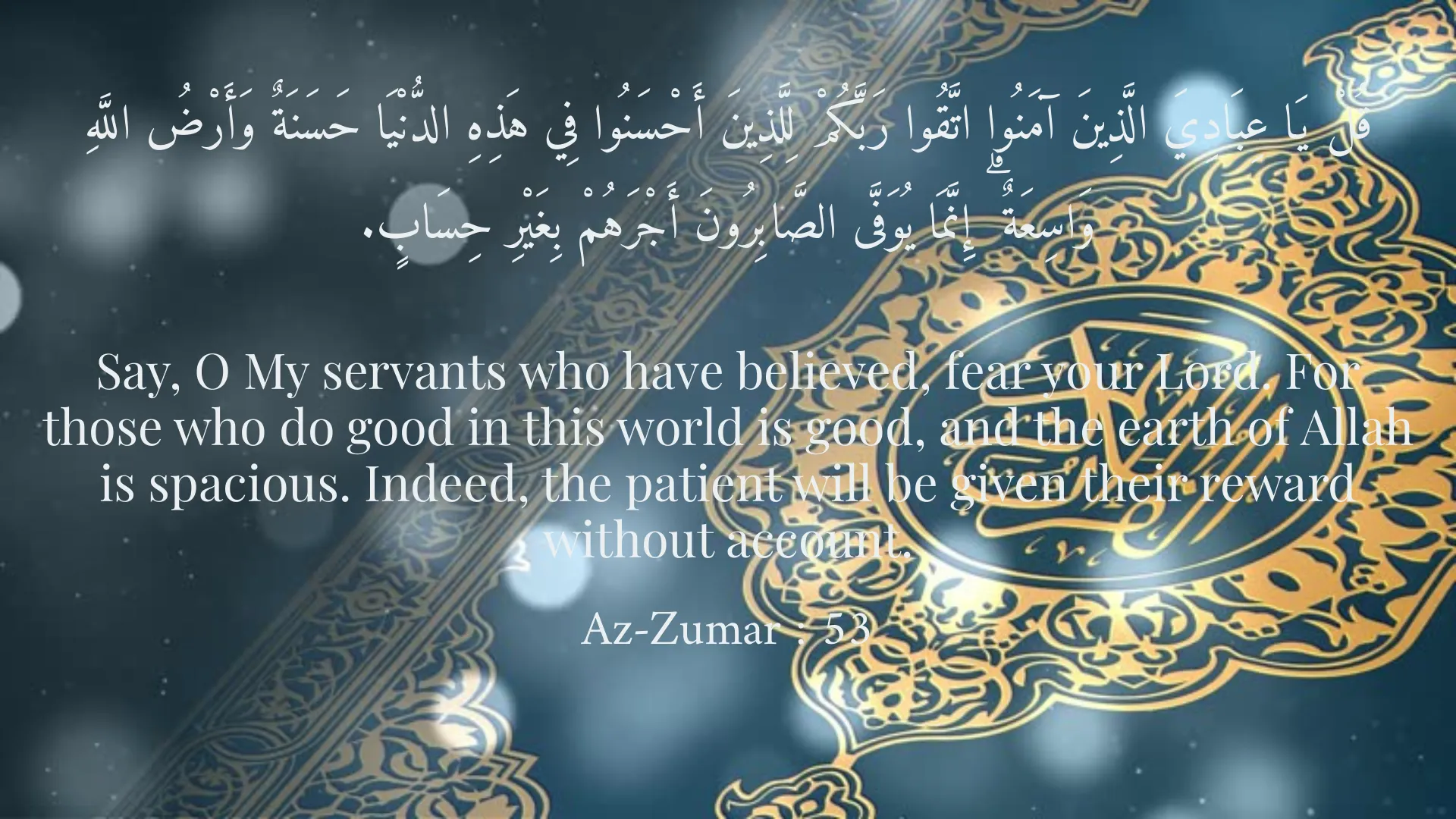
قُلْ يَا عِبَادِيَ الَّذِينَ آمَنُوا اتَّقُوا رَبَّكُمْ لِلَّذِينَ أَحْسَنُوا فِي هَذِهِ الدُّنْيَا حَسَنَةٌ وَأَرْضُ اللَّهِ وَاسِعَةٌ ۗ إِنَّمَا يُوَفَّى الصَّابِرُونَ أَجْرَهُمْ بِغَيْرِ حِسَابٍ.
Say, O My servants who have believed, fear your Lord. For those who do good in this world is good, and the earth of Allah is spacious. Indeed, the patient will be given their reward without account.
Az-Zumar : 53
وَعِبَادُ الرَّحْمَـٰنِ الَّذِينَ يَمْشُونَ عَلَى الْأَرْضِ هَوْنًا وَإِذَا خَاطَبَهُمُ الْجَاهِلُونَ قَالُوا سَلَامًا.
And the servants of the Most Merciful are those who walk upon the earth humbly, and when the ignorant address them [harshly], they say, 'Peace.'
Al-Furqan : 63
يَـٰٓأَيُّهَا الَّذِينَ آمَنُوا أَنفِقُوا مِنْ طَيِّبَاتِ مَا كَسَبْتُمْ وَمِمَّا أَخْرَجْنَا لَكُم مِّنَ الْأَرْضِ.
O you who have believed, spend from the good things which you have earned and from that which We have produced for you from the earth.
Al-Baqarah : 267
وَإِذَا سَأَلَكَ عِبَادِي عَنِّي فَإِنِّي قَرِيبٌ ۖ أُجِيبُ دَعْوَةَ الدَّاعِ إِذَا دَعَانِ.
And if My servants ask you concerning Me, indeed I am near. I respond to the supplicant when he calls upon Me.
Al-Baqarah : 186
Short Story
Once upon a time in a village named Golzar, there was a man named Hassan who was known to all for his kindness. Hassan always helped the needy and treated everyone with respect. One day, when he saw a hungry child, he immediately gave him bread and fruit. Everyone who saw Hassan was inspired by him and tried to be like him. In this way, Hassan showed everyone that kindness not only helps others but also makes the world a better place.