Quranic Answer
In the Holy Quran, Allah offers valuable insights and guidance to believers who strive to avoid sins and overcome bad habits. These teachings serve as a foundation for self-improvement and moral development. Accountability to oneself and to God is paramount when navigating the complexities of human behavior. The Quran addresses these issues by highlighting the importance of self-awareness, repentance, and the pursuit of virtuous actions. The first step in overcoming bad habits is to cultivate self-awareness. Self-awareness involves understanding one's own behavior, recognizing one's weaknesses, and acknowledging the consequences of personal actions. It is often said that knowledge is power, and in the context of spiritual growth, this saying holds true. By understanding what leads us to sin or engage in unproductive behaviors, we can take a proactive approach to change. This concept is beautifully articulated in Surah An-Nisa, verse 17, where it states, 'Repentance is only for those who do wrong in ignorance and then repent soon after.' This verse emphasizes the need for individuals to recognize their faults and take immediate action in seeking forgiveness upon the realization of their sins. Once we acknowledge our shortcomings, the next step in the journey of repentance is to actively seek forgiveness from Allah. It is important to recognize that the act of seeking forgiveness is not merely a formality; it is a sincere plea for mercy and guidance. Allah's compassion and readiness to forgive are significant themes woven throughout the Quran. The act of repentance, or 'Tawbah,' is a pivotal practice in Islam that signifies the hope for renewal and reconciliation with God. Moreover, the Quran encourages believers to engage in good deeds as a means of protecting themselves from falling into sinful behaviors. Engaging in acts of kindness and virtue not only reinforces positive habits but also creates an environment conducive to spiritual growth. Surah Al-Kahf, verse 105, states, 'And corrupt actions are not for those who seek the truth and those who seek God's favor.' This verse serves as a reminder that those who genuinely desire to seek the truth and earn Allah's favor will naturally gravitate towards virtuous actions and away from sinful behaviors. To further illuminate the connection between sin and repentance, Surah Aal-E-Imran, verse 135 notes that 'and those who, when they commit an immorality or wrong themselves by transgression, remember Allah and seek forgiveness for their sins.' This verse highlights a critical aspect of human nature—the inevitability of sin. No one is immune to making mistakes; however, the differentiating factor lies in our response to those mistakes. Those who remember Allah in moments of weakness are prompted to seek forgiveness, instilling a sense of accountability and awareness in their hearts. The profound relationship between prayer, repentance, and good deeds is essential in the path to overcoming bad habits. Allah has equipped us with the resources needed to nurture our souls. Practical techniques in breaking free from bad habits may include regular reminders of the rewards and mercy of Allah. Engaging regularly in Quran recitation, participating in daily prayers, and reflecting on the teachings of the Quran can significantly nurture the soul and fortify one’s intentions to move towards righteousness. In addition to individual practices of spiritual accountability, community support plays an important role in maintaining good behavior and overcoming bad habits. Engaging in the company of righteous and supportive individuals can create a conducive environment for growth. When surrounded by those who promote positivity and righteousness, one is more likely to emulate their behavior and be encouraged in their pursuit of personal improvement. Furthermore, the spiritual journey of self-improvement often necessitates patience and resilience. Acknowledging that the process of breaking free from ingrained habits is not immediate is crucial. It requires persistent effort, self-discipline, and the awareness that falls will happen along the way. During times of relapse, individuals must not despair; instead, they should remember the mercy of Allah and renew their commitment to repentance. In conclusion, the process of overcoming bad habits and avoiding sins, as taught in the Holy Quran, revolves around increasing self-awareness, actively seeking repentance, engaging in good deeds, and maintaining a strong relationship with Allah. It is a journey of personal transformation that integrates the heart, mind, and spirit. Through sincere repentance and consistent effort to amend our behavior, we can facilitate the process of liberating ourselves from habitual sins and, in turn, nurture a life that is fulfilling and aligned with the teachings of the Quran. The path to improvement is continuous, and with each step, we inch closer to our ultimate goal of righteousness and spiritual fulfillment.
Related Verses
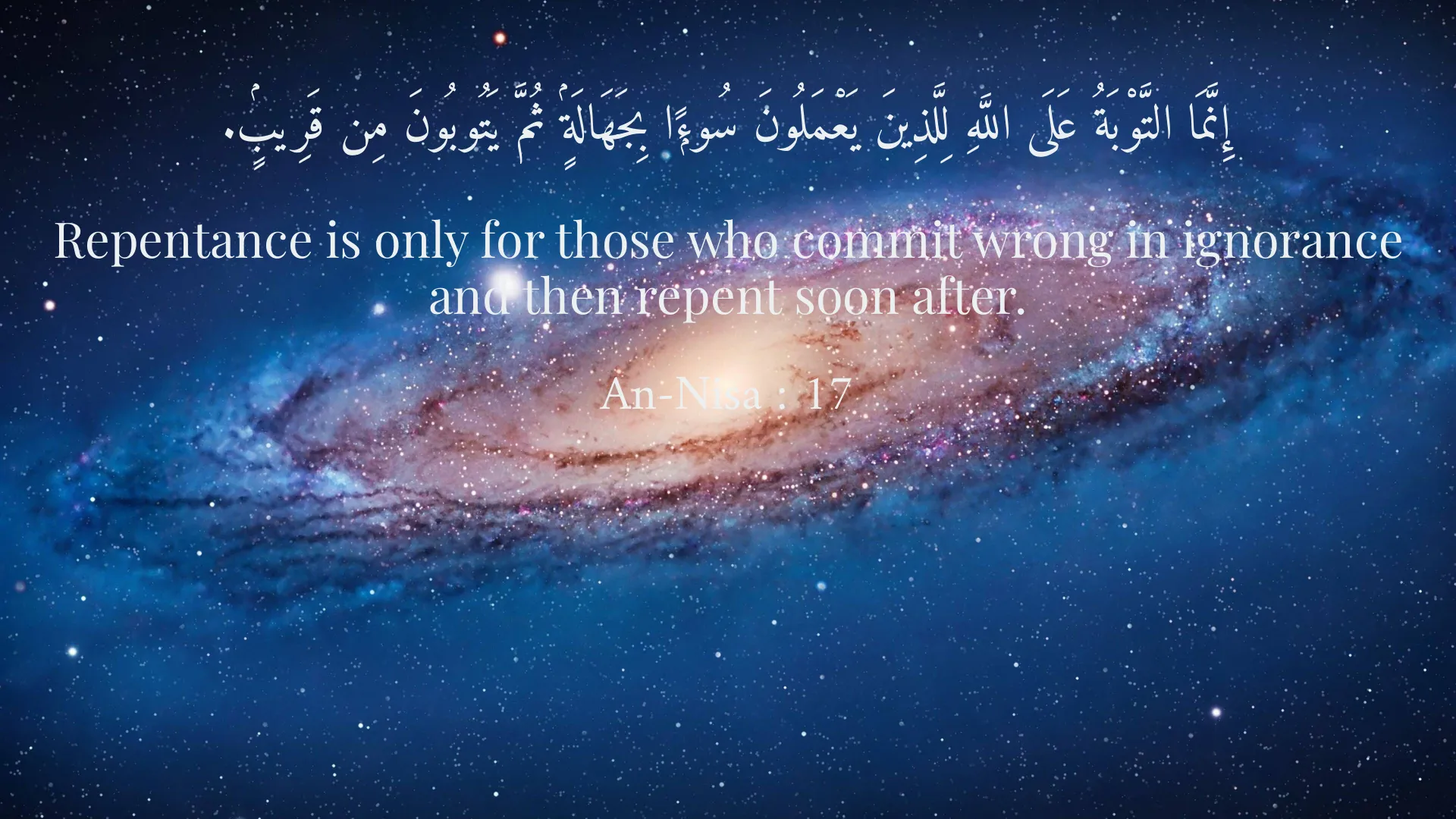
إِنَّمَا التَّوْبَةُ عَلَى اللَّهِ لِلَّذِينَ يَعْمَلُونَ سُوءًۭا بِجَهَالَةٍۢ ثُمَّ يَتُوبُونَ مِن قَرِيبٍۢ.
Repentance is only for those who commit wrong in ignorance and then repent soon after.
An-Nisa : 17
وَأَمَّا الَّذِينَ كَسَبُوا السَّيِّئَاتِ فَخَلَطُوا سَيِّئَةًۭ بِحَسَنَةٍۢ فَأُو۟لَـٰئِكَ هُمْ أَصْحَابُ النَّارِ ۖ هُمْ فِيهَا خَالِدُونَ.
And those who earn evil deeds and mix good with evil, they are the companions of the Fire; they will abide therein eternally.
Al-Kahf : 105
وَالَّذِينَ إِذَا فَعَلُوا سَـَٔاتًۭةً أَوْ ظَلَمُوا أَنفُسَهُمْ ذَكَرُوا اللَّهَ فَاسْتَغْفَرُوا لِذُنُوبِهِمْ وَمَن يَغْفِرُ الذُّنُوبَ إِلَّا اللَّهُ.
And those who, when they commit an immorality or wrong themselves, remember Allah and seek forgiveness for their sins; and who can forgive sins except Allah?
Aal-E-Imran : 135
Short Story
One day, a young man named Ahmad felt a heavy burden on his heart. He realized his bad habits had led him towards sin. After reflecting on the virtuous characters in the Quran like Joseph and David, he decided to change his life for the better, praying and seeking Allah's help. He began doing good deeds, and suddenly, he felt a transformation in his behavior. Not only did he break free from his bad habits, but he also experienced true peace in his life.