Quranic Answer
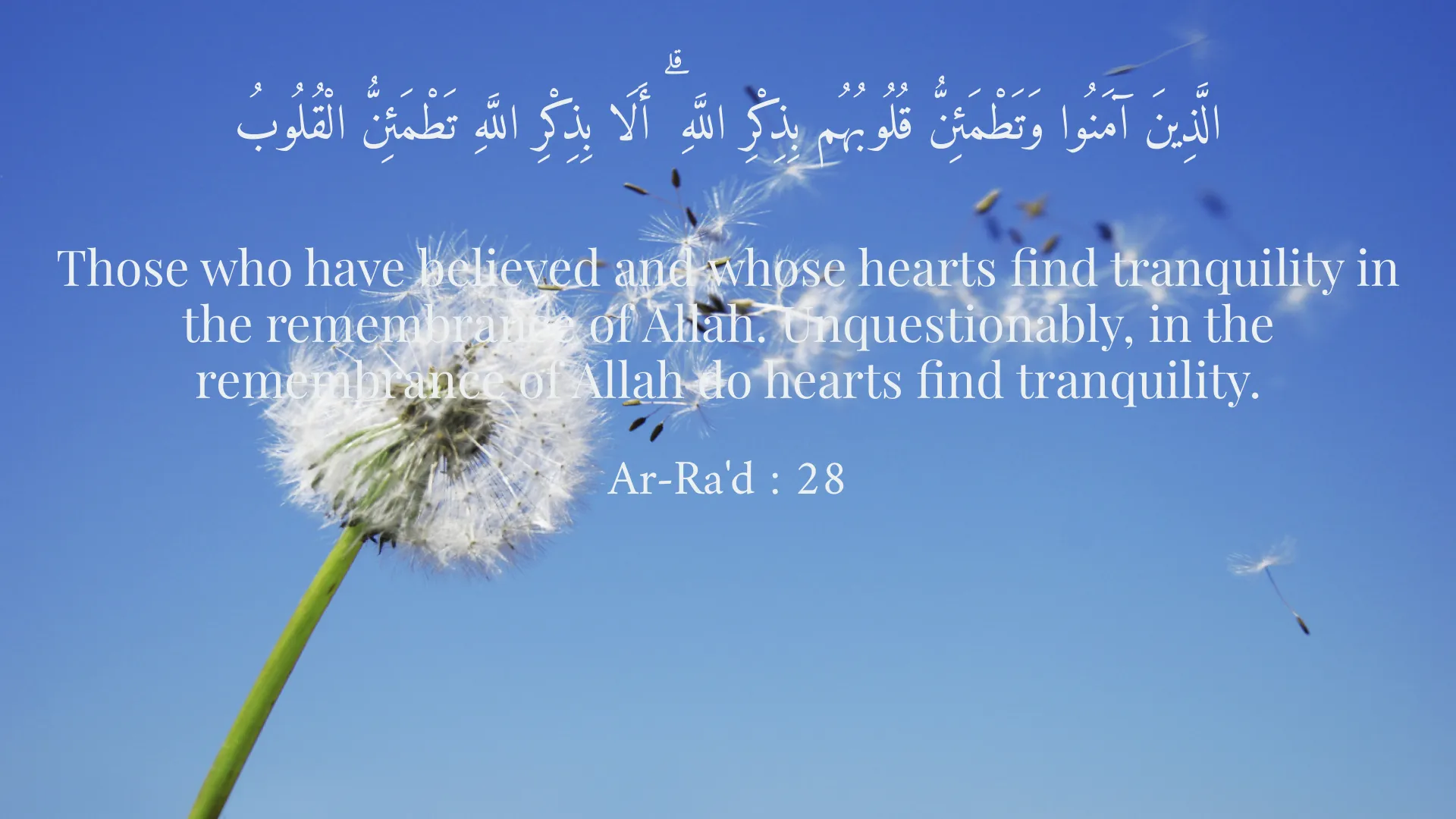
Your question about how to transition the remembrance of God from mere words to the depths of the heart is a fundamental and profoundly significant inquiry in a human being's spiritual journey. Dhikr, or the remembrance of God, is not simply the repetition of phrases like "Allahu Akbar" or "Subhanallah"; rather, it encompasses a far broader and deeper concept that permeates all dimensions of human existence, transforming the heart into a sanctuary of divine peace and presence. The Holy Quran explicitly emphasizes the importance of heartfelt remembrance and the continuous presence of God in the believer's soul and mind. As Allah states in Surah Ar-Ra'd, verse 28: "أَلَا بِذِكْرِ اللَّهِ تَطْمَئِنُّ الْقُلُوبُ" (Indeed, in the remembrance of Allah do hearts find tranquility). This verse unequivocally demonstrates that true tranquility of the heart lies not in material possessions or worldly attachments, but in a profound and continuous connection with the Almighty. The remembrance of God is not merely a dry, lifeless act of worship; it is a state of heartfelt presence that inwardly transforms one's life, drawing them closer to the divine presence. For the remembrance of God to transcend from the tongue to the heart and from the heart to all our actions, it requires constant mindfulness, practice, and a deep understanding of the nature of Dhikr. The first step in this journey is realizing that true Dhikr is not just about the movement of the tongue, but about the presence of the mind and heart. When we engage in verbal Dhikr, our heart must simultaneously attend to the meaning of those words, comprehending the greatness and divine attributes of Allah. This presence of heart is the starting point for transforming verbal Dhikr into heartfelt remembrance. To achieve this presence, one can draw upon various methods rooted in Quranic teachings: Firstly, contemplation and reflection on the verses of the Quran and the Divine Names and Attributes: The Holy Quran is replete with reminders and admonitions. Every verse opens a gateway to the infinite greatness and power of Allah. Reading the Quran with contemplation and understanding its meaning, not just its words, conveys a divine message to the heart. When we read the verse "Allah, there is no deity except Him, the Ever-Living, the Sustainer of existence," we should not merely suffice with its translation but reflect on the concepts of Allah being "Al-Hayy" (the Ever-Living) and "Al-Qayyum" (the Self-Subsisting, Sustainer of all). This contemplation transforms Dhikr from a dry word into a living meaning within the heart. Similarly, meditating on the Beautiful Names of Allah (Asma al-Husna) and His attributes such as Ar-Rahman (The Most Merciful), Ar-Rahim (The Especially Merciful), Al-Quddus (The Holy), As-Salam (The Giver of Peace), Al-Ghaffar (The Forgiver), As-Sattar (The Concealer of Sins), and recognizing their manifestations in the universe, draws the heart towards the remembrance of its Creator, filling it with light and insight. In Surah Al-Imran (verses 190-191), Allah describes people of understanding as those who reflect on the creation of the heavens and the earth and remember God in all states. Secondly, sincerity of intention and avoidance of ostentation (Riya): Dhikr must be performed solely for God. When Dhikr is done with pure intention, without any non-divine objectives, it has a deeper impact on the heart. Ostentation and showing off create a veil between a person and God, preventing the light of Dhikr from entering the heart. Allah says in Surah Al-Bayyinah, verse 5: "وَمَا أُمِرُوا إِلَّا لِيَعْبُدُوا اللَّهَ مُخْلِصِينَ لَهُ الدِّينَ حُنَفَاءَ" (And they were not commanded except to worship Allah, [being] sincere to Him in religion, inclining to truth). Sincerity is the key to Dhikr penetrating the core of one's being, endowing it with authenticity and spirit. Any act of worship, including Dhikr, if not performed with sincerity, is like a lifeless body that has no effect on the heart. Thirdly, performing obligatory prayers and duties with presence of heart: Prayer (Salat), as the supreme form of Dhikr, must be performed with full presence of heart and complete attention to the Worshipped. When we stand in prayer, our minds should not be occupied with worldly matters. Every prostration (ruku'), every bowing (sujud), and every recitation is an opportunity to renew our covenant with Allah and immerse ourselves in His remembrance. Allah says in Surah Al-Ankabut, verse 45: "وَأَقِمِ الصَّلَاةَ ۖ إِنَّ الصَّلَاةَ تَنْهَىٰ عَنِ الْفَحْشَاءِ وَالْمُنكَرِ ۗ وَلَذِكْرُ اللَّهِ أَكْبَرُ" (Recite what has been revealed to you of the Book and establish prayer. Indeed, prayer prohibits immorality and wrongdoing, and the remembrance of Allah is greater). This verse shows that the remembrance of God itself (manifested in prayer) has the greatest deterrent effect against evil. Practicing presence of heart in prayer will profoundly impact other forms of Dhikr, gradually extending this presence to all moments of life. Similarly, fasting, Hajj, Zakat, and other acts of worship, if performed with sincere intention and attention to their existential philosophy, each contribute in their own way to strengthening the remembrance of God in the heart, safeguarding it from heedlessness and forgetfulness. Fourthly, reflection on creation and the signs of God: The Quran repeatedly invites humanity to reflect on the creation of the heavens and the earth, the alternation of night and day, and the creation of humans and animals. This type of reflection is practically a continuous heartfelt Dhikr that makes one aware of the boundless greatness, wisdom, and power of their Creator, filling the heart with His remembrance. Every particle in the universe, from the smallest organism to the grandest galaxies, is a sign of Allah's presence and knowledge. Paying attention to these signs and pondering over them connects the heart to the source of creation and transforms the remembrance of God from an abstract notion into a tangible reality. Fifthly, consistency and perseverance in Dhikr: Heartfelt and continuous Dhikr is like a sapling that requires constant watering. We should not remember God only at specific times; rather, we should strive for the remembrance of God to be alive in our hearts at all times, whether in hardship or ease, awake or asleep. The Prophet Muhammad (peace be upon him) said: "The best Dhikr is that which is in the heart." Consistent verbal Dhikr itself, over time, leads to the presence of heart. Like droplets of water that gradually bore through rock, repetition with presence of mind softens the heart and allows divine light to enter it. This consistency makes the heart resistant to temptations and heedlessness, continuously drawing it towards the light of divine guidance. Sixthly, abstaining from sins and impurities, and purifying the soul: Sins are like rust that accumulates on the heart, distancing it from the light of God's remembrance. For the heart to become a vessel for the remembrance of God, one must abstain from sins and constantly turn to repentance and seeking forgiveness. Repentance is the cleansing of the heart, preparing it to receive the light of Dhikr. "قَدْ أَفْلَحَ مَن زَكَّاهَا وَقَدْ خَابَ مَن دَسَّاهَا" (Surah Ash-Shams 9-10) (He has succeeded who purifies it, and he has failed who corrupts it). Purification of the soul (Tazkiyah al-Nafs) is one of the most important ways to strengthen heartfelt Dhikr, because a pure heart is the place where divine light shines and the abode of true remembrance. Seventhly, paying attention to the rights of others and serving creation: The remembrance of God is not limited to individual acts of worship. Observing the rights of God's servants, helping the needy, acting with justice and fairness, and abstaining from oppression and tyranny are all manifestations of God's remembrance in action. When a person sincerely serves others, they are in effect embodying a reflection of Allah's attributes of mercy and compassion within themselves, and this itself is practical and heartfelt Dhikr that leads to the pleasure of the Lord and the illumination of the heart. Ultimately, the remembrance of God does not move from the tongue to the heart except through a deep understanding of Allah's place in existence and our relationship with Him. This understanding is achieved when we perceive ourselves as small before His absolute power, infinite knowledge, and boundless mercy, and realize that our entire being and everything we possess is from Him. This feeling of inherent need and poverty before divine absolute richness guides the heart towards His remembrance. The remembrance of God is like nourishment for the soul that enlivens and illuminates the heart, providing tranquility and meaning to life. This process is a lifelong journey, with each step bringing a person closer to the destination of divine proximity, constantly reminding them of the Creator of existence at every moment of life.
Related Verses
الَّذِينَ آمَنُوا وَتَطْمَئِنُّ قُلُوبُهُم بِذِكْرِ اللَّهِ ۗ أَلَا بِذِكْرِ اللَّهِ تَطْمَئِنُّ الْقُلُوبُ
Those who have believed and whose hearts find tranquility in the remembrance of Allah. Unquestionably, in the remembrance of Allah do hearts find tranquility.
Ar-Ra'd : 28
يَا أَيُّهَا الَّذِينَ آمَنُوا اذْكُرُوا اللَّهَ ذِكْرًا كَثِيرًا
O you who have believed, remember Allah with much remembrance
Al-Ahzab : 41
اتْلُ مَا أُوحِيَ إِلَيْكَ مِنَ الْكِتَابِ وَأَقِمِ الصَّلَاةَ ۖ إِنَّ الصَّلَاةَ تَنْهَىٰ عَنِ الْفَحْشَاءِ وَالْمُنكَرِ ۗ وَلَذِكْرُ اللَّهِ أَكْبَرُ ۗ وَاللَّهُ يَعْلَمُ مَا تَصْنَعُونَ
Recite what has been revealed to you of the Book and establish prayer. Indeed, prayer prohibits immorality and wrongdoing, and the remembrance of Allah is greater. And Allah knows that which you do.
Al-Ankabut : 45
Short Story
It is narrated in Saadi's Gulistan that a dervish, with sincerity and purity, kept his heart occupied with the remembrance of truth, and the phrase "La ilaha illa Allah" (There is no god but Allah) was constantly on his tongue. But a worldly man, who saw only the outward and was unaware of the inner reality, reproached him, saying: "O dervish, what good is this verbal remembrance that you continuously utter? Your heart should be connected to the Truth, not just your tongue!" The dervish smiled and replied: "My brother, you speak truly that real remembrance is what connects the heart to God. But this tongue is the guide to the heart. I first accustom my tongue to remembrance so that, little by little, the heart too may awaken and join the tongue. Is it not true that a child is first taught words bit by bit until they become eloquent? The remembrance of God is similar; it begins with words and, by God's permission, reaches the heart and illuminates it." The worldly man was touched by the dervish's words and realized that sometimes the outward actions are a gateway to the inward, and to reach depth, one must start from the surface. The dervish continued: "Many are those whose hearts are full of worldly remembrance, and whose tongues are devoid of remembrance. And many are those who have remembrance on their tongues, but their hearts are heedless. But blessed is he whose tongue and heart are both in the remembrance of the Truth. And if my heart has not yet reached that degree, at least I keep my tongue busy with this hope that one day the heart will also join the journey, and the remembrance of the Truth will reach the depths of the soul from mere verbal repetition and find tranquility."