Quranic Answer
Anxiety is a feeling that every human being experiences at different stages of life. In today's world, full of challenges and changes, finding inner peace and freedom from the shackles of worries and anxieties has become one of humanity's most significant concerns. The Holy Quran, as the divine word and an endless source of guidance and light, offers profound and effective solutions for achieving true and heartfelt tranquility. These teachings are not merely temporary palliatives for spiritual suffering but lay a solid foundation for a life filled with inner peace and assurance. One of the most central concepts that the Quran presents for calming the heart is the remembrance of Allah (Dhikr). In Surah Ar-Ra'd, verse 28, it states: "Those who have believed and whose hearts are assured by the remembrance of Allah. Unquestionably, by the remembrance of Allah hearts are assured." This noble verse is a gem of divine wisdom that explicitly declares that the primary source of peace lies in a continuous and conscious connection with the Creator of existence. The remembrance of Allah is not merely limited to uttering words; rather, it is a state of heart-presence and constant awareness of Allah's infinite greatness, power, knowledge, and boundless mercy. When a person remembers that an infinite power and absolute knowledge are observing and supporting them, the heavy burdens of worry and fear are lifted from their shoulders. Practical dhikr also includes fulfilling obligations, refraining from prohibitions, contemplating divine verses, and expressing gratitude for blessings. These reminders help a person not to feel alone and to sense that they are under the protection of absolute power, thereby banishing anxiety and worries arising from feelings of loneliness and helplessness. Heartfelt presence in dhikr literally frees the heart from worldly turmoil and brings it to the safe shore of tranquility. Prayer (Salah), the pillar of faith and the believer's ascension, is another fundamental factor in creating peace. The Holy Quran in Surah Al-Baqarah, verse 153, says: "O you who have believed, seek help through patience and prayer. Indeed, Allah is with the patient." Prayer is an opportunity to disconnect from the clamor of the world and connect with the source of eternal peace. In every unit of prayer, a person humbly and submissively finds themselves before the Almighty Lord, confiding their concerns, seeking needs, and asking for help. This direct and unmediated connection strengthens the sense of security and Allah's unwavering support in the heart. Prayer instills discipline in a person and guides them towards introspection and self-purification. The psychological effects of prayer are also noteworthy; as through its rhythmic movements and repetition of remembrances, the mind is freed from dispersion and achieves focus and presence in the moment. This daily practice, over time, increases a person's spiritual resilience against life's pressures and helps them cope with anxiety. Reliance on Allah (Tawakkul) is another key Quranic principle for overcoming anxiety. Tawakkul means entrusting affairs to Allah after exerting all one's efforts. Surah At-Talaq, verse 3, states: "And whoever relies upon Allah – then He is sufficient for him. Indeed, Allah will accomplish His purpose. Allah has already set for everything a [decreed] extent." When a person fully relies on Allah, they free themselves from the heavy burden of worrying about outcomes. They know that their destiny is in the hands of One who is both absolutely benevolent and absolutely capable. This reliance implies complete submission to divine decree after sincere effort. This perspective reduces anxiety stemming from uncertainties and fear of the future, as the individual accepts that what is good will materialize, and what is evil will either be averted by Allah's permission or transformed into something good. True Tawakkul is rooted in a deep understanding of Allah's names and attributes and frees the heart from agitation. Patience (Sabr) is another virtue greatly emphasized in the Quran and plays a vital role in managing anxiety. Patience means steadfastness and perseverance in the face of difficulties and adversities. The Quran invites believers to patience and promises that Allah is with the patient. Understanding that hardships and trials are part of divine tests and that one can overcome them with patience brings peace to the human soul. Furthermore, reciting the Quran and reflecting on its verses is itself a great source of tranquility. The divine word is a healing for hearts, and by reading and understanding it, a person comes to know the realities of existence, and their heart is purified from darkness and temptations. Verses that speak of Allah's power, mercy, justice, and wisdom assure a person that nothing is outside of Allah's will and planning, and every event has a wisdom behind it. Finally, reducing worldly attachments and recognizing the ephemeral nature of this world is also effective in calming anxiety. The Quran repeatedly refers to the worthlessness of the world and the transient nature of its pleasures. When a person understands this truth and knows that the world is a passage, not a permanent abode, their attachment to what they possess and their fear of losing what they have diminish. This perspective liberates a person from the bonds of greed and covetousness and leads them towards contentment and satisfaction. Helping others and engaging in good deeds can also help reduce anxiety; for when a person steps out of self-centeredness and thinks of others, they experience an inner sense of satisfaction and happiness, which is itself a powerful factor in dispelling anxiety. In summary, calming the anxious inner self is a spiritual journey that begins with strengthening one's relationship with Allah through remembrance (Dhikr), prayer (Salah), reliance (Tawakkul), patience (Sabr), and contemplation of the Quran, leading to a deeper understanding of one's place in existence and contentment with divine decree. This path brings lasting and true peace that no storm can disturb.
Related Verses
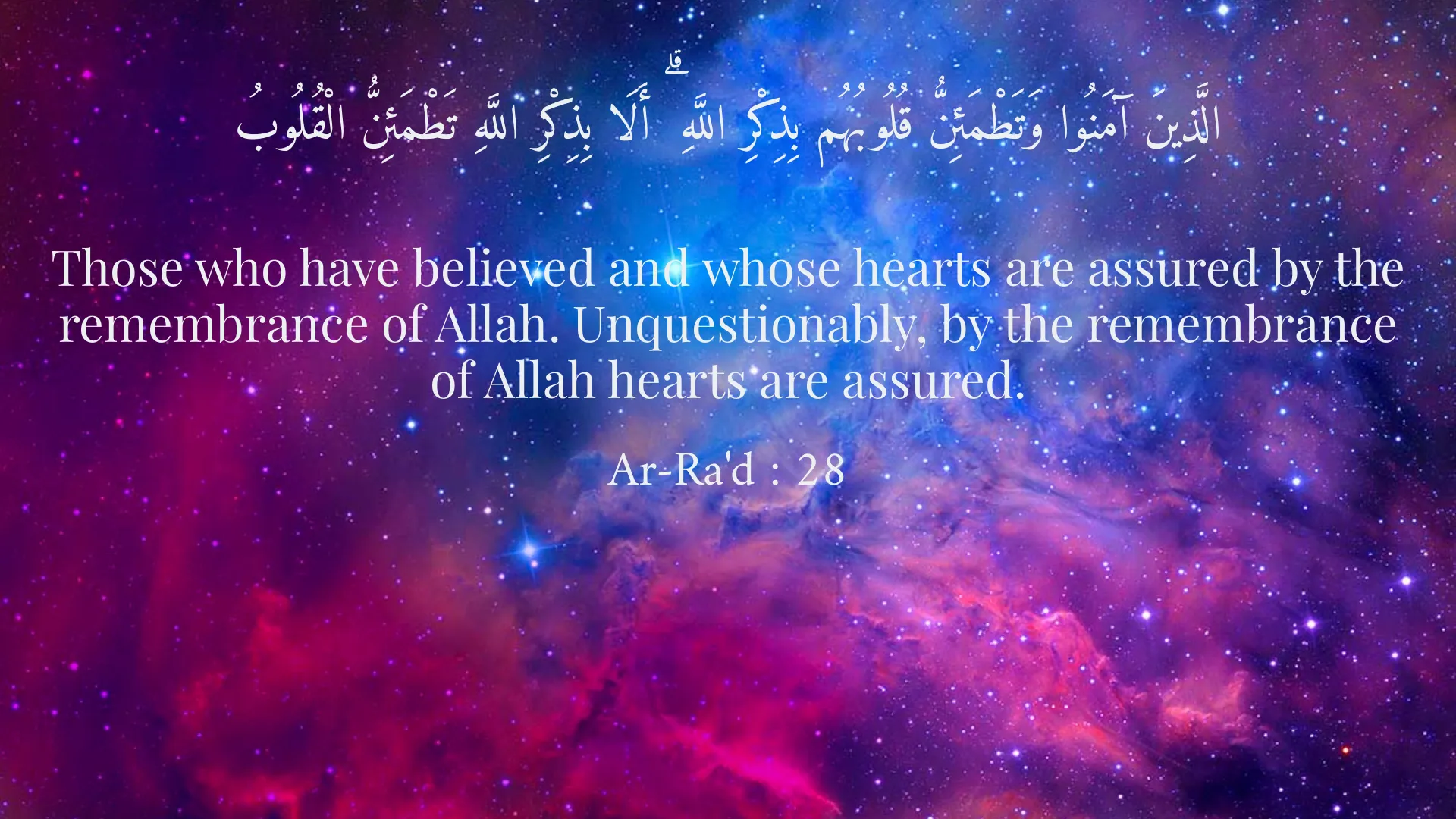
الَّذِينَ آمَنُوا وَتَطْمَئِنُّ قُلُوبُهُم بِذِكْرِ اللَّهِ ۗ أَلَا بِذِكْرِ اللَّهِ تَطْمَئِنُّ الْقُلُوبُ
Those who have believed and whose hearts are assured by the remembrance of Allah. Unquestionably, by the remembrance of Allah hearts are assured.
Ar-Ra'd : 28
يَا أَيُّهَا الَّذِينَ آمَنُوا اسْتَعِينُوا بِالصَّبْرِ وَالصَّلَاةِ ۚ إِنَّ اللَّهَ مَعَ الصَّابِرِينَ
O you who have believed, seek help through patience and prayer. Indeed, Allah is with the patient.
Al-Baqarah : 153
وَمَن يَتَوَكَّلْ عَلَى اللَّهِ فَهُوَ حَسْبُهُ ۚ إِنَّ اللَّهَ بَالِغُ أَمْرِهِ ۚ قَدْ جَعَلَ اللَّهُ لِكُلِّ شَيْءٍ قَدْرًا
And whoever relies upon Allah – then He is sufficient for him. Indeed, Allah will accomplish His purpose. Allah has already set for everything a [decreed] extent.
At-Talaq : 3
Short Story
It is said that one day a king met a dervish and asked him, "How is it that I, with all this grandeur and kingdom, am always anxious and troubled, yet you, with all your poverty and nothingness, are always calm and cheerful?" The dervish smiled and replied, "O King! Your anxiety stems from the fear of losing what you possess, and the greed to acquire what you do not. But I have nothing to fear losing, and I desire nothing but what Allah wills. The hearts of kings are like a vast ocean, easily agitated by every wind, but the heart of a dervish is like a small pond hidden in a corner of a garden, always calm and undisturbed. True peace lies in letting go of worldly attachments and trusting in the One God."