Quranic Answer
The Holy Quran, revered as the ultimate source of guidance and wisdom for Muslims, offers profound insight into the spiritual and emotional aspects of human existence. Among its many teachings, the tranquility of the heart stands out as one of the most significant blessings bestowed by Allah, highlighted throughout various verses in the text. The notion of inner peace is not only essential for a fulfilling life but is also intricately linked to the remembrance of Allah (dhikr), a practice that fosters a deeper connection with the Divine and cultivates a sense of serenity in the hearts of believers. One of the most poignant verses regarding this concept is found in Surah Ar-Ra'd (Chapter 13), verse 28, where Allah articulates, "Indeed, in the remembrance of Allah do hearts find rest." This declaration serves as a powerful reminder that amidst the chaos of life, turning our focus and thoughts towards Allah can provide a sanctuary for our souls. In today's fast-paced world, where anxiety and stress are prevalent, the wisdom in this verse is especially relevant. Many individuals seek peace through external sources, yet the Quran reassures us that authentic tranquility originates from reconnecting with our Creator. The idea that Allah encompasses us with His mercy and support is further emphasized in Surah Ta-Ha (Chapter 20), verse 46, where He comforts Moses, saying, "Fear not; indeed, I am with you and I hear you." This promise not only communicates the presence of divine assistance during tumultuous times but also invites believers to place their trust in Allah. The reassurance that we are never alone during our struggles can profoundly impact our emotional state, fostering a sense of calm even in the most trying circumstances. To achieve this tranquility of the heart, believers are encouraged to engage in various practices that draw them closer to Allah. Performing prayers (salah) is one of the most fundamental acts of worship in Islam. It serves as a direct connection to God and an opportunity for reflection and supplication. During these moments, individuals can express their gratitude, seek forgiveness, and ask for guidance, all of which contribute to mental clarity and peace. Additionally, being present in the act of prayer, focusing solely on the words and movements, can be meditative, allowing one to temporarily set aside worldly concerns. Beyond the ritual of prayer, remembrance (dhikr) is another significant practice that nurtures peace. Dhikr, which refers to the recitation of God's names and attributes, acts as a reminder of God's omnipresence and benevolence. When individuals engage in dhikr, whether by reciting specific phrases or reflecting on the greatness of Allah, they invite a sense of calmness into their lives. This practice can be performed anywhere and at any time, making it an accessible means of finding solace throughout the day. Furthermore, supplications (dua) are a powerful tool in seeking peace. Through dua, believers communicate their innermost thoughts and feelings to Allah, asking for guidance, strength, and protection. This act of vulnerability fosters a sense of intimacy with God, allowing one to let go of stress and worry while placing trust in divine wisdom. In times of distress—whether it be due to personal challenges or external circumstances—turning to Allah with heartfelt supplications can provide significant comfort and reassurance. In addition to these spiritual practices, various aspects of daily life contribute to achieving a peaceful heart. Cherishing good memories, for instance, plays a crucial role in mental well-being. By reflecting on positive experiences and moments of happiness, individuals can counterbalance the stressors of life with gratitude and appreciation. Regulating one's affairs wisely, including managing time and responsibilities, can also alleviate feelings of being overwhelmed. Establishing a balanced routine that incorporates time for work, relaxation, and spiritual reflection can lead to a more harmonious life. Hope is another vital component in the pursuit of tranquility. The act of looking forward to better days fosters resilience and provides motivation to overcome current challenges. Trusting in Allah's plan, even when faced with uncertainty, can instill a renewed sense of purpose and direction. When one embraces hope, fear diminishes, allowing the heart to experience calmness. In conclusion, the quest for tranquility of the heart is a profound journey that lies at the intersection of faith, mindfulness, and practical living. The teachings of the Quran emphasize that true peace is achieved through the remembrance of Allah and understanding His constant support and presence in our lives. By integrating prayers, dhikr, and dua into our daily routines, we can create a reservoir of peace that sustains us through life's trials. Moreover, nurturing positive memories, managing our affairs thoughtfully, and maintaining hope ensure that we remain anchored in serenity. Ultimately, as believers, it is essential to nourish our souls by consistently turning towards Allah, allowing His light to guide us in the quest for inner peace.
Related Verses
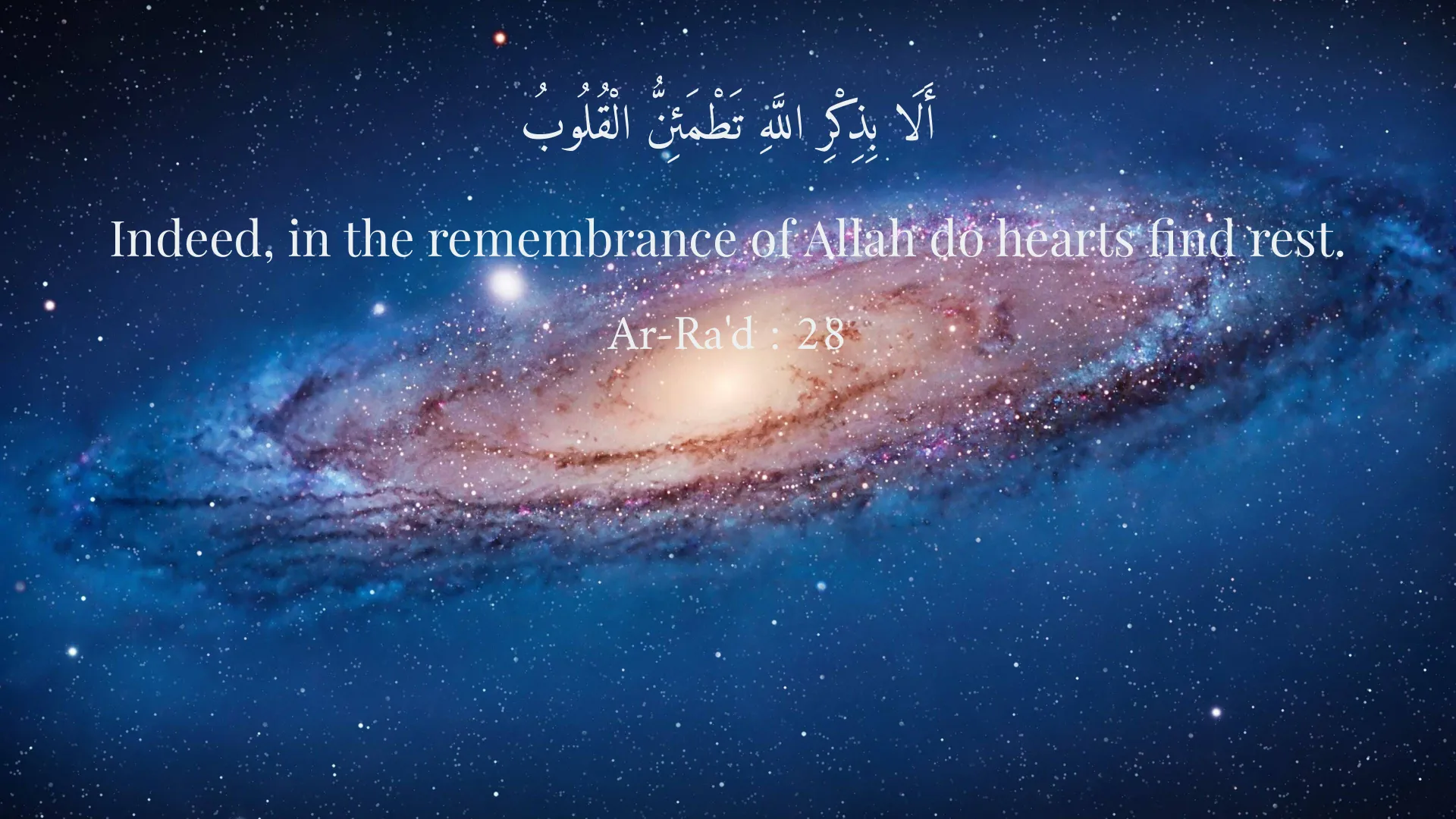
أَلَا بِذِكْرِ اللَّهِ تَطْمَئِنُّ الْقُلُوبُ
Indeed, in the remembrance of Allah do hearts find rest.
Ar-Ra'd : 28
لَا تَخَفْ إِنَّنِي مَعَكَ أَسْمَعُ
Fear not; indeed, I am with you and I hear you.
Ta-Ha : 46
Short Story
Once, a man lived in a city who was always anxious and restless. He entrusted everyone around him to give him peace, but no one could help him. One day, he visited a mosque and fervently prayed. Suddenly, he felt a calmness envelop him, and a light shone within his heart. He realized that true peace lies in the remembrance of Allah, and from that day on, he strived to engage more in the remembrance of God.