Quranic Answer
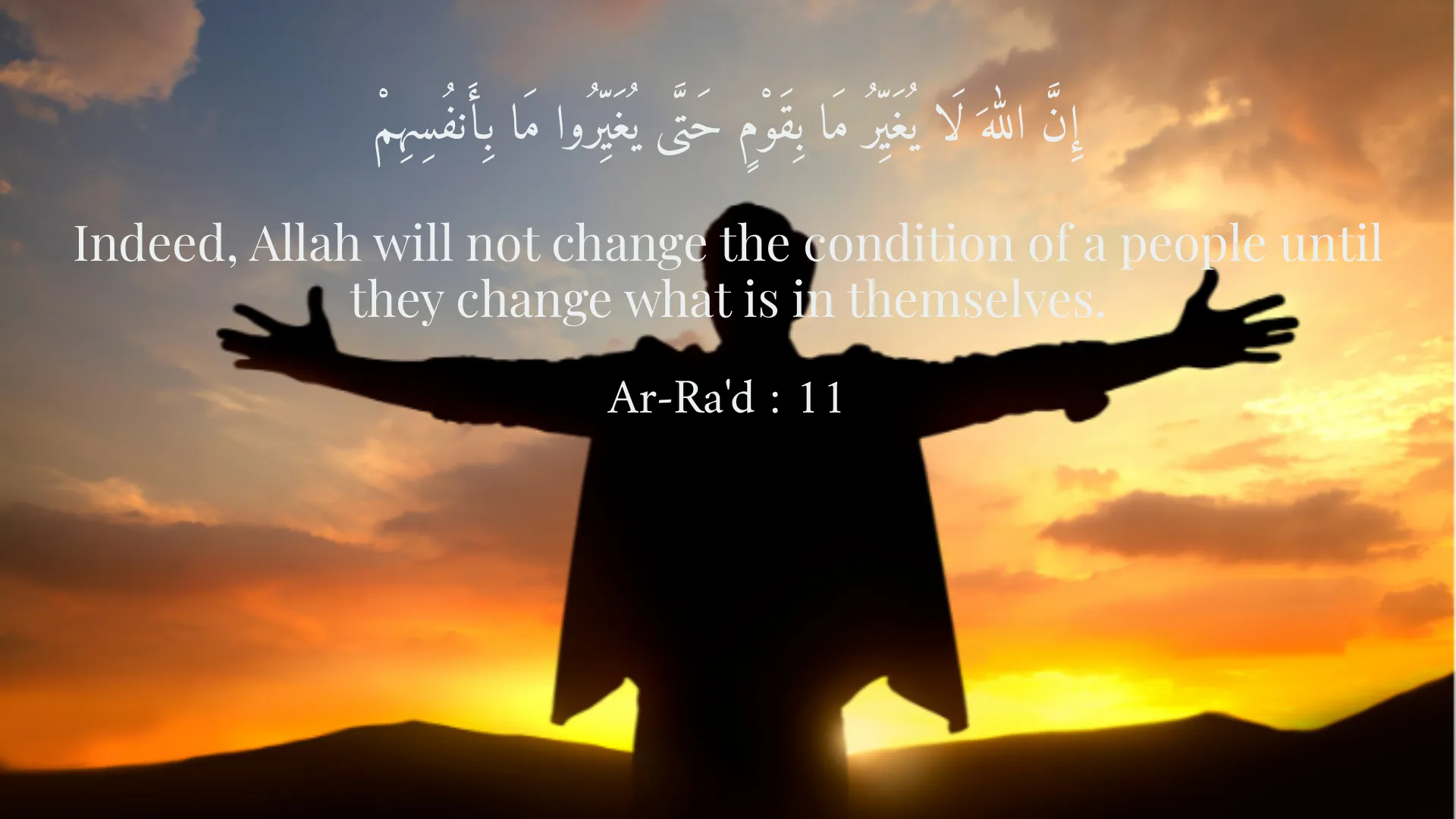
Changing oneself is a continuous process rooted in self-awareness and the effort to improve. This journey of transformation is often challenging, yet the rewards it brings to our lives are invaluable. The notion of personal growth is highlighted in many spiritual texts, including the Holy Quran, which provides guidance and encouragement for self-improvement and positive change. The Quran stresses the importance of working on ourselves in order to experience a shift in our lives and circumstances. This principle can be encapsulated in the profound words found in Surah Ar-Ra'd, verse 11, where it is stated, 'Indeed, Allah will not change the condition of a people until they change what is in themselves.' This verse indicates a fundamental truth: the power to change our lives rests within us, and it begins with the first step of introspection and the desire to evolve. Self-reflection is a critical method for initiating personal change. It requires a deep and honest look at oneself to identify both weaknesses and strengths. This process may include journaling, meditation, or just a quiet moment of contemplation where one can think about their behaviors, emotions, and life choices. By doing so, we can develop a clearer understanding of what aspects of our lives need alteration and where there is room for growth. Once we identify these areas, we can create a plan that includes strategies for improvement. This proactive approach allows individuals to set realistic goals, track their progress, and celebrate small victories that lead to larger transformations over time. In addition to self-reflection, the importance of surrounding oneself with positive and supportive friends cannot be overstated. The influence of our social circle is profound. As the saying goes, 'You are the average of the five people you spend the most time with.' When we associate with individuals who uplift us, inspire us, and motivate us toward self-betterment, we are likely to experience significant positive change. Conversely, surrounding ourselves with negativity can hinder our growth and reinforce counterproductive behaviors. Thus, selecting friends who share similar goals, values, and aspirations can foster an environment that encourages personal development. These relationships can lead to constructive conversations, shared experiences, and mutual support, all of which are vital for sustaining change. When we engage with friends who encourage our efforts toward improvement, we feel empowered to strive for our best selves. Moreover, the foundation that supports our transformative journey is our faith in God and the consistent effort to seek His pleasure. In Islam, the concept of 'Taqwa' or mindfulness of God is crucial. When we cultivate a strong connection with Allah, it can illuminate our path toward change. This relationship motivates us to adhere to moral principles, foster good behaviors, and avoid actions that may lead us astray. We find strength in prayer and remembrance of Allah (Dhikr), which serve as guiding lights in our lives and act as reminders of our purpose. The act of regularly engaging in prayer is not merely a ritual; it is a profound practice that centers our thoughts and intentions. Prayer provides a pause in our busy lives to reflect, express gratitude, and seek guidance. When we align ourselves spiritually, we are more likely to recognize the changes we need to make and find the courage to act on them. Each prayer can serve as a moment of recalibration, helping us remain focused on our journey toward becoming better individuals. It is also important to highlight behavioral changes that can lead to effective outcomes, as emphasized in Surah Al-Anfal, verse 53: 'This is because they opposed Allah and His Messenger.' This verse reminds us that our actions hold a significant weight in the realm of spirituality and personal growth. When we oppose positive values and principles, we not only hinder our development but may also affect the well-being of those around us. In contrast, when we strive for behaviors that reflect our faith and respect for Allah's commandments, we create a ripple effect of positive change in our lives and our communities. In conclusion, embarking on the journey of self-improvement is a profound commitment that requires self-awareness, reflection, and the courage to change. It is supported by our social circles, grounded in our faith, and empowered through our practices like prayer and remembrance. While the path to personal transformation is often filled with challenges, it ultimately leads to a deep sense of fulfillment and purpose. We must remember that change is not an overnight manifestation but a gradual and continuous process that brings us closer to the ideals we aspire to embody. As we strive for self-betterment, let us remain steadfast in our efforts and seek the loving guidance of Allah along our journey, allowing His light to lead us toward the best version of ourselves.
Related Verses
إِنَّ اللهَ لَا يُغَيِّرُ مَا بِقَوْمٍ حَتَّى يُغَيِّرُوا مَا بِأَنفُسِهِمْ
Indeed, Allah will not change the condition of a people until they change what is in themselves.
Ar-Ra'd : 11
هذا بأنهم شاقوا الله ورسوله
This is because they opposed Allah and His Messenger.
Al-Anfal : 53
Short Story
One day, a young man named Sajjad was dissatisfied with his life. He decided to seek change. He began by reading the Quran and reflecting on its verses. Particularly, verse 11 of Surah Ar-Ra'd inspired him. Sajjad concluded that he needed to change himself first for his life to change. He began improving his habits and tried to connect with positive friends. Gradually, he began to feel better about himself and his life improved day by day.