Quranic Answer
Anger is one of the most complex and powerful human emotions, which, if left unchecked, can wreak havoc both within an individual and in their relationships with others, much like a destructive fire. Sometimes, this anger manifests openly and explosively, but what is more challenging is the hidden, suppressed anger that nests deep within a person, gradually eroding their spirit and psyche. This unconscious anger can stem from old grievances, chronic disappointments, feelings of injustice, or even fear and anxiety, often revealing itself as irritability, impatience, depression, or even physical ailments. The Holy Quran, as a divine book of guidance and light, not only addresses the overt aspects of life but also pays attention to the most subtle states of the human soul, offering profound and fundamental solutions for managing and controlling these emotions, even for those underlying angers that individuals might be unaware of or choose to ignore. Controlling hidden anger is more than a momentary confrontation; it is a process of self-refinement and purification of the soul, requiring an understanding of Quranic principles and their continuous application in daily life, leading to lasting peace and divine contentment. One of the most central and beautiful Quranic concepts that directly addresses anger management, especially suppressed anger, is "Kazm al-Ghayz" (restraining rage). Allah Almighty, in Surah Al-Imran, verse 134, enumerates the characteristics of the righteous, stating: "Who spend [in the cause of Allah] during ease and hardship and who restrain [their] anger and who pardon the people – and Allah loves the doers of good." This noble verse highlights "Kazm al-Ghayz" as one of the most prominent traits of the benevolent and the righteous. "Kazm" literally means to tie the mouth of a waterskin full of water, implying that a person should contain their anger within, much like a waterskin holds its water, preventing it from overflowing. This suppression of anger does not mean denying or repressing it, but rather controlling and managing it so that it does not lead to inappropriate actions, and its roots are properly identified and addressed. Hidden anger often originates from resentments, grievances, overlooked feelings, or unfulfilled expectations. Kazm al-Ghayz teaches us that instead of allowing these emotions to control us, we should control them, internalizing them and neutralizing them with patience and forgiveness. This virtue necessitates deep self-awareness and continuous effort to calm the inner self, as anger can gradually harden the heart and impede a correct understanding of truths. Other Quranic Foundations for Managing Hidden Anger: 1. Patience and Perseverance (Seeking help through patience and prayer): The Holy Quran frequently emphasizes the virtue of patience in numerous verses. In Surah Al-Baqarah, verse 153, Allah says: "O you who have believed, seek help through patience and prayer. Indeed, Allah is with the patient." Patience is the key to inner peace and coping with adversities. Hidden anger often stems from impatience and an inability to tolerate undesirable circumstances or annoying behaviors from others. By strengthening the spirit of patience and submission to divine will, we can dry up the roots of anger. Patience empowers us not to rush into action when confronted with triggers of anger, but to act with contemplation and wisdom instead of immediate, emotional reactions. This inner fortitude allows us to recognize the feeling of anger, understand its source, and then manage it using Quranic tools such as prayer and reliance on Allah, rather than allowing it to accumulate secretly and destructively within us, leading to psychological and physical ailments. Patience is one of the most important qualities of believers, elevating their ranks in the sight of Allah and making them resilient against trials. 2. Forgiveness and Pardoning (Pardoning the people): Closely related to Kazm al-Ghayz, the concept of forgiveness and pardoning is also highly emphasized in the Quran. In the same verse 134 of Surah Al-Imran, immediately after "who restrain their anger," it refers to "and who pardon the people." This indicates that suppressing anger is only the first step; the final and complementary step is forgiving those who might be the cause of our anger. Hidden anger often arises from grudges, the inability to forgive others, and holding onto internal resentments. The Quran teaches us that forgiveness is not only beneficial for the other party but also brings peace and liberation back to our own hearts. Surah An-Noor, verse 22, states: "And let them pardon and overlook. Would you not like that Allah should forgive you? And Allah is Forgiving and Merciful." When we forgive others, we lift a heavy burden of resentment and malice from our shoulders, which is the greatest factor in controlling and eradicating hidden anger. Forgiveness helps us let go of the past and heal deep emotional wounds. This is not only vital for relationships with others but also essential for one's own mental health. Long-term grievances and the inability to forgive gradually turn into hidden anger, which, like a chronic illness, drains a person's energy, deprives them of life's joys, and hinders their progress on the path of piety and felicity. 3. Taqwa and God-consciousness (Fear of Allah): Taqwa, meaning piety and constant awareness of God's presence, is a crucial factor in controlling all negative inclinations, including anger. When a person constantly perceives themselves in the presence of God and is aware of the eternal consequences of their actions, they gain a strong motivation to control their ego and restrain their anger. Verse 134 of Al-Imran also attributes these qualities to the "Muttaqin" (the righteous). A pious individual, through the remembrance of Allah and fear of divine reckoning, refrains from actions stemming from anger and strives to manage their negative emotions so that they do not lead to sin or injustice. This God-consciousness prompts an individual to reflect on the spiritual and eternal dimensions before reacting harshly or harboring resentment, knowing that every action is recorded. Taqwa guides a person towards self-knowledge and soul purification, as the root of many angers is heedlessness of God and self-alienation. 4. Dhikr and Remembrance of Allah: In moments when anger, even in its hidden form, intensifies, seeking refuge in the remembrance of Allah can be calming. The Quran states: "Unquestionably, by the remembrance of Allah hearts are assured" (Ar-Ra'd, verse 28). When the heart finds peace through the remembrance of Allah, there is less room for hidden angers to grow. One can divert the mind from angry thoughts towards serenity by reciting dhikr, making supplications, or reciting the Quran. Seeking forgiveness (Istighfar) is also a powerful tool; asking Allah's forgiveness not only purifies sins but also helps a person become aware of their spiritual weaknesses and strive to rectify them. The remembrance of Allah is like water on the fire of anger, extinguishing it and restoring peace to the heart. Continuous dhikr serves as a strong shield against the onslaught of satanic whispers and negative thoughts that can feed hidden anger. Practical Solutions Inspired by the Quran: * Self-awareness and Contemplation: Identify the roots of your hidden anger. Is it from injustice? A feeling of weakness? Or misunderstandings? Through contemplation and introspection, you can find the source of this anger. (Referring to the necessity of reflection on the signs of Allah in the universe and within oneself). * Shifting Perspective: Instead of focusing on what upset you, try to change your perspective and look at the positive aspects of the situation or make excuses for the other party. This is part of "pardoning the people." (Reflecting on the vastness of Divine Mercy and emulating it). * Seeking Help from Allah: As the Quran states, seek help through patience and prayer. Prayer and supplication establish a direct connection with the source of absolute peace and can be instrumental in controlling emotions. (Prayer and supplication as pillars of tranquility). * Practicing Forgiveness: Practice forgiveness as a conscious and continuous act. Whenever you feel resentment towards someone, consciously decide to forgive them. This will gradually eliminate hidden anger. (Emulating the attributes of Allah). * Managing Expectations: Many hidden angers stem from high and unfulfilled expectations of others or of life. By being realistic and managing expectations, many of these angers can be prevented. (Acceptance of divine decree and reliance on Allah). * Preventing Accumulation: Do not let small annoyances and grievances accumulate. Resolve issues promptly through effective and constructive communication. (The necessity of enjoining good and forbidding evil with wisdom and beautiful admonition). Ultimately, controlling hidden anger is a continuous journey of spiritual growth, where at every moment, through conscious choices, we can move towards inner peace and divine pleasure. The Holy Quran, with its profound teachings, not only shows the way but also provides a strong motivation for this greater inner struggle (Jihad al-Akbar) by emphasizing the eternal rewards and closeness to Allah for those who master their souls. This inner control is not the suppression of emotions, but the transformation of negative energies into peace, forgiveness, and benevolence. When hidden anger is contained by these Quranic teachings, one's inner space transforms into a garden of peace and love, whose fruits will manifest both in this world and the hereafter. Achieving this level of self-control is a sign of complete faith and piety, highly valued by Allah. This inner struggle is greater than any external struggle, for victory over the commanding self (Nafs al-Ammarah) is a prerequisite for all salvation and felicity. An individual who controls their hidden anger can navigate life with greater peace and insight, establishing healthier and deeper relationships with those around them. This path is a journey towards the true and divine self, where every step is illuminated by divine guidance.
Related Verses
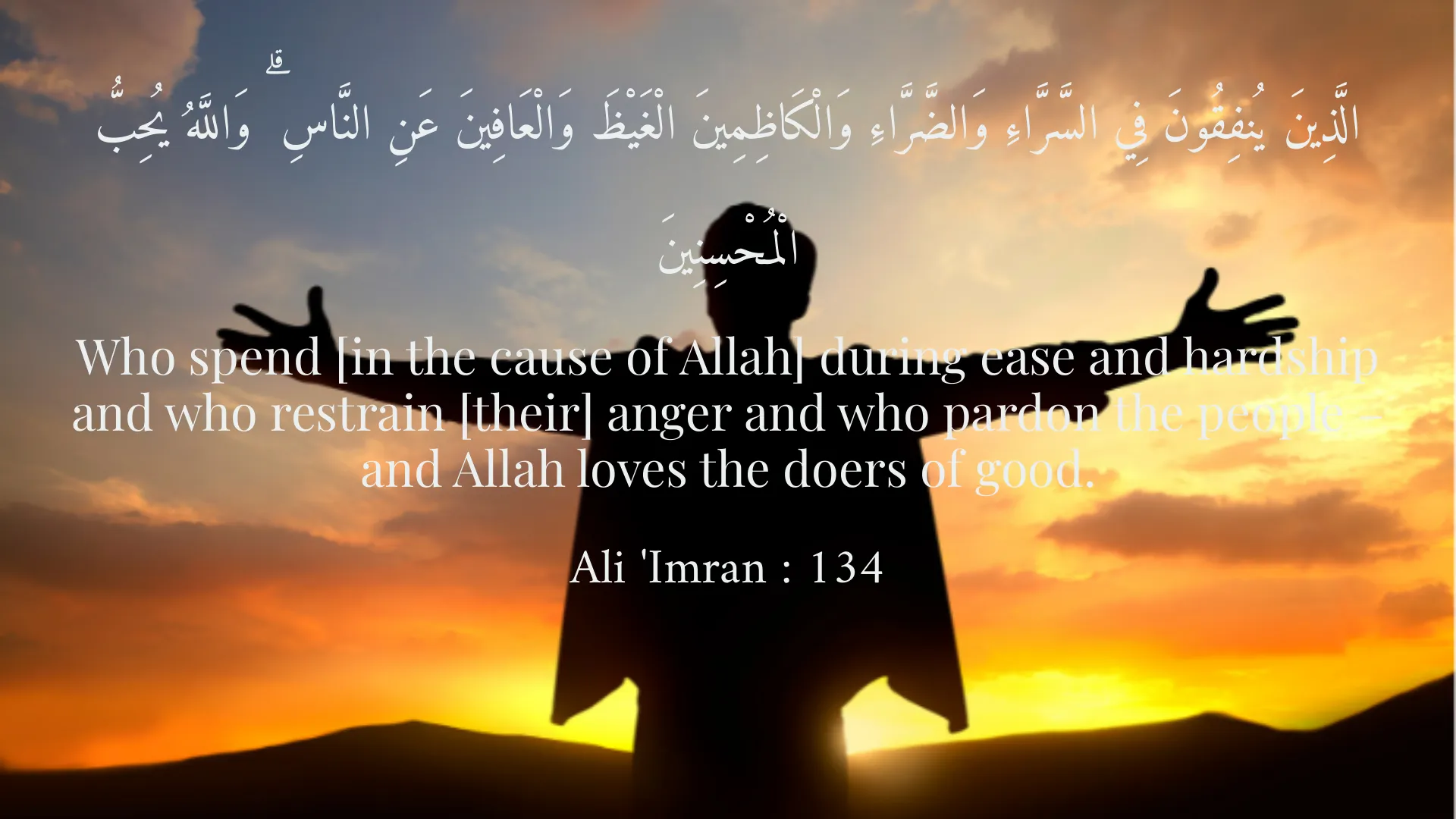
الَّذِينَ يُنفِقُونَ فِي السَّرَّاءِ وَالضَّرَّاءِ وَالْكَاظِمِينَ الْغَيْظَ وَالْعَافِينَ عَنِ النَّاسِ ۗ وَاللَّهُ يُحِبُّ الْمُحْسِنِينَ
Who spend [in the cause of Allah] during ease and hardship and who restrain [their] anger and who pardon the people – and Allah loves the doers of good.
Ali 'Imran : 134
يَاأَيُّهَا الَّذِينَ آمَنُوا اسْتَعِينُوا بِالصَّبْرِ وَالصَّلَاةِ ۚ إِنَّ اللَّهَ مَعَ الصَّابِرِينَ
O you who have believed, seek help through patience and prayer. Indeed, Allah is with the patient.
Al-Baqarah : 153
وَلْيَعْفُوا وَلْيَصْفَحُوا ۗ أَلَا تُحِبُّونَ أَن يَغْفِرَ اللَّهُ لَكُمْ ۗ وَاللَّهُ غَفُورٌ رَّحِيمٌ
And let them pardon and overlook. Would you not like that Allah should forgive you? And Allah is Forgiving and Merciful.
An-Noor : 22
الَّذِينَ آمَنُوا وَتَطْمَئِنُّ قُلُوبُهُم بِذِكْرِ اللَّهِ ۗ أَلَا بِذِكْرِ اللَّهِ تَطْمَئِنُّ الْقُلُوبُ
Those who have believed and whose hearts are assured by the remembrance of Allah. Unquestionably, by the remembrance of Allah hearts are assured.
Ar-Ra'd : 28
Short Story
It is said that a kind-hearted man had a ill-tempered neighbor who constantly troubled him. Whenever the kind man suffered annoyance from his neighbor, instead of retaliating and giving in to anger, he remained silent and remembered God and the reward for the patient. His acquaintances reproached him, asking, 'Why do you tolerate this injustice?' The man, with a warm smile, replied: 'My friends, whenever the fire of anger sparks within me, I recall that Allah loves the patient and the forgiving. Is it not better to extinguish this fire with the cool water of patience and forgiveness, rather than fuel it with the fire of revenge? For the reward of quenching the fire of anger is inner peace and divine contentment.' In this way, he always preserved his inner tranquility and remained safe from hidden anger, until one day, that very ill-tempered neighbor became ashamed of the man's continuous kindness and silence, and reformed his own behavior, making amends.