Quranic Answer
Controlling anger is a significant topic in moral and behavioral training for individuals. Throughout history, societies have grappled with the challenges of anger and its manifestations in human behavior. Anger, when unchecked, can lead to destructive consequences for both the individual and those around them. This is why the ability to master one’s emotional responses is not only essential for personal growth but also for fostering harmonious relationships within communities. The Holy Quran, as a divine source of guidance, emphasizes the importance of refraining from anger and exercising patience during difficult times. Muslim scholars and spiritual leaders often refer to the teachings found in the Quran to help individuals navigate their emotional challenges. For instance, in Surah Al-Imran, verse 134, Allah states: "And those who spend in [His] cause in both ease and hardship and who restrain anger and who pardon the people - and Allah loves the doers of good." This powerful verse indicates that those who practice patience and control their anger are closer to Allah. The ability to manage anger is depicted not merely as a personal achievement but as a means of attracting divine love and favor. To effectively control anger, one must first engage in self-awareness. Recognizing the emotions one feels is the foremost step towards emotional regulation. This awareness involves identifying the triggers of anger; for example, is the anger stemming from personal relationships, workplace stress, or societal injustices? Self-awareness allows individuals to decipher their emotional responses and challenges. Once the source of anger is recognized, individuals can begin to devise strategies to cope with it. Furthermore, during moments of anger, it is advisable to take several deep breaths and focus on regaining calmness. Deep breathing techniques help in activating the parasympathetic nervous system, assisting in reducing physiological arousal and promoting a sense of calm. When experiencing anger, instead of impulsively reacting, individuals should pause, breathe, and reconsider their initial response. This pause can prevent potential escalation and allow for a more reasoned approach to the situation. Moreover, the secret to controlling anger is intertwined with embodying virtues such as kindness, compassion, and forgiveness. The Quran also references these themes extensively. In Surah Fussilat, verse 34, it states: "And not equal are the good deed and the bad. Repel [evil] by that [deed] which is better; then, the one who between you and him is enmity will be like an old friend." This verse reminds us that responding to hostility or provocation with goodness can transform adversarial relationships. By striving to do good and forgive others, we can overcome our anger and cultivate tranquility in our hearts. In a broader context, the importance of controlling anger extends beyond individual incidents of emotional upheaval. Societal strife, violence, and conflicts often stem from unchecked anger. Individuals who are unable to manage their anger may engage in hurtful behaviors that impact families and communities. Anger can lead to cycles of violence and retribution, creating an environment of fear and hostility. On the contrary, when individuals actively practice anger management and embody teachings of patience and forgiveness, they contribute to a culture of peace and understanding. Schools and families can play significant roles in developing emotional intelligence by teaching children how to process and express their emotions appropriately. Programs that incorporate lessons on conflict resolution and emotional management can equip future generations with the tools needed to navigate challenges with grace and understanding. Furthermore, the role of community cannot be understated. Support structures, such as counseling programs and peer support groups, can provide individuals with healthy outlets for expressing their emotions. When people come together to share their experiences and learn from one another, they foster empathy and solidarity. By providing platforms for open dialogue about emotions, communities can challenge the stigma surrounding anger and mental health, encouraging individuals to seek help rather than retreat into isolation. In conclusion, controlling anger is a multifaceted endeavor that requires self-awareness, practice, and vigilance. The spiritual teachings found in the Quran, emphasizing patience, doing good, and forgiving others, serve as powerful reminders of the virtues we can embody in our daily lives. The journey towards mastering anger not only aligns with achieving personal stability but also cultivates a peaceful society. Through individual accountability and communal support, we can transform anger from a destructive force into an opportunity for growth, understanding, and ultimately, love. Therefore, pursuing these teachings not only brings one closer to Allah but also fosters a blissful and harmonious existence for all individuals involved.
Related Verses
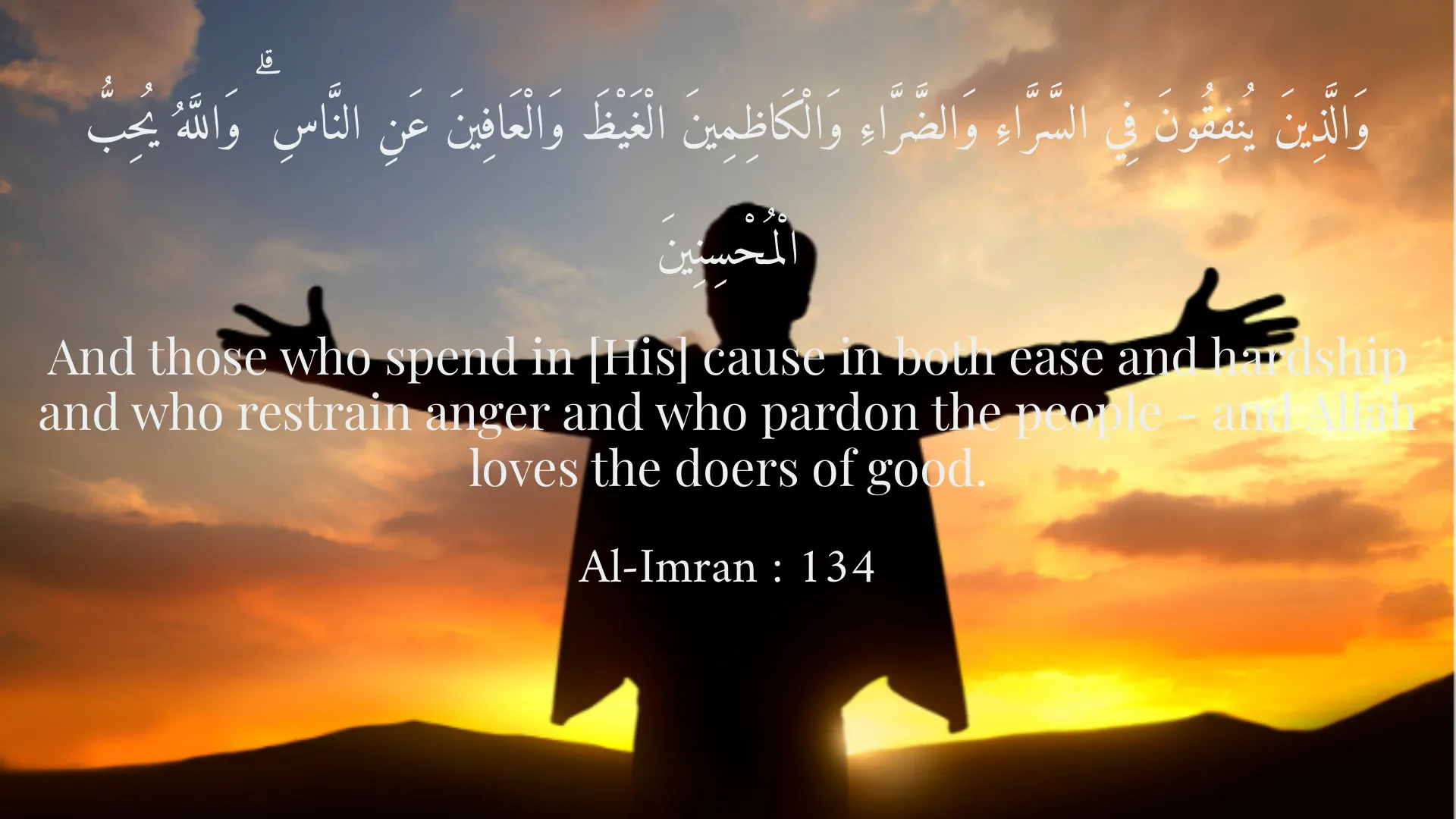
وَالَّذِينَ يُنفِقُونَ فِي السَّرَّاءِ وَالضَّرَّاءِ وَالْكَاظِمِينَ الْغَيْظَ وَالْعَافِينَ عَنِ النَّاسِ ۗ وَاللَّهُ يُحِبُّ الْمُحْسِنِينَ
And those who spend in [His] cause in both ease and hardship and who restrain anger and who pardon the people - and Allah loves the doers of good.
Al-Imran : 134
وَلَا تَسْتَوِي الْحَسَنَةُ وَلا السَّيِّئَةُ؛ اَدْفَعْ بِالَّتِي هِيَ أَحْسَنُ فَإِذا الَّذِي بَيْنَكَ وَ بَيْنَهُ عَدَاوَةٌ كَأَنَّهُ وَلِيٌّ حَمِيمٌ
And not equal are the good deed and the bad. Repel [evil] by that [deed] which is better; then, the one who between you and him is enmity will be like an old friend.
Fussilat : 34
Short Story
Once upon a time, there was a man named Amir who was in his middle age. He often became angry over the smallest issues, affecting his life greatly. One day, he decided to attend a Quran session. There, he encountered beautiful verses reminding him that self-control and forgiveness triumph over anger. After that, Amir tried to control himself in every situation, and now he leads a happy and peaceful life.