Quranic Answer
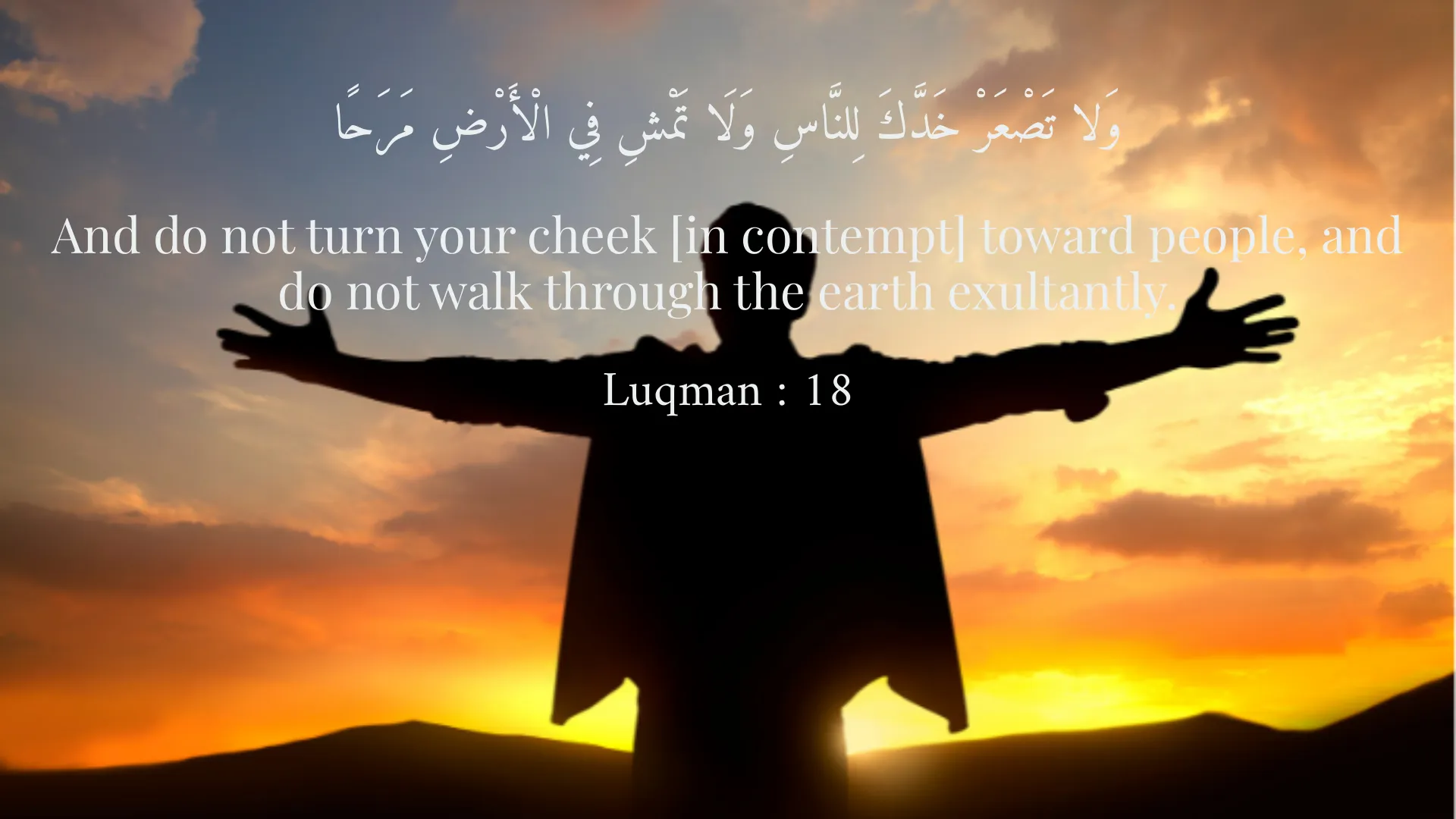
Pride is a negative and dangerous feeling that can lead a person away from the right path in life. It is often described as a sense of superiority or self-importance that clouds judgment and fosters an inflated perception of oneself. In many cultures and religious teachings, pride is recognized as a vice that can lead to a multitude of problems, including interpersonal conflicts, social division, and even spiritual alienation. This article will delve into the significance of humility and modesty as opposites to pride, particularly through the lens of Islamic teachings as conveyed in the Holy Quran. One of the most poignant reminders of humility can be found in Surah Luqman, verse 18: 'And do not turn your cheek [in contempt] toward people, and do not walk through the earth exultantly.' This simple yet profound statement underscores essential values in human interactions: respect and approachability. The Holy Quran ascribes great significance to how individuals treat one another, emphasizing that turning one's cheek in contempt signifies arrogance and disrespect. Not only does such behavior alienate individuals from one another, but it also alienates them from the moral compass that guides right actions. Walking through the earth exultantly implies a sense of entitlement and disregard for the feelings and rights of others. This verse teaches us that pride and arrogance should have no place in our social interactions. Instead, we are encouraged to strive for humility, approaching others with compassion and understanding. It points to a broader social principle: the importance of cooperation and community over individualism and egoism. By fostering a spirit of humility, we open ourselves to the wisdom and experiences of others, enriching our own lives in the process. In another significant declaration from the Quran, Surah Al-An'am, verse 165 states: 'And He it is who made you successors upon the earth and has raised some of you above others in degrees so that He may try you in what He has given you.' This passage carries profound implications regarding the nature of human existence and social stratification. It reminds us that our positions and attributes in life are not merely personal achievements but trials from Allah. Each person has unique qualities, but this diversity is meant to serve as a test of character and morality. By realizing that no one is inherently superior to another, we can better appreciate the richness of the human experience. Pride, in this context, becomes not only an individual flaw but a societal issue; it perpetuates divisions and discord among people. When we recognize that our varied statuses are part of a divine design for testing our reactions, we foster an atmosphere where equality and compassion thrive. Furthermore, Surah Al-Hujurat, verse 13 states: 'Indeed, the most noble of you in the sight of Allah is the most righteous of you.' This critical insight shifts our understanding of worth from material accomplishments or social standing to the essence of righteousness. In stark contrast to worldly measures of success, such as wealth or status, the Quran posits that true honor is found in one's piety, integrity, and good deeds. This verse offers a powerful reminder that in the eyes of Allah, our spiritual state is paramount. It blinds us from superficial judgments based on appearances or social caste. This understanding helps us combat pride, both in ourselves and others. When we internalize that one's nobility is based on righteousness, we gain a more profound awareness of our own actions and their repercussions on others. A focus on spiritual growth, rather than social superiority, can transform our attitudes and promote a culture of humility. Therefore, to conquer the pangs of pride, we must anchor our self-worth not in material possessions or social recognition but in our relationship with Allah. It is essential to remember that our worth is determined ultimately by our piety and the good deeds we carry out in our lives. By cultivating humility, we should actively practice actions that enhance our inner character. This includes being gentle in our speech, kind to those around us, and striving for sincerity in our intentions. Seeking Allah's assistance is also crucial in controlling pride. In prayer, we can ask for guidance to instill humility within our hearts and help us remain aware of our faults. Aligning with a spiritual path not only helps us to build a community based on mutual respect and love but also positions us as better persons in the relationships we develop. Humility opens the door to knowledge and understanding, while pride serves as a barrier that limits our potential for growth. In conclusion, fostering humility and modesty is integral to leading a life aligned with divine principles. Pride is a dangerous feeling that can steer us away from righteousness, while humility illuminates the path of compassion, understanding, and spiritual growth. Emphasizing Quranic teachings reminds us of the importance of treating others with respect and kindness. Ultimately, it is through humility that we may unveil the true essence of our worth, honor, and potential to positively impact our lives and the lives of those around us.
Related Verses
وَلا تَصْعَرْ خَدَّكَ لِلنَّاسِ وَلَا تَمْشِ فِي الْأَرْضِ مَرَحًا
And do not turn your cheek [in contempt] toward people, and do not walk through the earth exultantly.
Luqman : 18
وَهوَ الَّذِي جَعَلَكُمْ خَلَائِفَ الْأَرْضِ وَرَفَعَ بَعْضَكُمْ فَوْقَ بَعْضٍ دَرَجَاتٍ لِّيَتَّخِذَ بَعْضُكُمْ بَعْضًا سُخْرِيًّا
And He it is who made you successors upon the earth and has raised some of you above others in degrees.
Al-An'am : 165
إِنَّ أَكْرَمَكُمْ عِندَ اللَّهِ أَتْقَاكُمْ
Indeed, the most noble of you in the sight of Allah is the most righteous of you.
Al-Hujurat : 13
Short Story
One day, a man named Ali felt proud of his successes in work and life. He thought that because of his efforts, he could look down on others. One day, his neighbor, who had failed in his work, visited him, and instead of offering help, Ali laughed at him. That night, while reading the Quran, he came across a verse from Surah Luqman about humility and not ridiculing others. He realized that his pride was distancing him from God and others. After that, Ali decided to be kinder in his relationships and to understand the feelings of others.