Quranic Answer
Loneliness is an increasingly prevalent issue in today's modern world, affecting millions of individuals across different demographics and cultures. In an age dominated by technology and social media, where human connection is often reduced to mere online interactions, the profound sense of isolation that many feel can be deeply troubling. The experience of loneliness is not merely a fleeting emotional state; it can lead to a range of negative health outcomes, both mental and physical. This complex challenge is rooted in our inherent need for connection and belonging. However, spiritual guidance can also provide meaningful insights on coping with solitude, particularly from Islamic teachings. The Holy Quran offers profound wisdom regarding loneliness and the mechanisms available to overcome it. One of the essential verses addressing this emotional state is found in Surah Ar-Ra'd (13:28), where it is stated, 'Indeed, it is by the remembrance of Allah that hearts find peace.' This verse underscores a significant principle in Islamic thought: that the act of remembering Allah can serve as a remedy for many of life’s trials, including loneliness. This remembrance, known as ‘Dhikr,’ can take many forms, including prayer, meditation, and reflection on the blessings bestowed upon us. The practice of Dhikr is often an antidote to feelings of isolation, providing a sense of belonging to something greater than oneself. Furthermore, the Quran encourages believers to seek comfort and support from Allah during these solitary moments. When one turns to Allah in prayer and contemplation, they can find solace amidst their struggles. This connection is vital; it reinforces the idea that even in the depths of loneliness, individuals are not truly alone, but rather in communion with their Creator. Thus, enhancing one's spiritual practices can significantly impact their emotional health, offering a pathway to peace and understanding. In addition to the personal relationship with Allah, the Quran also emphasizes the importance of social connections and friendships in combating loneliness. In Surah Al-Anfal (8:24), Allah advises believers: 'O you who have believed, respond to Allah and the Messenger when he calls you to that which gives you life.' Engaging in good deeds and supporting one another within the community can significantly reduce feelings of isolation. The social dimension is echoed in Surah Al-Hujurat (49:10), where it states, 'The believers are but brothers.' This verse highlights the intrinsic value of community and connections among believers. Interpersonal relationships serve as a vital pillar for emotional support. Building and maintaining positive relationships with friends and family can significantly bolster one's mental health. Healthy relationships contribute to emotional stability, allowing individuals to share their burdens and joys. Furthermore, these connections can provide practical support, including companionship and encouragement during difficult times. Studies indicate that social interactions can trigger the release of oxytocin and serotonin, hormones that help alleviate feelings of loneliness and promote overall emotional well-being. Regular engagement with a supportive social circle can create a buffer against loneliness. Thus, for anyone grappling with feelings of isolation, it is essential to seek out and nurture meaningful relationships with others. In today's fast-paced society, it is also significant to recognize the subtle ways in which loneliness manifests. Oftentimes, individuals may not articulate their feelings of isolation and may instead bury these emotions under layers of busyness. Recognizing and confronting these feelings is imperative to developing healthier coping strategies. One powerful approach is to identify the triggers that lead to feelings of loneliness; whether they stem from transitioning to a new environment, loss of a loved one, or changes in social dynamics, acknowledging these triggers can help individuals seek appropriate support. It’s also essential to encourage community involvement and volunteerism as avenues for combating loneliness. Engaging in community service activities not only provides opportunities for social interaction but also fosters a sense of purpose. Contributing to the well-being of others can significantly uplift one's spirit, as altruistic acts can enhance joy and mitigate feelings of isolation. Moreover, in the context of mental health, individuals should not hesitate to seek professional help when feelings of loneliness become overwhelming. Mental health professionals can offer support strategies and therapeutic approaches tailored to individuals' unique experiences. By utilizing both spiritual and therapeutic resources, individuals struggling with loneliness can work towards healing and strength. In conclusion, loneliness is a multifaceted challenge that many endure, particularly in the context of our modern society. It is imperative to foster both spiritual and social resilience to combat these feelings. The Holy Quran provides vital guidance on this journey, reminding us of the importance of remembering Allah and the power of community and friendship. By nurturing our relationship with Allah through prayer and reflection, as well as by investing in positive relationships with others, we can emerge from the shadows of loneliness. Furthermore, prioritizing community involvement and seeking professional help when needed can bolster our efforts to navigate these emotional challenges. Thus, anyone looking for energy and peace in life should remember Allah, converse with Him about their struggles, and actively cultivate constructive friendships.
Related Verses
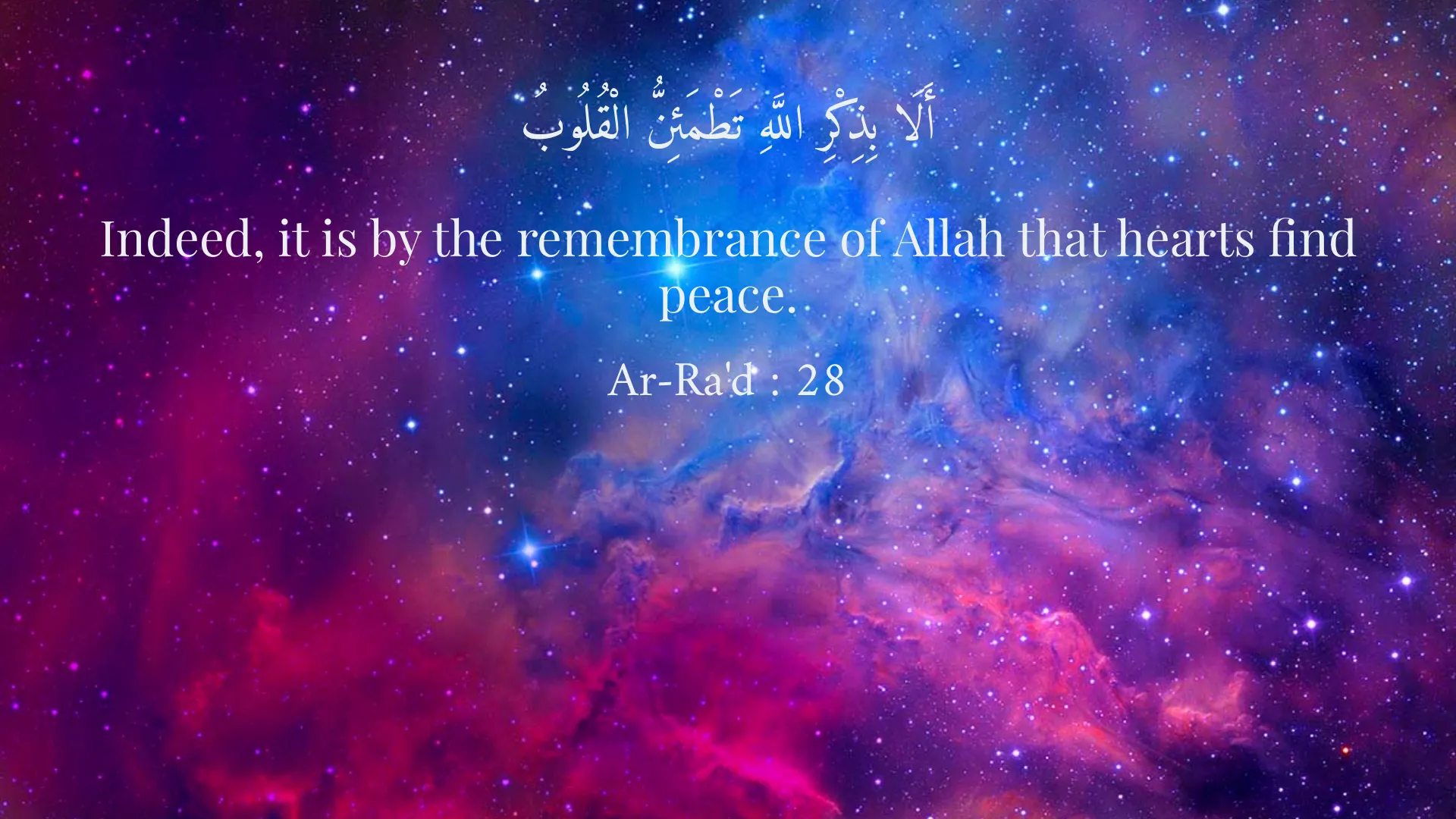
أَلَا بِذِكْرِ اللَّهِ تَطْمَئِنُّ الْقُلُوبُ
Indeed, it is by the remembrance of Allah that hearts find peace.
Ar-Ra'd : 28
يَا أَيُّهَا الَّذِينَ آمَنُوا اسْتَجِيبُوا لِلَّهِ وَلِلرَّسُولِ إِذَا دَعَاكُمْ لِمَا يُحْيِيكُمْ
O you who have believed, respond to Allah and the Messenger when he calls you to that which gives you life.
Al-Anfal : 24
إنما المؤمنون إخوة
The believers are but brothers.
Al-Hujurat : 10
Short Story
One day, a young man named Hamid was sitting in the park, feeling lonely. He remembered the verse from the Quran that says, 'Indeed, it is by the remembrance of Allah that hearts find peace.' Hamid decided that instead of complaining, he would take action by remembering God. He made an effort to connect with others and eventually found wonderful friendships. Over time, he felt his loneliness diminish and his life took on a hue of love and companionship.