Quranic Answer
Correcting one's actions is a central theme in the spiritual and moral development of individuals. Throughout various religious texts and philosophies, the importance of self-improvement and repentance is emphasized, and among them, the teachings found in the Holy Quran stand as a profound guide. In this article, we will explore the concept of correcting one's actions as articulated in the Holy Quran, the significance of repentance, and the methods through which individuals can navigate towards a path of righteousness. ### The Importance of Correction in One’s Actions In every individual’s life, there comes a time when they face the need for correction, be it in their behavior, attitude, or moral standpoints. Making mistakes is inherent to human nature, and it is through these missteps that we learn and grow. However, it is the response to these errors that defines our character. The process of correction is not just about acknowledging one’s wrongs but also about taking actionable steps towards reforming oneself. This is where the concept of repentance, as presented in the Holy Quran, holds paramount importance. ### Repentance in the Holy Quran The Quran, being a guiding light for millions, offers insightful principles regarding the importance of repentance. In Surah At-Tahreem (66:8), Allah calls upon believers to turn back to Him with sincerity and strengthen their faith and piety. This invitation serves as a reminder that no matter how lost one may feel, there is always hope for redemption. The essence of repentance in this context is not merely to express regret but to commit genuinely to changing one’s behavior for the better and fostering a stronger connection with the Creator. Next, in Surah Az-Zumar (39:53), Allah promises His servants boundless mercy, reinforcing that seeking forgiveness is always met with compassion and grace from God. This promise emphasizes that hope should never be lost; regardless of the severity of one’s sins, one can always return to God with a sincere and humble heart. The recognition of God's immense mercy is integral to the process of correction, as it instills faith in individuals that improvement and forgiveness are attainable. ### The Pathway to Rectification Correcting one’s actions involves a multifaceted approach that includes sincere repentance as well as the pursuit of good deeds. It is essential for individuals to actively seek forgiveness from God, recognizing their misdeeds and vowing to change. In Surah Al-Furqan (25:70), it is mentioned that those who repent and engage in righteous deeds will enter Paradise. This verse serves as a beacon of hope, illustrating that the path to salvation and spiritual fulfillment is paved with repentance and virtuous actions. 1. Sincere Repentance: The first step in correcting one’s actions is to engage in sincere repentance. This means acknowledging one's faults openly, feeling remorse for them, and making a firm intention to avoid such mistakes in the future. 2. Commitment to Good Deeds: After repenting, individuals must channel their efforts towards performing good deeds. Engaging in acts of kindness, charity, and service to others not only benefits those around them but also solidifies the intentions of one’s heart. 3. Seeking Guidance from the Righteous: Consulting and engaging in conversations with righteous individuals can be invaluable. These individuals often serve as a source of wisdom and guidance, drawing from their experiences to help others navigate their paths. Exposure to a community of righteousness encourages continuous growth and accountability. 4. Regular Self-Reflection: Continuous self-reflection allows individuals to stay grounded and aware of their actions. This practice aids in recognizing areas requiring further correction and improvement, fostering a mindset oriented toward growth. ### The Cycle of Improvement The journey towards correcting one’s actions is cyclical. Individuals will find themselves in a constant state of self-improvement, which is nurtured through acts of worship, moral integrity, and ethical behavior. The beauty of this cycle lies in the fact that it is never too late to begin anew. Each moment presents a new opportunity to repent and strive for excellence. ### Conclusion In conclusion, the necessity of correcting one's actions is an essentiel aspect of personal growth and spiritual awakening. The lessons derived from the Holy Quran serve not only as religious guidance but also as a comprehensive framework for moral rectitude and self-improvement. Believers are reminded to maintain faith in Allah’s mercy and to engage earnestly in acts of righteousness. By embracing the principles of repentance and correcting one’s actions, individuals are offered a chance at redemption, paving the way to paradise, as promised in the holy verses. Through this transformative process, one not only enhances their spiritual ties but also contributes positively to the well-being of society at large.
Related Verses
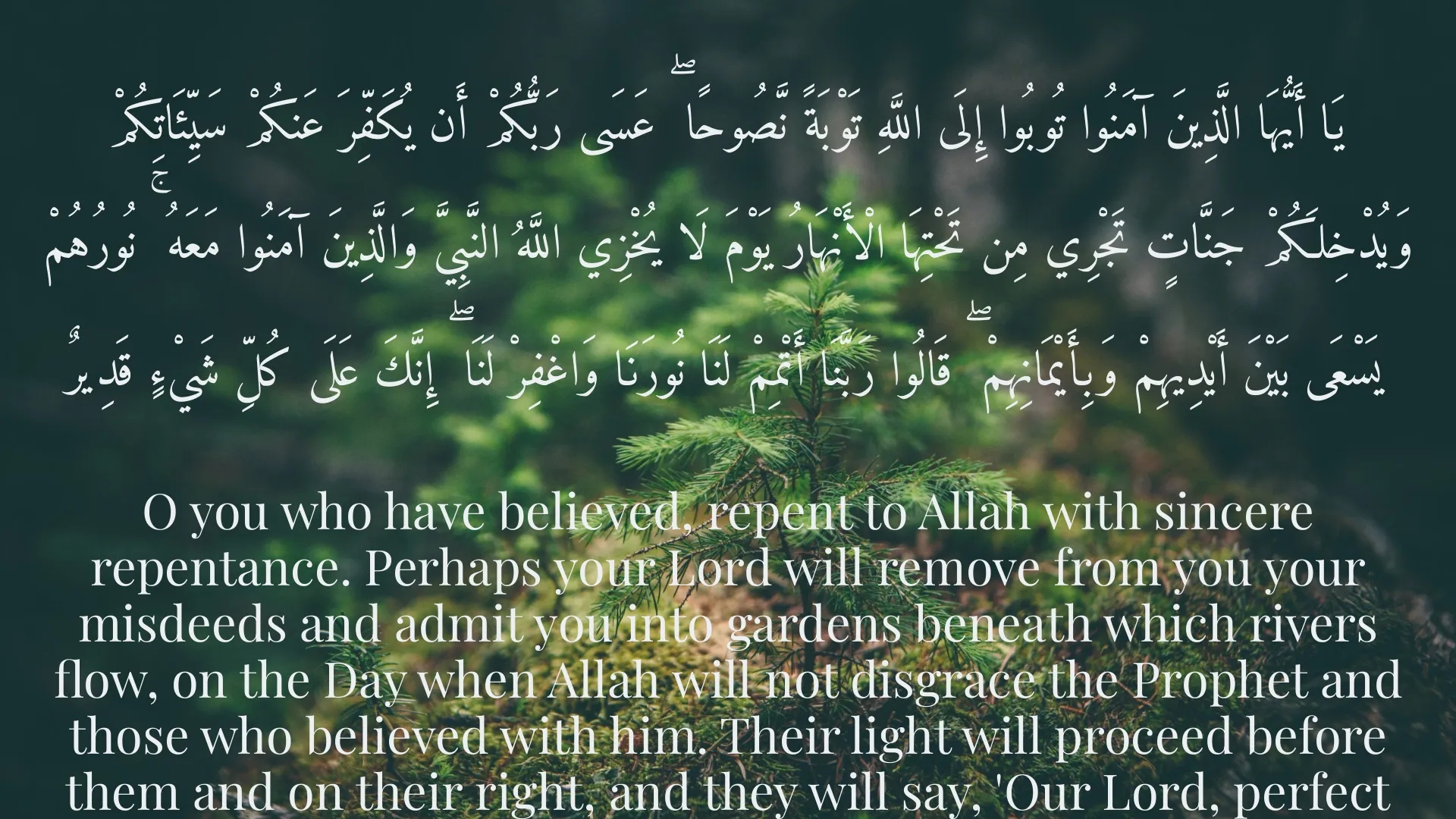
يَا أَيُّهَا الَّذِينَ آمَنُوا تُوبُوا إِلَى اللَّهِ تَوْبَةً نَّصُوحًا ۖ عَسَى رَبُّكُمْ أَن يُكَفِّرَ عَنكُمْ سَيِّئَاتِكُمْ وَيُدْخِلَكُمْ جَنَّاتٍ تَجْرِي مِن تَحْتِهَا الْأَنْهَارُ يَوْمَ لَا يُخْزِي اللَّهُ النَّبِيَّ وَالَّذِينَ آمَنُوا مَعَهُ ۚ نُورُهُمْ يَسْعَى بَيْنَ أَيْدِيهِمْ وَبِأَيْمَانِهِمْ ۖ قَالُوا رَبَّنَا أَتْمِمْ لَنَا نُورَنَا وَاغْفِرْ لَنَا ۖ إِنَّكَ عَلَى كُلِّ شَيْءٍ قَدِيرٌ
O you who have believed, repent to Allah with sincere repentance. Perhaps your Lord will remove from you your misdeeds and admit you into gardens beneath which rivers flow, on the Day when Allah will not disgrace the Prophet and those who believed with him. Their light will proceed before them and on their right, and they will say, 'Our Lord, perfect for us our light and forgive us. Indeed, You are over all things competent.'
At-Tahreem : 8
قُلْ يَا عِبَادِيَ الَّذِينَ آمَنُوا اتَّقُوا رَبَّكُمْ ۖ لِلَّذِينَ أَحْسَنُوا فِي هَذِهِ الدُّنْيَا حَسَنَةٌ ۖ وَأَرْضُ اللَّهِ وَاسِعَةٌ ۖ إِنَّمَا يُوَفَّى الصَّابِرُونَ أَجْرَهُمْ بِغَيْرِ حِسَابٍ
Say, 'O My servants who have believed, fear your Lord. For those who do good in this world is good, and the earth of Allah is spacious. Indeed, the patient will be given their reward without account.'
Az-Zumar : 53
إِلَّا مَنْ تَابَ وَآمَنَ وَعَمِلَ صَالِحًا فَأُو۟لَـٰئِكَ يَدْخُلُونَ الْجَنَّةَ وَلَا يُظْلَمُونَ شَيْئًا
Except for the one who repents, believes and does righteous work. For those will enter Paradise and will not be wronged at all.
Al-Furqan : 70
Short Story
Once upon a time, there was a man named Hasan who felt he had forgotten what it meant to be the best version of himself. He decided to take action and work on correcting his actions. Hasan began spending his time in prayer and supplication, seeking forgiveness from Allah. Gradually, he found that with a stronger determination, he was able to perform the best of deeds. He realized that through rectifying his intentions and actions, he could earn a place in Paradise.