Quranic Answer
Doing good is one of the important principles of life emphasized in the Holy Quran. This fundamental teaching transcends cultural and geographical boundaries, offering a universal message that resonates with people of all backgrounds. In a world often filled with strife and discord, the emphasis on good deeds serves as a guiding light for individuals seeking a meaningful and fulfilling life. This article explores the importance of doing good in Islam, the necessary intentions behind such actions, and practical ways to cultivate this noble habit in daily life. To cultivate the habit of doing good, an individual must first possess a sincere intention. It is a common understanding in Islamic teachings that the intention behind one's actions holds immense significance. The purity of one's intentions is paramount; indeed, it is the underlying principle that animates and validates any act of goodness. Essentially, good deeds should be performed for the sake of Allah, as a means of seeking His pleasure and approval. This intrinsic motivation transforms mundane acts into acts of worship, thereby elevating the status of such deeds in the eyes of the Creator. In Surah Al-Baqarah, verse 177, Allah states: 'Righteousness is not that you turn your faces toward the east or the west, but [true] righteousness is in one who believes in Allah, the Last Day, the Angels, the Book, and the Prophets and gives his wealth, in spite of love for it, to relatives, orphans, the needy, the traveler, those who ask [for help], and for freeing slaves; and [who] establishes prayer and gives zakah; [those who] fulfill their promise when they promise; and [those who] are patient in poverty and hardship and during battle. Those are the ones who have been true, and it is those who are the righteous.' This profound verse encapsulates the essence of righteousness, highlighting that good deeds extend far beyond superficial actions. From this verse, it becomes abundantly clear that doing good is not merely about ritualistic practices or following external religious obligations; rather, it embraces comprehensive and noble behaviors towards others. Goodness in Islam is defined by one's conduct and obligations to Allah and humanity. An individual is encouraged to hold a deep understanding of their responsibilities to family, friends, the less fortunate, and society at large. As such, the Quran presents a holistic view of righteousness that encourages believers to engage in positive actions that uplift and sustain their communities. To develop the habit of doing good, one must begin to incorporate this conduct into their daily life. The simplest yet effective approach is to start with small actions that demonstrate kindness and empathy. For instance, greeting others with a smile creates an atmosphere of warmth and friendliness, while helping the needy can significantly affect those who require support. These seemingly minor actions can have profound ripple effects, inspiring others to pay forward kindness and generosity. Moreover, showing respect towards parents is another invaluable aspect of doing good enshrined in Islamic teachings. In many verses of the Quran, Allah emphasizes the importance of honoring one's parents, and doing good to them is considered among the highest forms of righteous behavior. Maintaining a caring and respectful relationship with parents can instill values of empathy, responsibility, and love in family units and, by extension, society. Participating in charity events and supporting social initiatives can also be beneficial in promoting goodness within communities. Charity, or 'Sadaqah,' and obligatory almsgiving, or 'Zakah,' are cornerstone practices in Islam that reinforce the notion of social responsibility. By engaging in charitable acts, individuals not only provide assistance to those in need, but they also foster a sense of community and connectedness. Local charity drives, food banks, and fundraising events are excellent opportunities for individuals to practice generosity, demonstrate compassion, and influence others positively. Furthermore, creating awareness about social issues and advocating for the rights of marginalized groups can serve as a powerful form of doing good. Actively engaging in discussions surrounding social justice, education, and environmental conservation can inspire collective action that leads to meaningful change in society. It encourages individuals to take responsibility not just for their actions, but for the welfare of others and the world as a whole. Finally, praying and seeking assistance from Allah can further aid an individual in their journey towards goodness. Supplicating for guidance and strength is integral to nurturing righteous intentions and pushing through the challenges that may arise while committing to doing good. By turning to Allah in prayer, individuals can cultivate a sense of belonging and rely on a higher power to equip them for their endeavors. This spiritual connection can embolden their resolve, allowing them to navigate any obstacles with resilience. As individuals embark on the journey of doing good, it is essential to recognize that changing habits takes time and perseverance. Cultivating goodness requires consistency and an open heart. One might face moments of challenge or inertia, but the key to developing this habit is not to become disheartened. Instead, a conscious effort to consistently practice good deeds, no matter how small, can ultimately lead to transformation. Gradually, a consistent pattern of good actions fosters the development of righteous character and a deeper understanding of one's purpose in life. In conclusion, the principle of doing good is paramount in Islam and serves as a beacon of hope and guidance for individuals navigating the complexities of life. The essence of righteous living extends far beyond mere actions; it is a comprehensive understanding of one’s obligations and duties to others and to Allah. By cultivating sincerity in intentions, initiating small acts of kindness, engaging in community outreach, and seeking divine assistance, individuals can develop the habit of doing good in their daily lives. Ultimately, this commitment to goodness not only enriches individual lives but also nurtures healthy, cohesive communities, reinforcing the timeless message of the Quran that righteousness is an achievable goal for everyone.
Related Verses
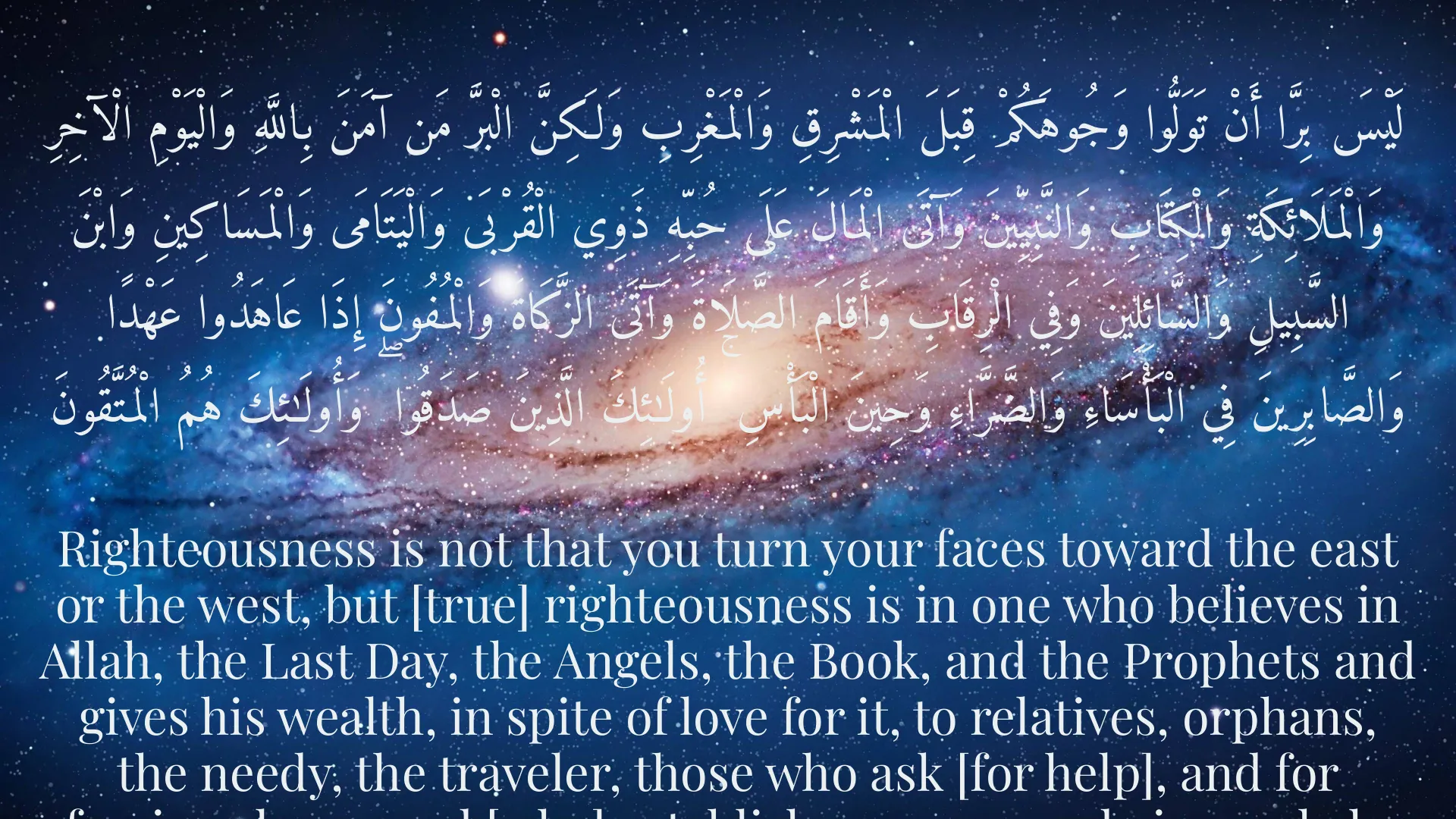
لَيْسَ بِرَّا أَنْ تَوَلُّوا وَجُوهَكُمْ قِبَلَ الْمَشْرِقِ وَالْمَغْرِبِ وَلَكِنَّ الْبرَّ مَن آمَنَ بِاللَّهِ وَالْيَوْمِ الْآخِرِ وَالْمَلَائِكَةِ وَالْكِتَابِ وَالنَّبِيِّينَ وَآتَى الْمَالَ عَلَى حُبِّهِ ذَوِي الْقُرْبَى وَالْيَتَامَى وَالْمَسَاكِينِ وَابْنَ السَّبِيلِ وَالسَّائِلِينَ وَفِي الْرِقَابِ وَأَقَامَ الصَّلَاةَ وَآتَى الزَّكَاةَ وَالْمُفُونَ إِذَا عَاهَدُوا عَهْدًا وَالصَّابِرِينَ فِي الْبَأْسَاءِ وَالضَّرَّاءِ وَحِينَ الْبَأْسِ ۚ أُولَـٰئِكَ الَّذِينَ صَدَقُوا ۖ وَأُولَـٰئِكَ هُمُ الْمُتَّقُونَ
Righteousness is not that you turn your faces toward the east or the west, but [true] righteousness is in one who believes in Allah, the Last Day, the Angels, the Book, and the Prophets and gives his wealth, in spite of love for it, to relatives, orphans, the needy, the traveler, those who ask [for help], and for freeing slaves; and [who] establishes prayer and gives zakah; [those who] fulfill their promise when they promise; and [those who] are patient in poverty and hardship and during battle. Those are the ones who have been true, and it is those who are the righteous.
Al-Baqarah : 177
Short Story
Once upon a time, a young man named Arash decided to make a habit of doing good. Every morning, before going to work, he would do one good deed. One day he helped an old man sitting on the street by giving him food. The old man was very grateful and said, 'Your act has made me happy.' From that day onward, Arash realized that each time he performed a good deed, not only did it bring him joy, but it also filled his heart with a sense of satisfaction and peace. This good feeling encouraged him to continue doing good.