Quranic Answer
In the Holy Quran, the essence of true belief is intricately linked with acts of kindness and the commitment to helping others. This concept is not merely a suggestion but a fundamental characteristic of the faithful, deeply rooted in the texts of the Quran. One of the most significant verses that highlight this core belief is found in Surah Al-Baqarah, verse 177. This verse elucidates that genuine faith involves giving charity and assistance to those in need, underscoring that such acts are not merely optional but essential indicators of a believer's relationship with their faith. Charity, in its many forms, becomes a central theme throughout the Quran. It serves as a reminder that wealth should not be hoarded but shared to create a balanced community. The act of giving—whether it be through monetary donations or time spent with the less fortunate—reflects the compassion and kindness that true believers should embody. In this light, the significance of charity becomes a reflection of one's unwavering faith in Allah. Giving isn’t just about almsgiving; it’s about establishing a culture of empathy that ripples through society. Furthermore, Surah An-Nisa, verse 36, expands on this theme by directing humanity to be good to a wide array of individuals in their lives—parents, relatives, orphans, the needy, and neighbors. This inclusive sentiment emphasizes the responsibility that comes with being a part of a community. The Quranic guidance speaks to the collective nature of humanity, highlighting that the welfare of individuals is interconnected. When we engage in kindness towards our parents, we strengthen familial bonds and cultivate respect. When we care for orphans, we provide not just material support but also emotional security. Every small act of kindness contributes to a nurturing society where individuals feel valued and cared for. Moreover, this also directly ties into the concept of good character within Islamic teachings. In Surah Al-Mu'minun, verse 57, Allah encourages believers to engage in righteous deeds without fear. This command encourages believers to embrace opportunities for kindness, presenting the idea that ethical actions should be pursued with vigor and enthusiasm. It is not merely about performing good deeds out of obligation but rather embracing them as a joyful expression of one’s faith. Acts of service—whether sharing food with a neighbor, volunteering at a local charity, or simply offering a listening ear to a friend—are tangible manifestations of this directive. In addition, the Quran instills in its followers the belief that all acts of goodness, no matter how trivial they may appear, do not go unnoticed by Allah. This reassurance brings a sense of purpose and fulfillment to believers, acting as a powerful motivator for maintaining a lifestyle rooted in kindness. Such acknowledgment serves to encourage individuals to sustain their efforts in doing good, regardless of the scale or visibility of the act. Thus, even seemingly insignificant gestures can have profound impacts on the lives of others and on the community at large. Furthermore, the act of helping others and engaging in positive interactions with the people around us is beneficial not just for those receiving help, but also for the individual performing the good deed. Numerous studies in psychology have shown that engaging in acts of kindness can lead to greater life satisfaction, increased happiness, and even improved health outcomes for givers. When one channels their energy towards altruistic behaviors, they cultivate a sense of belonging, purpose, and joy. This intrinsic reward aligns seamlessly with the Quranic teachings, highlighting the holistic nature of faith that intertwines spiritual well-being with community betterment. This reciprocal relationship between giving and receiving underscores the community-centric visions that the Quran espouses. By creating strong relationships through acts of kindness and charity, we foster a sense of belonging among individuals, cultivating an environment filled with mutual respect and love. For example, people who regularly support their neighbors create a bond that enhances their living environment, enabling them to thrive together and support one another in times of need. When people embrace this philosophy, the overall atmosphere within the community shifts towards one of empathy, collaboration, and understanding. Ultimately, the Quran's messages about kindness and helping others open a pathway for believers to create a community grounded in love and empathy. Each act of goodness becomes a building block for a stronger society, where individuals feel genuinely cared for and valued. It inspires believers to pursue goodness with sincerity, aspiring for Allah’s pleasure in their everyday lives. As such, the teachings of the Quran act as a compass guiding faithful individuals towards not only spiritual enlightenment but also towards fostering a compassionate and empathetic community. In conclusion, the importance of doing good and helping others, as outlined in the Quran, is not just a reflection of individual faith, but a collective responsibility towards nurturing a society enriched with love and support. It encourages every believer to act upon their beliefs, reinforcing that the essence of true faith is deeply embedded in the actions we take towards others. When faced with opportunities to serve and support, embracing these moments can lead to fulfilling lives both for the giver and receiver, ultimately aligning oneself with the divine virtues Allah has bestowed upon humanity.
Related Verses
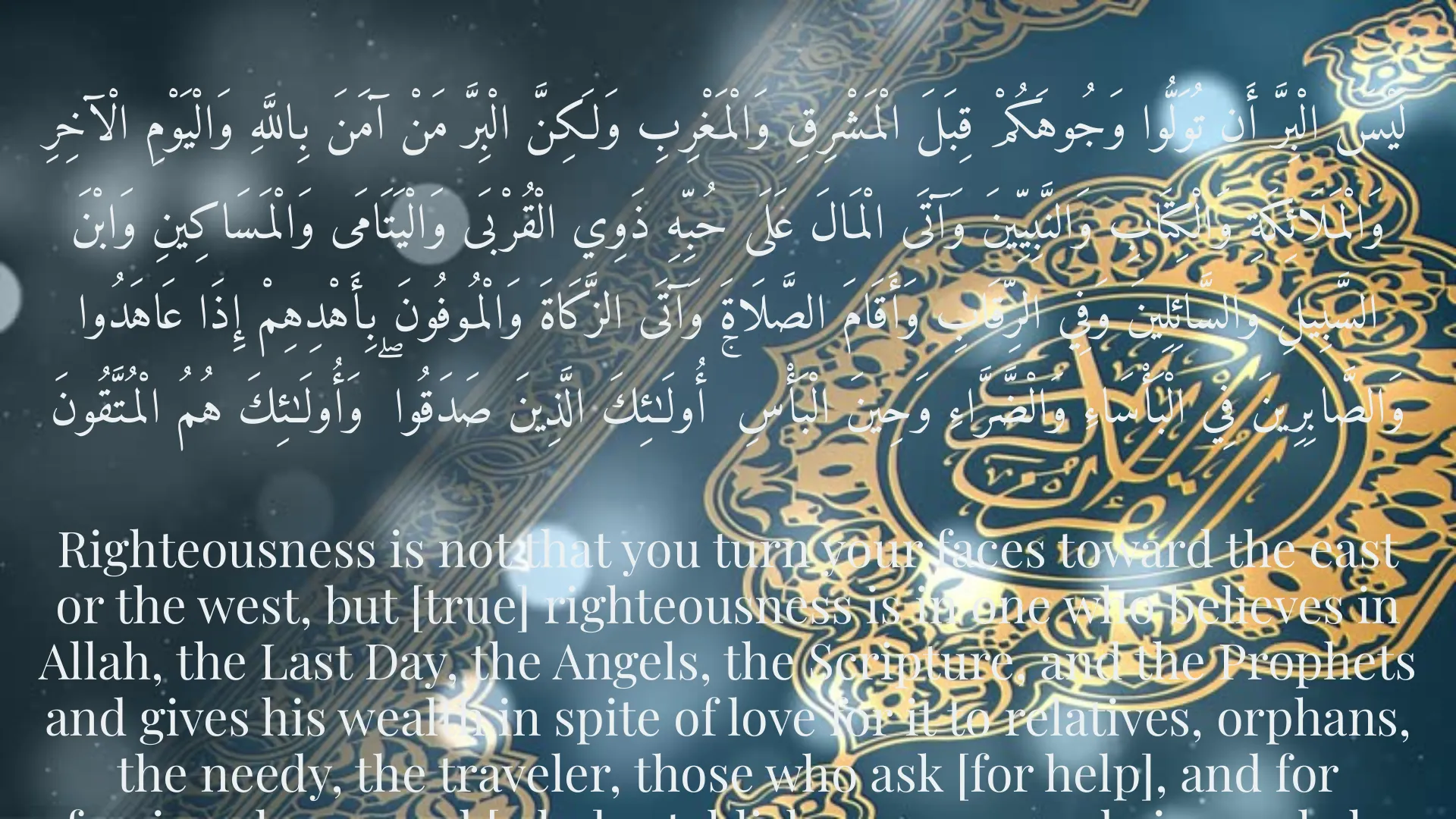
لَيْسَ الْبِرَّ أَن تُوَلُّوا وَجُوهَكُمْ قِبَلَ الْمَشْرِقِ وَالْمَغْرِبِ وَلَكِنَّ الْبِرَّ مَنْ آمَنَ بِاللَّهِ وَالْيَوْمِ الْآخِرِ وَالْمَلَائِكَةِ وَالْكِتَابِ وَالنَّبِيِّينَ وَآتَى الْمَالَ عَلَى حُبِّهِ ذَوِي الْقُرْبَى وَالْيَتَامَى وَالْمَسَاكِينِ وَابْنَ السَّبِيلِ والسَّائِلِينَ وَفِي الرِّقَابِ وَأَقَامَ الصَّلَاةَ وَآتَى الزَّكَاةَ وَالْمُوفُونَ بِأَهْدِهِمْ إِذَا عَاهَدُوا وَالصَّابِرِينَ فِي الْبَأْسَاءِ وَالْضَّرَّاءِ وَحِينَ الْبَأْسِ ۚ أُولَـٰئِكَ الَّذِينَ صَدَقُوا ۖ وَأُولَـٰئِكَ هُمُ الْمُتَّقُونَ
Righteousness is not that you turn your faces toward the east or the west, but [true] righteousness is in one who believes in Allah, the Last Day, the Angels, the Scripture, and the Prophets and gives his wealth in spite of love for it to relatives, orphans, the needy, the traveler, those who ask [for help], and for freeing slaves; and [who] establishes prayer and gives zakah; [those who fulfill their promise when they promise] and [those who are] patient in poverty and hardship and during battle. Those are the ones who have been true, and it is those who are the righteous.
Al-Baqarah : 177
وَاعْبُدُوا اللَّهَ وَلَا تُشْرِكُوا بِهِ شَيْئًا ۖ وَبِالْوَالِدَيْنِ إِحْسَانًا ۖ وَبِذِي الْقُرْبَى وَالْيَتَامَى وَالْمَسَاكِينِ وَالْقَائِمِينَ بِالْقِسْطِ وَالْمُسَائِلِينَ وَالْمُعْتَقِدِينَ
And worship Allah and associate nothing with Him, and to parents, do good, and to relatives, orphans, the needy, the speaker of justice, and the petitioners.
An-Nisa : 36
Short Story
One day, a man named Hasan decided he wanted to help his neighbors. Every day, he would prepare some food and take it to their doors. One day, one of the neighbors thanked him and said how much his actions positively impacted their life. Hasan felt a deep sense of happiness and pride hearing this and decided to continue this practice. He realized that doing good not only helps others, but it also brings joy to oneself.