Quranic Answer
Feeling guilty, although sometimes heavy and overwhelming, can actually be a sign of a living conscience and an awakening heart. This feeling itself is the first step towards return and repentance, indicating that you are still inclined towards goodness and divine perfection. In Quranic and Islamic teachings, no sin is so great that God's mercy and forgiveness cannot encompass it, provided that a sincere repentance and a truthful return take place. This is a deeply comforting message, reiterated many times in the Holy Quran, bringing solace to the hearts of believers. The first and most important step to drawing closer to God when feeling guilty is 'Tawbah' (repentance). In Islam, Tawbah is not merely a verbal confession but a profound change of heart and action. Sincere repentance, known as 'Tawbatun Nasuh,' has several pillars: First, genuine remorse and regret for the sin committed. This regret must come from the depths of one's being, not merely from fear of punishment. Second, immediate abandonment of the sin. If one is still committing the sin while repenting, their repentance is incomplete. Third, a firm resolve and intention not to return to that sin in the future. Fourth, making amends if possible; meaning, if the rights of others (Haqq al-Nas) have been violated, they must be restored or forgiveness sought from those individuals. The Holy Quran invites us to repent, as in Surah At-Tahrim, verse 8: "O you who have believed, repent to Allah with sincere repentance. Perhaps your Lord will remove from you your misdeeds and admit you into Gardens beneath which rivers flow." Following and alongside repentance, 'Istighfar' (seeking forgiveness from God) is highly effective. Repeatedly uttering the phrase "Astaghfirullah Rabbi wa Atubu Ilayh" (I seek forgiveness from Allah, my Lord, and I repent to Him) with presence of mind purifies the soul from impurities and brings a sense of lightness and closeness to God. Istighfar not only erases sins but also brings worldly and spiritual blessings, as mentioned in the Quran and Hadith, that it leads to an increase in sustenance, the descent of merciful rain, and righteous offspring. This act demonstrates humility and an acknowledgment of one's weakness before the infinite power of God, which God loves dearly. Another way to draw closer to God after feeling guilty is to cultivate 'hope in His mercy' and avoid despair. Satan constantly tries to induce despair in a person after sin, to divert them from the path of repentance and return. However, the Quran explicitly states in Surah Az-Zumar, verse 53: "Say, 'O My servants who have transgressed against themselves [by sinning], do not despair of the mercy of Allah. Indeed, Allah forgives all sins. Indeed, it is He who is the Forgiving, the Merciful.'" This verse is one of the most hopeful in the Quran, opening the doors of mercy to all sinners and assuring them that there is no sin that God cannot forgive, unless the individual himself turns away from His mercy. 'Performing good deeds' is also a powerful way to erase the effects of sin and draw closer to God. The Quran states in Surah Hud, verse 114: "Indeed, good deeds do away with evil deeds." This means that after repentance, one should not dwell on the past and drown in regret; rather, one should strive to move forward by performing acts of worship, giving charity, helping the needy, showing kindness to people, and engaging in any other righteous deed. These actions not only foster positive feelings and hope but also practically demonstrate a change of direction and a resolve to live a life in accordance with God's pleasure. Every good deed you perform acts like a step, bringing you closer to God and removing the darkness of sin from your heart. 'Continuous connection with the Quran and prayer' also plays a vital role. Prayer (Salat) is the pillar of faith and the ascension of the believer. Through prayer, a person has the opportunity to speak directly to their Lord five times a day, express their needs, and purify their heart from any impurity. Reciting the Quran and reflecting on its verses also refines the soul and increases one's insight into the greatness of God and the right way of life. The verses of the Quran are full of lessons of hope, repentance, and return to God, which can be the best guide for a person in moments of guilt. Finally, it is important to understand that while guilt is unpleasant, it can be a sign that your soul is still striving for perfection and closeness to its Creator. This feeling should motivate you to act and move forward, not to become paralyzed by despair. God is the best acceptor of repentance, the most merciful forgiver, and infinitely patient. He awaits the return of His servants, even if they have stumbled many times. Through sincere repentance, continuous Istighfar, hope in God's boundless mercy, performing righteous deeds, and perseverance in the path of servitude, you can not only free yourself from the feeling of guilt but also achieve a level of proximity to God that you could not have imagined before. This is a continuous and forward-moving journey, where every step brings you closer to divine light and tranquility.
Related Verses
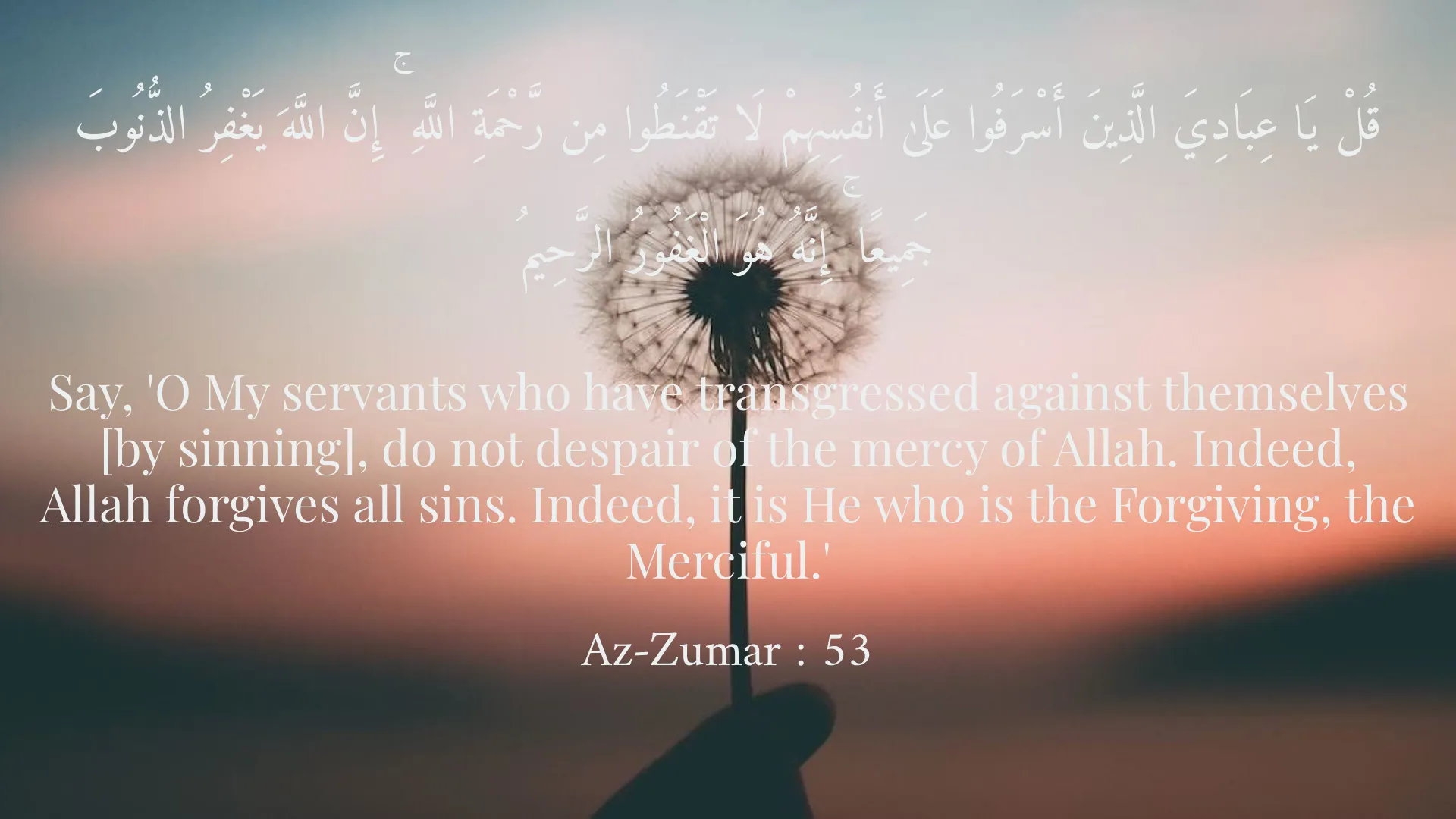
قُلْ يَا عِبَادِيَ الَّذِينَ أَسْرَفُوا عَلَىٰ أَنفُسِهِمْ لَا تَقْنَطُوا مِن رَّحْمَةِ اللَّهِ ۚ إِنَّ اللَّهَ يَغْفِرُ الذُّنُوبَ جَمِيعًا ۚ إِنَّهُ هُوَ الْغَفُورُ الرَّحِيمُ
Say, 'O My servants who have transgressed against themselves [by sinning], do not despair of the mercy of Allah. Indeed, Allah forgives all sins. Indeed, it is He who is the Forgiving, the Merciful.'
Az-Zumar : 53
يَا أَيُّهَا الَّذِينَ آمَنُوا تُوبُوا إِلَى اللَّهِ تَوْبَةً نَّصُوحًا عَسَىٰ رَبُّكُمْ أَن يُكَفِّرَ عَنكُمْ سَيِّئَاتِكُمْ وَيُدْخِلَكُمْ جَنَّاتٍ تَجْرِي مِن تَحْتِهَا الْأَنْهَارُ
O you who have believed, repent to Allah with sincere repentance. Perhaps your Lord will remove from you your misdeeds and admit you into Gardens beneath which rivers flow.
At-Tahrim : 8
وَأَقِمِ الصَّلَاةَ طَرَفَيِ النَّهَارِ وَزُلَفًا مِّنَ اللَّيْلِ ۚ إِنَّ الْحَسَنَاتِ يُذْهِبْنَ السَّيِّئَاتِ ۚ ذَٰلِكَ ذِكْرَىٰ لِلذَّاكِرِينَ
And establish prayer at the two ends of the day and at the approach of the night. Indeed, good deeds do away with evil deeds. That is a reminder for those who remember.
Hud : 114
Short Story
It is narrated that during the reign of a just king, there was a man who had committed many sins in his youth, and his heart was burdened by the heavy weight of his transgressions. At night, he would shed tears of remorse, and by day, he would burn with regret for the past he had squandered. One day, as he walked in a garden, he saw a nightingale singing melodies and flitting from branch to branch, free and carefree. He sighed and said to himself, "Oh, if only I were as light-hearted and free from the burden of sins as this nightingale!" A wise old man, who was nearby, heard his words and smiled, saying, "My young friend! Do not be sad! Repentance is a gate that is always open. If your heart is throbbing with regret and your eyes are wet with remorse, know that this itself is a sign of divine grace. God is more forgiving and merciful than you can imagine. It is enough to turn to His threshold with a broken heart and a sincere intention, and ask for His forgiveness. No sin is too great in His majesty, and no repentance goes unrewarded." The young man took heed of the old man's words. He returned home, repented to God, and decided to spend the rest of his life doing good deeds and serving humanity. After a while, he found such peace in his heart as if he had never sinned, and the doors of divine proximity were opened to him. Thus, the feeling of guilt led him not to despair, but to hope and movement towards the Divine.