Quranic Answer
The Quran, revered as the holy scripture of Islam, holds a significant position in the lives of Muslims around the world. Its verses not only serve as a sacred text but also provide a practical framework for ethical and moral conduct that adherents are encouraged to embody in their daily lives. Hence, the embodiment of the Quran in behavior can be understood as the application of its teachings and verses in the everyday actions and decisions of individuals. This practice is essential for those who seek to live in accordance with the divine guidance provided in this holy book, which encompasses interaction with God and fellow human beings. In its essence, the Quran serves as a comprehensive guide that delineates the principles of righteousness and moral conduct. In Surah Al-Baqarah, verse 177, Allah articulates a profound understanding of righteousness. The verse states, "Righteousness is not that you turn your faces toward the east or the west, but rather it is that one believes in Allah, the Last Day, the Angels, the Book, and the Prophets; and gives his wealth, in spite of love for it, to relatives, orphans, the needy, the traveler, those who ask [for help], and for freeing slaves; [and who] establishes prayer and gives zakah; [those who] fulfill their promise when they promise; and [those who] are patient in poverty and hardship and during battle. Those are the ones who have been true, and it is those who are the righteous." This passage illuminates the significance of inner faith supplemented by external actions, emphasizing that true righteousness is not merely about following rituals but encompasses a deep belief in fundamental tenets of Islam and a commitment to act upon those beliefs. To truly embody the Quran, one must cultivate a belief system that is rooted in these principles and strive to enact them in daily behavior. This means that a Muslim's faith should naturally influence their actions, leading them to demonstrate virtues such as integrity, compassion, and generosity. The relationship with God forms the core of this embodiment; hence, believers should engage in practices that fortify this connection. The establishment of daily prayers, or Salah, is one of the primary means through which Muslims seek to align themselves with divine expectations outlined in the Quran. Prayer not only allows individuals to engage directly with their Lord but also acts as a reminder of the ethical values they are expected to uphold. Furthermore, conducting oneself with kindness and compassion is another critical aspect of Quranic teachings. In Surah Al-Imran, verse 159, Allah instructs His Messenger, Prophet Muhammad (PBUH), to deal gently and kindly with people. The verse states, "So by mercy from Allah, [O Muhammad], you were lenient with them. And if you had been rude in speech or harsh in heart, they would have disbanded from about you..." This highlights the importance of empathy and understanding when interacting with others. The gentle approach advocated in this verse encourages believers to foster a sense of community and support among fellow individuals, creating an environment built on trust and respect. To epitomize these values in various aspects of life, one can begin with their workplace. In a professional setting, embodying the Quran can manifest through respectful interactions with colleagues, listening to their ideas, and collaborating effectively. Furthermore, the practice of honesty is vital in a work environment where individuals are often tested on their integrity. An employee who embodies Quranic principles might choose not to engage in deceitful practices, instead opting for transparency in their dealings. Philanthropy and social responsibility are also encouraged within the framework of the Quran. As indicated in the verses above, giving to those in need is an essential component of righteousness. This can be incorporated into daily life by offering assistance to those who are less fortunate, whether through financial support, volunteering, or sharing knowledge. For instance, establishing initiatives within an organization to encourage collective charity or community service can create a ripple effect that amplifies the Quranic values of generosity and compassion beyond personal conduct. In addition, there are practices such as fasting that serve as significant avenues for drawing closer to God and reinforcing the essence of Quranic teachings in everyday life. The month of Ramadan, during which Muslims fast from dawn until sunset, serves not only as a spiritual exercise but also as a reminder of the struggles faced by those less fortunate. The act of fasting instills self-discipline and empathy while cultivating an appreciation for the bounties provided by God. This sense of gratitude and reflection can push individuals to seek ways to better embody the values taught in the Quran all year round. In conclusion, the embodiment of the Quran in behavior necessitates a thorough understanding and sincere application of its teachings in daily life. It begins with an intimate relationship with the Quran, characterized by reading, reflection, and understanding of its verses. Muslims are encouraged to absorb these teachings deeply and implement them in a way that reflects the essence of faith, compassion, and moral responsibility. The principles outlined in the Quran serve as a guide for not only individual conduct but also interpersonal relationships, thereby demonstrating the timeless relevance of its teachings. Therefore, as one seeks to embody the Quran in behavior, they must actively strive to integrate these divine principles into their life choices, interactions with others, and overall worldview, ultimately fostering a harmonious society grounded in the values of love, justice, and righteousness.
Related Verses
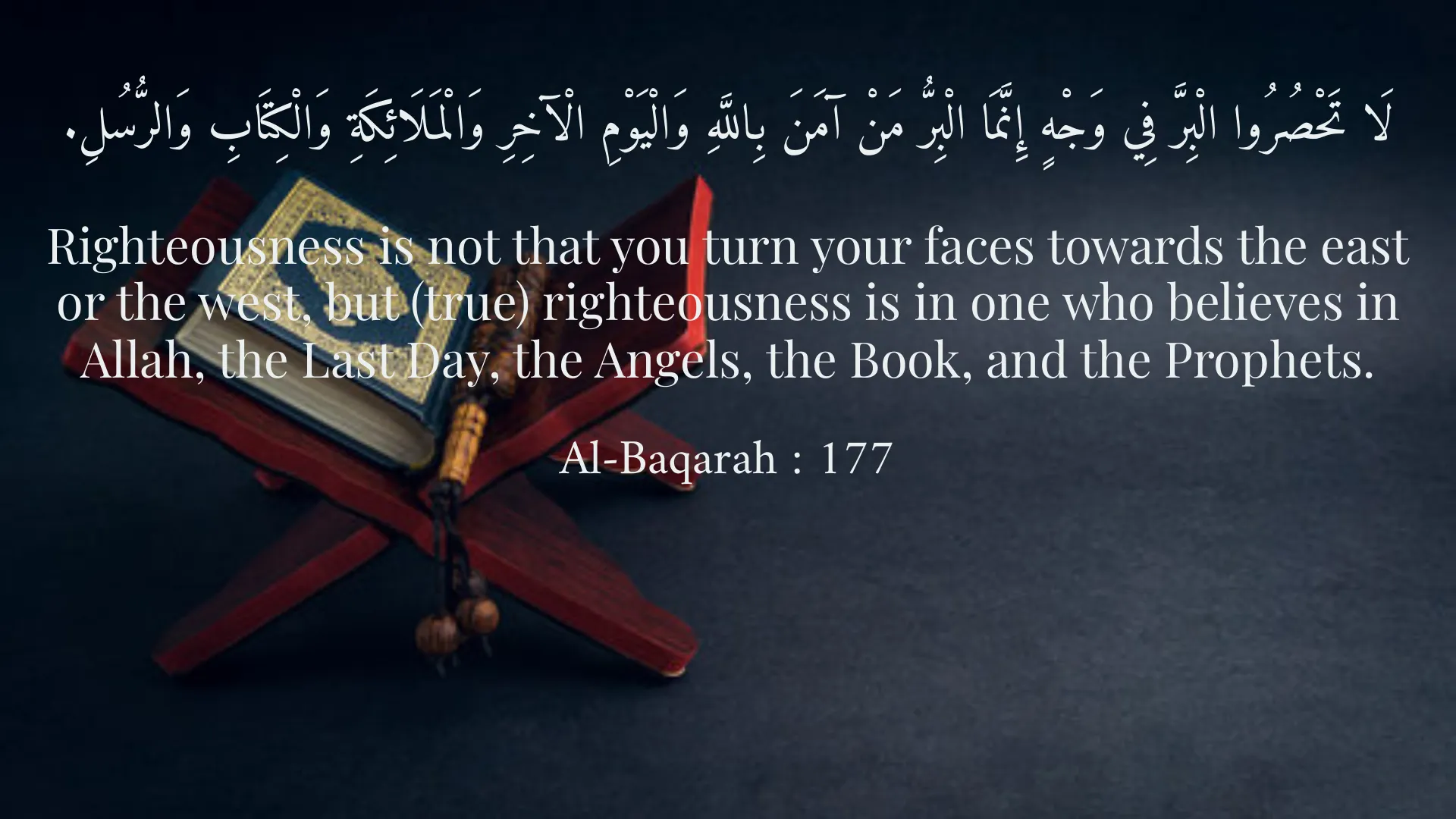
لَا تَحْصُرُوا الْبِرَّ فِي وَجْهٍ إِنَّمَا الْبِرُّ مَنْ آمَنَ بِاللَّهِ وَالْيَوْمِ الْآخِرِ وَالْمَلَائِكَةِ وَالْكِتَابِ وَالرُّسُلِ.
Righteousness is not that you turn your faces towards the east or the west, but (true) righteousness is in one who believes in Allah, the Last Day, the Angels, the Book, and the Prophets.
Al-Baqarah : 177
فَإِنَّمَا رَحْمَةٌ مِّنْ اللَّهِ لَكُمْ
So it is by mercy from Allah that you were lenient with them.
Al-Imran : 159
يَأَيُّهَا الَّذِينَ آمَنُوا كُونُوا قَوَّامِينَ لِلَّهِ شُهَدَاءَ بِالْقِسْطِ.
O you who have believed, be persistently standing firm in justice, witnesses for Allah.
Al-Ma'idah : 8
Short Story
Once upon a time, Ali was sitting with his friends discussing ways to improve their lives. Ali said, 'I always try to shape my behavior based on the Quran. These days, I feel like I am living more peacefully because I strive to embody kindness and fairness in my conduct. Whenever I speak to someone or assist them, I ask myself: Is my behavior in line with the Quran? This pushes me to become better each day and to be a better person.' His friends were inspired and said they also wanted to embody the Quran in their lives.