Quranic Answer
The question of how to prevent our acts of worship from becoming soulless, mechanical habits is a central concern for sincere believers on the path to Allah. The Quranic teachings emphasize the importance of quality and presence of heart in acts of worship, far beyond their mere outward performance. The Holy Quran guides us towards worship that is rich in awareness, humility, contemplation, and sincerity, rather than just the repetition of movements and litanies without thought or reflection. This noble goal is achievable through deep and sustainable approaches rooted in correct understanding and sincere action. The first and most fundamental principle to prevent worship from becoming a mere habit is 'Ikhlas' (sincerity). The Quran states in Surah Al-Bayyinah, verse 5: "And they were not commanded except to worship Allah, [being] sincere to Him in religion, inclining to truth, and to establish prayer and to give zakah. And that is the correct religion." Ikhlas means purifying one's intention from any non-divine motive. When the intention is purely for the sake of Allah's pleasure, worship transforms from a mere outward act into a profound spiritual connection and dialogue with the Creator. This sincere intention must be renewed daily and at every moment to ensure that worship retains its freshness and dynamism, thus preventing it from falling into the trap of fruitless repetition. Focusing on the fact that every time we engage in worship, we are establishing a connection with the One True God, can infuse our actions with new energy and meaning. The second principle is 'Hudhur al-Qalb' (presence of heart) and 'Khushu'' (humility). In Surah Al-Mu'minun, verses 1 and 2, Allah says: "Certainly will the believers prosper. * Those who are during their prayer humbly submissive." Khushu' means complete humility and submission before the Divine Majesty, encompassing both the heart and the limbs. Presence of heart means complete focus of the mind and emotions on the act of worship being performed. For example, in prayer, every word and movement should be accompanied by an understanding of its meaning and purpose. Imagine standing before a king; would you not speak to him with your entire being and with utmost reverence? If we are standing before the Sovereign of all existence, this humility and presence of heart should be far deeper and purer. Contemplation before beginning worship, reflecting on the meanings of remembrances and verses, and recalling Allah's greatness and power can help enhance presence of heart. 'Tadabbur' (reflection and contemplation) on the verses of the Quran and the meanings of dhikr is the third strategy. The Quran instructs us to reflect upon its verses: "Do they not then contemplate the Quran? Or are there locks upon their hearts?" (Surah Muhammad, verse 24). When we read the Quran or perform prayer each time with a fresh perspective on its meanings and messages, we realize that every verse and every remembrance opens a new window to divine wisdom and knowledge. This contemplation prevents monotony and repetition, transforming worship into an experience of discovery and insight. Each day, one can dedicate a small portion of time to deeper reflection on a specific verse or dhikr, discovering new dimensions within it. The fourth strategy is a 'continuous reminder of the purpose of worship'. Why do we worship? To express gratitude, to draw closer to Allah, to purify the self, to attain inner peace, and to fulfill our duty of servitude. Allah says in Surah Adh-Dhariyat, verse 56: "And I did not create the jinn and mankind except to worship Me." By remembering this fundamental purpose of creation, worship transforms from a burden into a valuable opportunity for growth and elevation. Whenever we feel our worship becoming a habit, we should remind ourselves that these moments are opportunities to nourish the soul and connect with the source of all existence. 'Diversity in acts of worship' can also help maintain spiritual vitality. In addition to daily prayers, one can engage in thoughtful recitation of the Quran, supplication and intimate prayer (du'a), remembrance (dhikr) and seeking forgiveness (istighfar), contemplation of Allah's creation, performing good deeds and serving others, and even reflecting on Allah's blessings. All these are different forms of worship, each nourishing the soul in its own way and preventing monotony. Surah Al-Baqarah, verse 152, states: "So remember Me; I will remember you. And be grateful to Me and do not deny Me." This verse indicates that the remembrance of Allah can be a dynamic and reciprocal form of worship, not merely dry and empty repetition. Finally, 'continuous self-assessment and self-awareness' are of paramount importance. We should regularly ask ourselves: Was my worship today accompanied by presence of heart? Was I able to establish a deeper connection with Allah? This honest self-evaluation and continuous striving for improvement ensure that acts of worship always remain a path of growth and closeness to Allah, rather than mere rituals performed out of routine or obligation. We should also continuously seek Allah's help and grace to assist us in sincere and conscious servitude. By implementing these principles derived from the Holy Quran – sincerity, presence of heart and humility, contemplation, remembering the purpose, diversity in worship, and continuous self-awareness – we can ensure that our acts of worship are always filled with meaning, fervor, and vitality, guiding us step by step towards perfection and closeness to Allah. This path is a continuous and dynamic journey towards Allah, which should never turn into a fixed station or a lifeless habit.
Related Verses
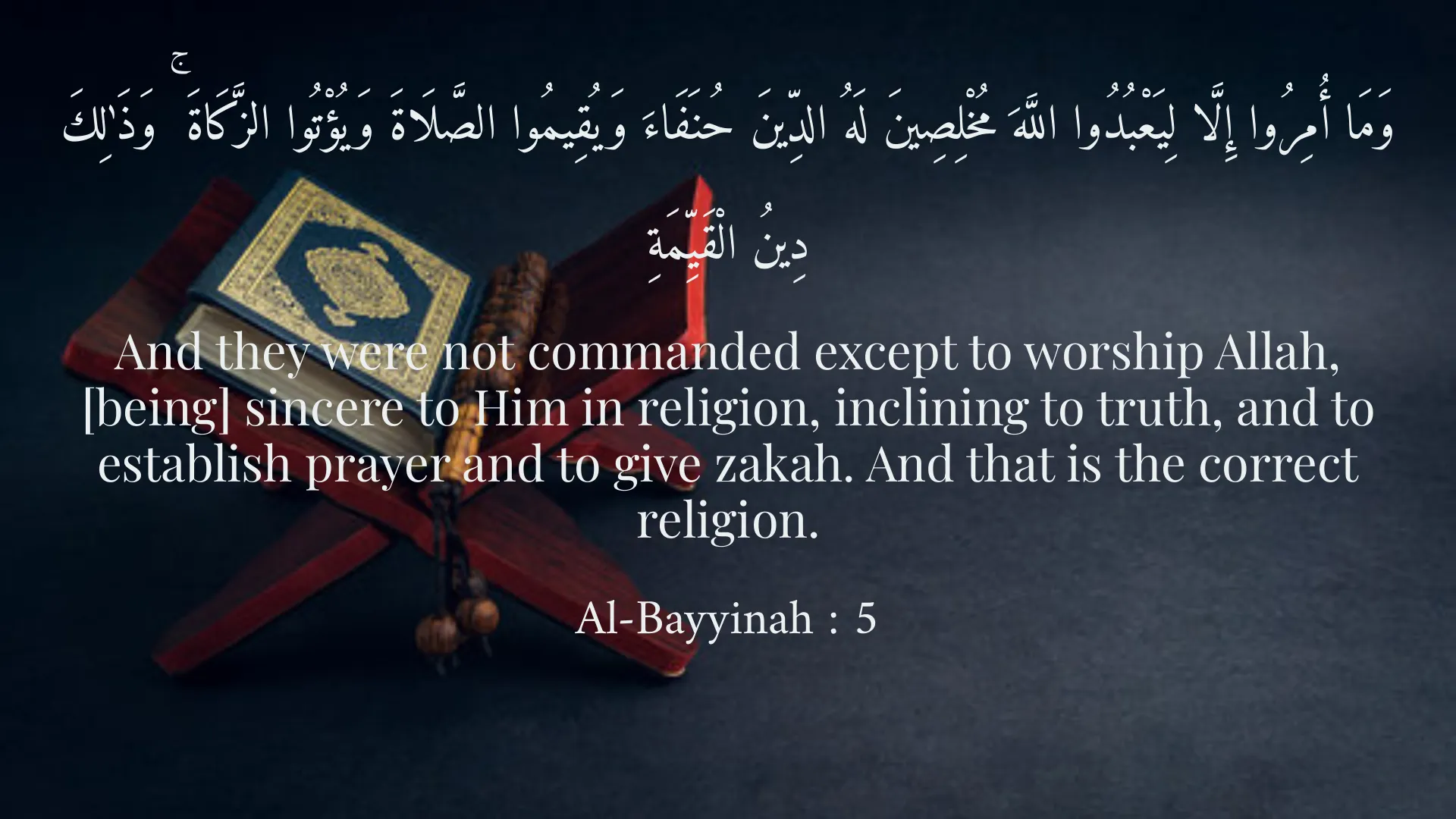
وَمَا أُمِرُوا إِلَّا لِيَعْبُدُوا اللَّهَ مُخْلِصِينَ لَهُ الدِّينَ حُنَفَاءَ وَيُقِيمُوا الصَّلَاةَ وَيُؤْتُوا الزَّكَاةَ ۚ وَذَٰلِكَ دِينُ الْقَيِّمَةِ
And they were not commanded except to worship Allah, [being] sincere to Him in religion, inclining to truth, and to establish prayer and to give zakah. And that is the correct religion.
Al-Bayyinah : 5
قَدْ أَفْلَحَ الْمُؤْمِنُونَ
Certainly will the believers prosper,
Al-Mu'minun : 1
الَّذِينَ هُمْ فِي صَلَاتِهِمْ خَاشِعُونَ
Those who are during their prayer humbly submissive.
Al-Mu'minun : 2
فَاذْكُرُونِي أَذْكُرْكُمْ وَاشْكُرُوا لِي وَلَا تَكْفُرُونِ
So remember Me; I will remember you. And be grateful to Me and do not deny Me.
Al-Baqarah : 152
Short Story
They say there was a man who went to the mosque every morning and evening to pray, with such meticulousness and composure that the people of the locality knew him for his piety. One day, a mystic passed by while the man was engaged in prayer. The mystic smiled and said, "O friend, what kind of prayer is this that you are performing?" After finishing his prayer, the man asked in astonishment, "How so? I pray the same way every day, and I believe it is with humility and respect." The mystic replied, "Your prayer is like flowing water on a stone; although pure and continuous, it leaves no impression on the heart of the stone. Habit is a veil between you and the Divine Presence. Perform each prostration as if it were your last prayer, and listen to every word as if God is speaking to you. Then you will see that prayer is not merely a habit, but a gateway to the heavens." The man fell into deep thought, and from then on, he strove to perform every prayer with an awakened heart and a fresh perspective, freeing himself from the chains of habit and tasting the sweetness of servitude.