Quranic Answer
To feel the divine presence of God in your life is a profound and transformative experience that transcends the mundane aspects of daily existence. It requires an active commitment to nurturing your spiritual and moral connection with the Almighty. In many religious texts, including the Holy Quran, believers are reminded of the intimate proximity of God to their souls. A particularly striking reminder can be found in Surah Qaf, verse 16, which states, 'And We have certainly created man and We know what his soul whispers to him, and We are closer to him than his jugular vein.' This verse encapsulates the essence of God's omnipresence and evokes a sense of comfort in knowing that one is never truly alone. Thus, to feel God's presence in your life, it becomes imperative to engage in practices that strengthen your spiritual bond with Him. One of the most effective ways to establish this connection is through consistent prayer, or Salat, which serves as a direct line of communication between the believer and God. The act of praying encourages mindfulness and reflection, allowing individuals to turn inward and examine their thoughts and feelings in relation to their faith. Each prayer serves as an opportunity not just to petition for personal needs but to express gratitude, seek forgiveness, and reinforce moral values. Regular prayer can significantly enhance our consciousness of God in our everyday lives, making us more attuned to His guidance and will. Moreover, the act of reading the Quran cannot be overstated in its importance. It is through the verses of this sacred text that one can gain insights into God's attributes, teachings, and expectations from humanity. Surah Al-Baqarah, verse 186, provides further assurance: 'And when My servants ask you concerning Me, indeed, I am near.' This verse reinforces the notion that the relationship between God and His creation is reciprocal; the more we seek Him, the closer He draws near to us. Reading and reflecting on the Quran not only fortifies individuals' faith but also encourages them to embody the principles outlined within, allowing God's presence to manifest through their actions. Performance of good deeds is yet another avenue through which we can feel God’s presence. The Quran emphasizes the importance of compassion, charity, and altruism in enhancing our spiritual well-being. In Surah Al-Mu’minun, verses 1 to 11, God delineates the characteristics of His righteous servants, highlighting that they are humble in their prayers and actively assist those in need. Acts of kindness not only benefit those who receive them but also serve to elevate the spiritual state of the giver. By engaging in good deeds, believers create a tangible manifestation of God's love in the world, thereby solidifying their connection to Him. In addition to these spiritual practices, cultivating an attitude of love and kindness toward others is crucial in feeling God's presence in our lives. God’s love is intended to flow through us towards others, creating a ripple effect of compassion in our communities. Engaging with others, whether through acts of charity or simple everyday kindness, fosters a sense of connectedness that is essential for a fulfilling spiritual life. It reflects the understanding that our relationship with God is interconnected with our relationships with His creations. Furthermore, the importance of community and companionship in fostering one's spirituality cannot be overlooked. Surrounding oneself with individuals who share a similar commitment to faith enhances our capacity to experience God collectively. Shared prayers, Quran study groups, and community service provide channels through which members can encourage one another and strengthen their spiritual bond. United in faith, we can witness and feel God's presence not just individually, but collectively as a group. However, feeling God's presence is not devoid of challenges. Life often brings trials and tribulations that can obscure awareness of the divine presence. In such times, maintaining faith and commitment to spiritual practices becomes even more crucial. The very act of returning to prayer, seeking solace in scripture, and continuing to perform good deeds even amid hardship is a testament of faith and dedication. It serves as a reminder that even when we face obstacles, God's presence is unwavering; He is just a prayer away. Moreover, self-reflection is an essential practice as it encourages believers to examine their intentions and motivations. Asking oneself whether one acts out of goodness or simply from a desire for recognition can serve as a powerful tool in re-aligning one's focus toward spiritual growth. Engaging in this introspective journey can lead to a profound realization of God’s grace and mercy, allowing individuals to feel His presence more vividly in their lives. In conclusion, to feel God's presence in one's life is a journey that requires intention, mindfulness, and an active commitment to fostering spiritual and moral connections with Him. Through prayer, reading the Quran, performing good deeds, and extending compassion to others, individuals can cultivate an awareness of the divine presence that envelops them. The reciprocal nature of this relationship with God encourages an interactive and vibrant faith experience, demonstrating that the more we seek Him, the more we shall find Him. As one navigates through life's ups and downs, it is vital to remember that God is always near, patiently awaiting us to turn to Him and feel His love in our lives.
Related Verses
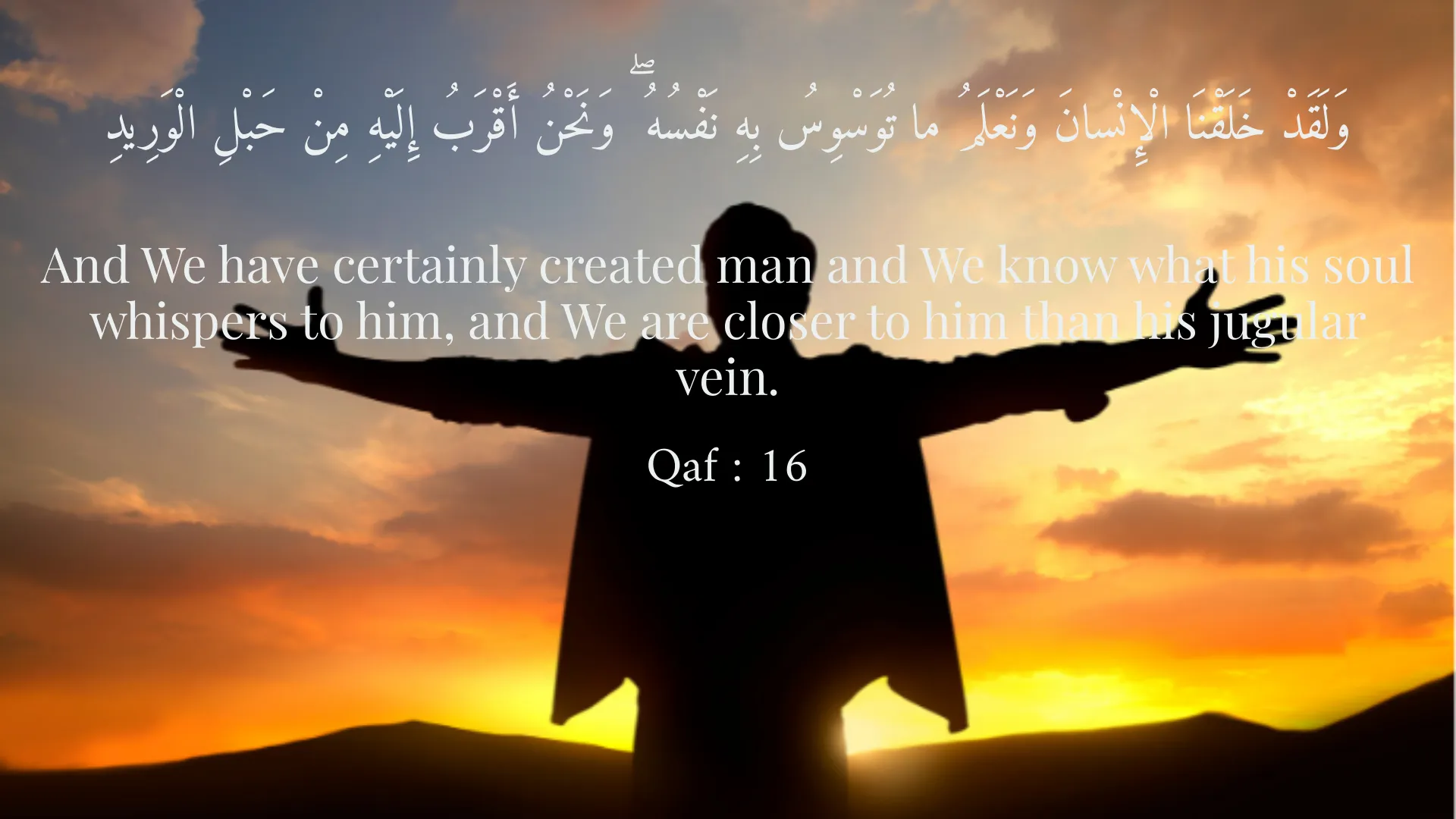
وَلَقَدْ خَلَقْنَا الْإِنْسانَ وَنَعْلَمُ ما تُوَسْوِسُ بِهِ نَفْسُهُ ۖ وَنَحْنُ أَقْرَبُ إِلَيْهِ مِنْ حَبْلِ الْوَرِيدِ
And We have certainly created man and We know what his soul whispers to him, and We are closer to him than his jugular vein.
Qaf : 16
وَإِذَا سَأَلَكَ عِبَادِي عَنِّي فَإِنِّي قَرِيبٌ ۖ أُجِيبُ دَعْوَةَ الدَّاعِ إِذَا دَعَانِ
And when My servants ask you concerning Me, indeed, I am near. I respond to the invocation of the supplicant when he calls upon Me.
Al-Baqarah : 186
قَدْ أَفْلَحَ الْمُؤْمِنُونَ
Certainly will the believers have succeeded.
Al-Mu'minun : 1
Short Story
One day, Adel was pondering about his life and wondered what held the most significance. He recalled the verses of the Quran and realized that for a meaningful life, one must be close to God. From that day forward, he paid attention to his thoughts and prayers daily and made an effort to help others. After some time, he felt that God brought more hope and peace into his life.