Quranic Answer
Finding inner peace and tranquility of heart has been one of humanity's most fundamental and profound quests throughout history. From the perspective of the Holy Quran, this true and lasting peace is not found in material possessions, fleeting social statuses, or mere worldly pleasures, but rather in a deep and sincere connection with the Creator of the universe, Allah Almighty. The Quran clearly states that human hearts find rest only in the remembrance of Allah, and this inner satisfaction is the fruit of faith, reliance on God (Tawakkul), patience (Sabr), gratitude (Shukr), and performing righteous deeds. The central axis for achieving inner peace and contentment according to the Quran is "Dhikr Allah," or the remembrance of God. In Surah Ar-Ra'd, verse 28, Allah says: "الَّذِينَ آمَنُوا وَتَطْمَئِنُّ قُلُوبُهُم بِذِكْرِ اللَّهِ ۗ أَلَا بِذِكْرِ اللَّهِ تَطْمَئِنُّ الْقُلُوبُ"; which means, "Those who have believed and whose hearts are assured by the remembrance of Allah. Unquestionably, by the remembrance of Allah hearts are assured." This verse presents a fundamental and universal principle for human spiritual life. The remembrance of Allah is not merely about repeating words; it encompasses performing prayers (Salat), making supplications (Dua), reciting the Quran, contemplating Allah's signs in nature, and most importantly, recognizing Allah's presence in every moment of life and adhering to His commands and prohibitions. When a person perceives Allah as present and observing in all their actions, they distance themselves from sins and turn towards good deeds. This very sense of divine presence grants them peace and reassurance that they are not alone and have a firm support. By focusing on the remembrance of Allah, the heart is cleansed of anxieties, worries, and satanic whispers, which are sources of much unrest, thereby creating space for divine tranquility and serenity. "Tawakkul" or reliance upon Allah is another pillar of inner peace. Tawakkul means entrusting one's affairs to Allah after having exerted the necessary effort. In Surah At-Talaq, verse 3, Allah says: "وَمَن يَتَوَكَّلْ عَلَى اللَّهِ فَهُوَ حَسْبُهُ"; meaning, "And whoever relies upon Allah, then He is sufficient for him." This reliance lifts the heavy burden of worries and fears from a person's shoulders. When an individual knows that they have entrusted the outcome of their efforts to the merciful God, they no longer have apprehension about future events. This certainty in divine power and wisdom grants profound peace, saving the individual from drowning in negative thoughts and despair. Tawakkul does not imply inaction or laziness; rather, it signifies the peak of effort with a serene heart, an effort whose outcome is entrusted to divine will and wisdom. "Sabr (patience) and Shukr (gratitude)" are also two essential wings for attaining inner contentment. Human life is full of ups and downs, hardships, and ease. The Holy Quran repeatedly emphasizes patience and gratitude. Patience in the face of difficulties, in fulfilling acts of worship, and in abstaining from sins, empowers a person to navigate crises with tranquility. When one patiently accepts divine decree, they realize that every hardship holds wisdom and every test is an opportunity for growth. On the other hand, gratitude for blessings enhances peace and feelings of contentment. A grateful outlook on life, even in the smallest things, can open a gateway to inner satisfaction and free a person from envying what they lack. These two qualities lead a person to accept divine wisdom in destinies and to perceive beauty in all states of life, and this acceptance itself is a source of peace. Furthermore, the Quran emphasizes the importance of "righteous deeds" and serving creation. When a person acts kindly towards others, alleviates their burdens, or helps those in need, they find a sense of worth and meaning in life. This feeling of being useful naturally brings forth peace and contentment of heart. Forgiving, overlooking, acting justly, and showing kindness to others expands one's sphere of inner peace and frees them from the shackles of malice and envy, which are significant causes of anxiety. Living with purpose gives meaning to life, and when this purpose aligns with divine pleasure and serving creation, its fruits manifest as worldly and otherworldly peace and happiness. Ultimately, lasting inner peace and tranquility result from "submission to Divine will." Submission to the truth does not negate human free will but rather signifies harmonizing one's will with the Creator's. This submission assures a person that whatever happens is under God's wise command, bringing the highest level of peace. The verse "O tranquil soul! Return to your Lord, well-pleased and pleasing [to Him], and enter among My [righteous] servants and enter My Paradise" (Al-Fajr, 89:27-30) exemplifies the peak of this contentment; where the soul, in utmost peace and satisfaction, returns to its Lord. This verse offers a roadmap for life: by achieving inner certainty in this world, we will attain divine pleasure in the afterlife and enter Paradise. This path is one of meaningful and peaceful living, a path that connects humans to their true essence and the purpose of their creation.
Related Verses
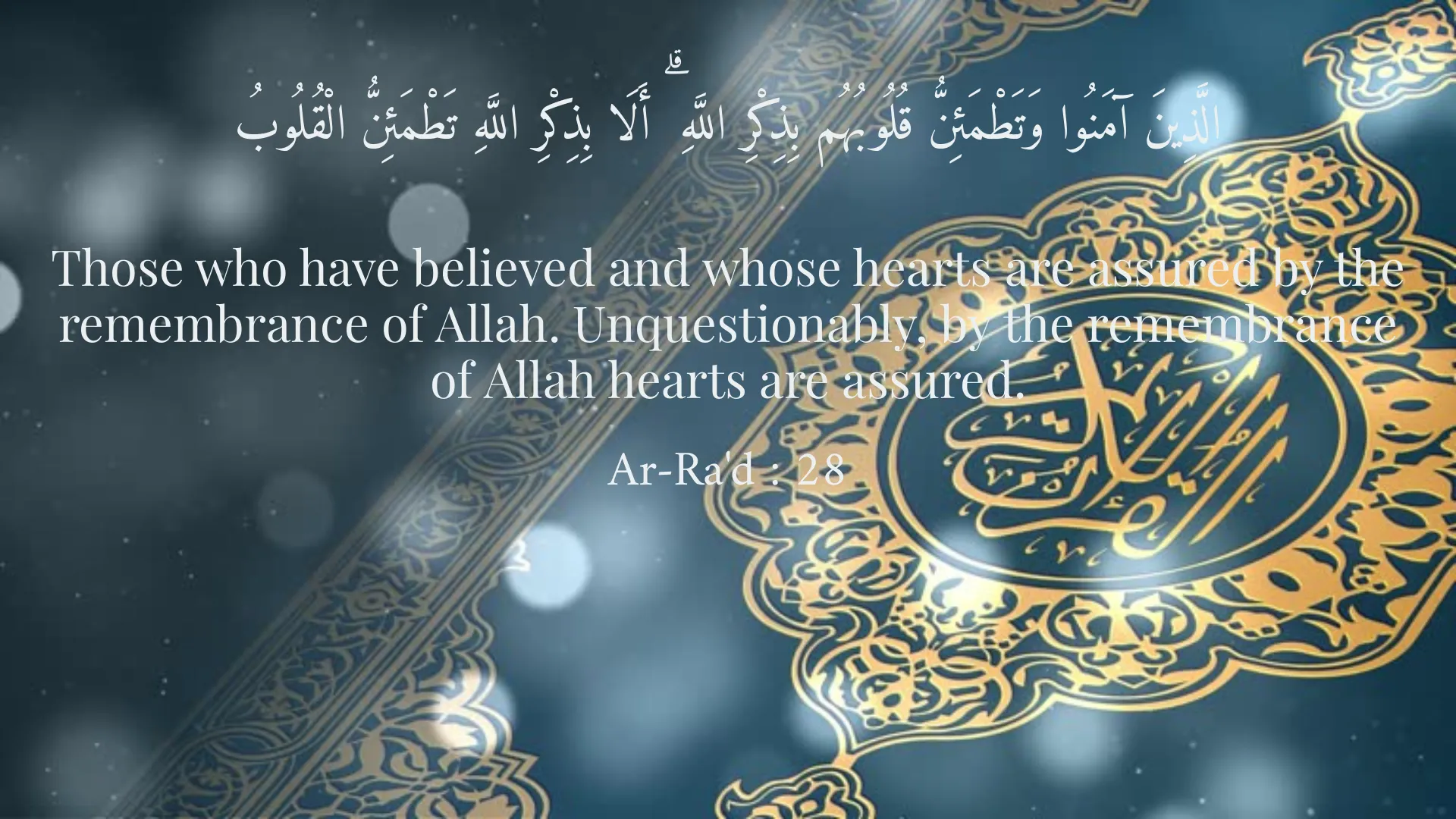
الَّذِينَ آمَنُوا وَتَطْمَئِنُّ قُلُوبُهُم بِذِكْرِ اللَّهِ ۗ أَلَا بِذِكْرِ اللَّهِ تَطْمَئِنُّ الْقُلُوبُ
Those who have believed and whose hearts are assured by the remembrance of Allah. Unquestionably, by the remembrance of Allah hearts are assured.
Ar-Ra'd : 28
يَا أَيَّتُهَا النَّفْسُ الْمُطْمَئِنَّةُ
O tranquil soul!
Al-Fajr : 27
ارْجِعِي إِلَىٰ رَبِّكِ رَاضِيَةً مَّرْضِيَّةً
Return to your Lord, well-pleased and pleasing [to Him],
Al-Fajr : 28
وَمَن يَتَوَكَّلْ عَلَى اللَّهِ فَهُوَ حَسْبُهُ ۚ إِنَّ اللَّهَ بَالِغُ أَمْرِهِ ۚ قَدْ جَعَلَ اللَّهُ لِكُلِّ شَيْءٍ قَدْرًا
And whoever relies upon Allah - He is sufficient for him. Indeed, Allah will accomplish His purpose. Allah has already set for everything a [decreed] extent.
At-Talaq : 3
Short Story
It is narrated that a wealthy and deeply anxious man approached a wise Sufi master, complaining about his sleepless nights and worries over his vast possessions and wealth. The master, who was sitting peacefully in a corner of a garden, gazing at the tranquil trees without any concern, smiled and said, 'Do you wish to find peace?' The wealthy man eagerly replied, 'Yes, I would give my life for this peace!' The master said, 'There are two paths: one is to abandon your wealth and attach your heart to nothing, so you may become light-hearted; the other is to free your heart from attachment to wealth, even if your wealth remains. For peace is not in holding onto things, but in letting go of attachment. I know a dervish whose only possession was a hat, and every night, wherever he slept, he would lay his head on his hat and sleep soundly until morning, free from any worries.' The wealthy man pondered that the dervish's peace came from his detachment, not from his possessions. And thus, he realized that inner contentment comes from freeing one's heart from worldly attachments, not from accumulating them.