Quranic Answer
The feeling of guilt and regret over past mistakes is a natural part of the human experience. If managed correctly, this feeling can be a powerful motivator for growth and change. However, if it persists for too long or leads to despair, it can become a heavy burden on one's soul and psyche. In the rich Islamic tradition, guided by the teachings of the Holy Quran, there is a clear and hopeful path to liberation from this burden, leading us towards inner peace and self-forgiveness. This path primarily involves sincere repentance and seeking forgiveness from Allah, followed by accepting His boundless mercy. Self-forgiveness in Islam carries a deeper meaning than merely forgetting or ignoring errors; it signifies taking responsibility, making amends (where necessary), and placing complete trust in divine forgiveness, which subsequently brings peace and relief from the burden of sin. Step 1: Sincere Repentance (Tawbah Nasuha) and True Return to God The Quran repeatedly emphasizes the importance of repentance. Repentance is not merely a word; it is a comprehensive process that includes genuine remorse for the wrongful act, abandoning that sin, and a firm resolve not to return to it in the future. In Surah At-Tahrim, verse 8, Allah says: “O you who have believed, repent to Allah with sincere repentance. It may be that your Lord will remove from you your misdeeds and admit you to Gardens beneath which rivers flow.” This verse clearly indicates that sincere repentance (Tawbah Nasuha) not only covers sins but also paves the way for entry into divine mercy and blessings. Self-forgiveness becomes possible when we believe in this divine promise that sincere repentance is accepted. Step 2: Trusting in Allah's Infinite Mercy and Forgiveness One of the greatest obstacles to self-forgiveness is despairing of Allah's mercy. Satan always tries to trap humans in a cycle of sin and hopelessness. However, the Quran explicitly warns us against this trap. In Surah Az-Zumar, verse 53, we read: “Say, 'O My servants who have transgressed against themselves [by sinning], do not despair of the mercy of Allah. Indeed, Allah forgives all sins. Indeed, it is He who is the Forgiving, the Merciful.'” This verse is a beacon of hope for anyone feeling overwhelmed by past sins. By understanding that Allah is the Most Merciful of those who show mercy and that He forgives all sins (provided there is genuine repentance), the heavy burden of sin is lifted from a person, thereby paving the way for self-forgiveness. This self-forgiveness stems not from pride, but from trust in the divine promise. Step 3: Restoring the Rights of Others (Huquq al-Ibad) and Rectifying Actions If past mistakes involve Huquq al-Ibad (the rights of other people), repentance is not sufficient with just remorse and seeking Allah's forgiveness alone. One must also strive to restore those rights and gain the satisfaction of those whose rights were violated. This action is a sign of the sincerity of repentance and the individual's sense of responsibility. Even if direct compensation is not possible, one should seek forgiveness on behalf of that person or perform good deeds with the intention for them. This effort to rectify past wrongs not only holds value with Allah but also helps the individual feel that a practical step has been taken to cleanse the past, which plays a significant role in inner peace and self-forgiveness. Step 4: Moving Forward and Performing Righteous Deeds After repentance and seeking forgiveness, it is crucial not to dwell in the past. The Quran in several verses indicates that good deeds nullify bad deeds. In Surah Hud, verse 114, it states: “And establish prayer at the two ends of the day and during parts of the night. Indeed, good deeds do away with evil deeds. That is a reminder for those who remember.” This principle shows that instead of drowning in eternal regret, one should devote energy to building a better future and performing good deeds. Every righteous act we perform not only brings us closer to Allah but also reduces the psychological burden of past sins. Self-forgiveness means letting go of a past that cannot be changed and focusing on the present and future shaped by our actions. This perspective lifts a person out of despair and guides them towards growth and perfection. Step 5: Patience, Reliance on Allah (Tawakkul), and Learning from Experience The process of self-forgiveness and complete liberation from the burden of past mistakes may take time. It requires patience and reliance on Allah. It is important to learn from mistakes and ensure they are not repeated. This learning is a sign of wisdom and intellectual maturity. Ultimately, forgiving oneself within the Islamic context is not self-deception, but a logical and spiritual outcome of trusting in Allah and embarking on the path of repentance and rectification. When a person knows that Allah has forgiven them and made the path of return easy, there is no longer a reason for self-punishment and self-condemnation. This inner peace and liberation is a gift from Allah to His repentant and hopeful servants.
Related Verses
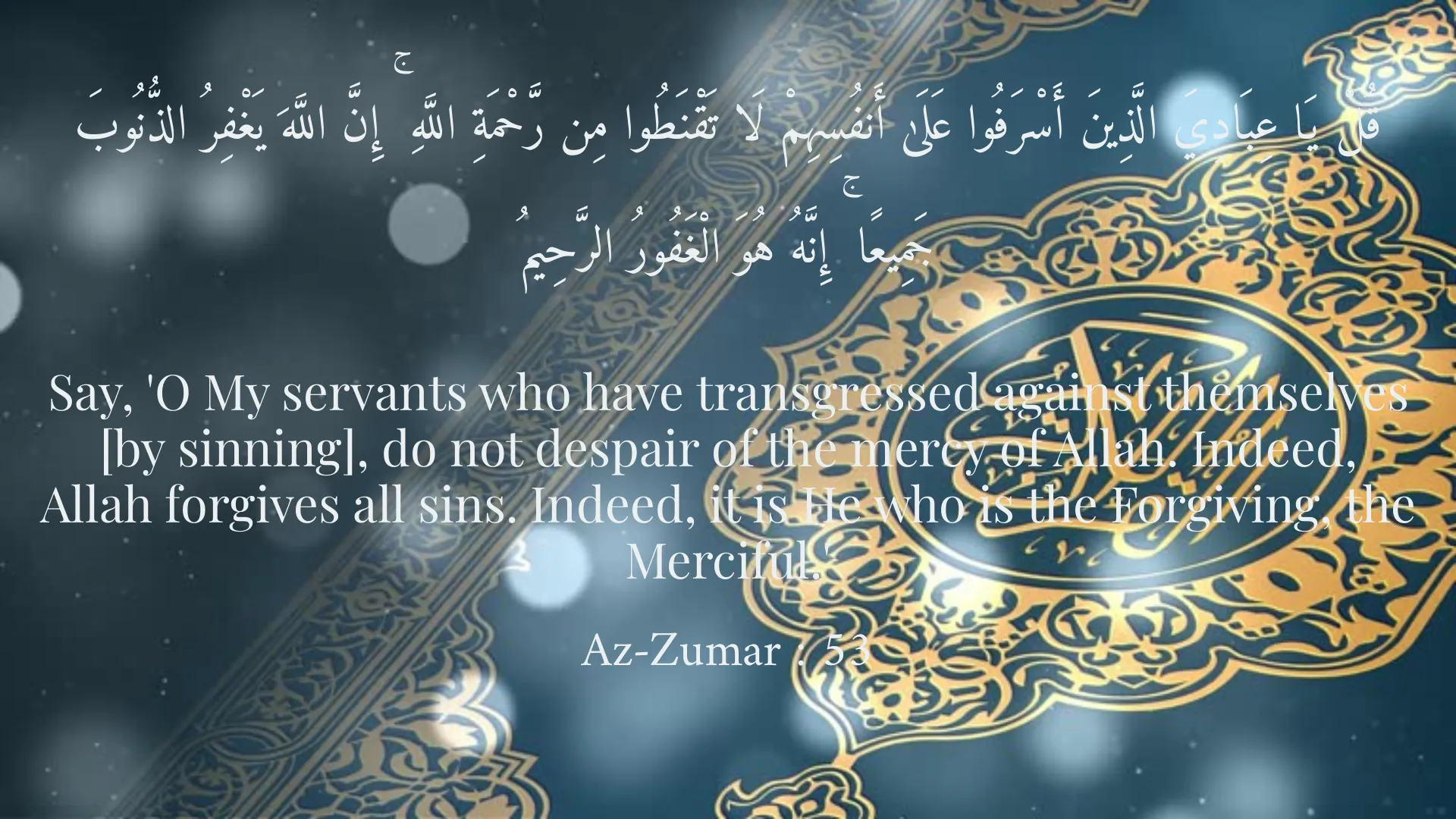
قُلْ يَا عِبَادِيَ الَّذِينَ أَسْرَفُوا عَلَىٰ أَنفُسِهِمْ لَا تَقْنَطُوا مِن رَّحْمَةِ اللَّهِ ۚ إِنَّ اللَّهَ يَغْفِرُ الذُّنُوبَ جَمِيعًا ۚ إِنَّهُ هُوَ الْغَفُورُ الرَّحِيمُ
Say, 'O My servants who have transgressed against themselves [by sinning], do not despair of the mercy of Allah. Indeed, Allah forgives all sins. Indeed, it is He who is the Forgiving, the Merciful.'
Az-Zumar : 53
يَا أَيُّهَا الَّذِينَ آمَنُوا تُوبُوا إِلَى اللَّهِ تَوْبَةً نَّصُوحًا عَسَىٰ رَبُّكُمْ أَن يُكَفِّرَ عَنكُم سَيِّئَاتِكُمْ وَيُدْخِلَكُمْ جَنَّاتٍ تَجْرِي مِن تَحْتِهَا الْأَنْهَارُ يَوْمَ لَا يُخْزِي اللَّهُ النَّبِيَّ وَالَّذِينَ آمَنُوا مَعَهُ ۖ نُورُهُمْ يَسْعَىٰ بَيْنَ أَيْدِيهِمْ وَبِأَيْمَانِهِمْ يَقُولُونَ رَبَّنَا أَتْمِمْ لَنَا نُورَنَا وَاغْفِرْ لَنَا ۖ إِنَّكَ عَلَىٰ كُلِّ شَيْءٍ قَدِيرٌ
O you who have believed, repent to Allah with sincere repentance. It may be that your Lord will remove from you your misdeeds and admit you to Gardens beneath which rivers flow [on] the Day when Allah will not disgrace the Prophet and those who believed with him. Their light will proceed before them and on their right; they will say, 'Our Lord, perfect for us our light and forgive us. Indeed, You are over all things competent.'
At-Tahrim : 8
وَأَقِمِ الصَّلَاةَ طَرَفَيِ النَّهَارِ وَزُلَفًا مِّنَ اللَّيْلِ ۚ إِنَّ الْحَسَنَاتِ يُذْهِبْنَ السَّيِّئَاتِ ۚ ذَٰلِكَ ذِكْرَىٰ لِلذَّاكِرِينَ
And establish prayer at the two ends of the day and during parts of the night. Indeed, good deeds do away with evil deeds. That is a reminder for those who remember.
Hud : 114
Short Story
In Saadi's Gulistan, it is recounted that in ancient times, a wealthy but greedy merchant wronged a poor man in a transaction. Years passed, and the merchant grew old, but he found no peace in his heart; the burden of that injustice weighed heavily on his shoulders. One day, he met a wise sage and spoke of his sorrow. The sage replied: "O young man, you shall not feel light until you lift the burden from your shoulders. A sin intertwined with people's hearts will not depart except through rectification and the satisfaction of its owner. A bright heart is like a mirror, and the dust of error will not settle on it except through the purity of repentance and compensation." The merchant took heed of the sage's words, sought out the poor man, rectified his wrong, and sought his forgiveness. After that, it was as if a mountain had been lifted from his heart, and he found a tranquility that had eluded him for years. This story illustrates that self-forgiveness is only possible after confronting one's error and seeking forgiveness from the Creator and His creation, and then the heart is illuminated by divine light.