Quranic Answer
Dear sister or brother, your question about freeing oneself from hidden habits is a profound and significant one, rooted in the human quest for perfection. Hidden habits are those behaviors that perhaps no one knows about except ourselves, but they have deep impacts on our soul, psyche, and our relationship with Allah. The Holy Quran, as a book of guidance, offers unparalleled solutions for inner purification and liberation from the bonds of anything that distances us from the path of truth. These solutions apply not only to apparent sins but also to inner whispers and secret habits, helping individuals to draw closer to their true essence. The first and perhaps most crucial step in breaking free from hidden habits is 'awareness' and 'acknowledgment' of their existence. Often, people conceal such habits or inclinations within themselves out of ignorance or denial. The Quran teaches us that a person must be aware of their actions and even their thoughts. The self-reproaching soul (Nafs al-Lawwamah), mentioned in the Quran (Surah Al-Qiyamah, verse 2), helps us identify our mistakes and hold ourselves accountable. This self-awareness is the initial spark for change. Without accepting the existence of a problem, one cannot seek a solution. This stage requires deep honesty with oneself and the courage to confront internal weaknesses. The second step is 'Tawbah Nasuha,' or sincere repentance. Repentance in Islam is not merely a verbal declaration; it is a comprehensive process involving regret for the past, abandoning the sin in the present, and resolving not to return to it in the future. Allah in the Quran invites His servants, who have wronged themselves, to repent and return to His mercy. In Surah Az-Zumar, verse 53, He states: "Say, 'O My servants who have transgressed against themselves [by sinning], do not despair of the mercy of Allah. Indeed, Allah forgives all sins. Indeed, it is He who is the Forgiving, the Merciful.'" This verse ignites a lamp of hope in every human heart, indicating that even the greatest sins are forgivable with sincere repentance. Tawbah Nasuha does not only mean being cleansed of sin but signifies an inner and spiritual transformation that prepares a person for a better future. This repentance must be accompanied by continuous Istighfar (seeking forgiveness) and asking for Allah's pardon, as He is the One who transforms hearts. 'Taqwa' (God-consciousness) and 'constant mindfulness of Allah' (Muraqabah) constitute the third and vital step on this path. Taqwa means self-restraint and abstaining from Allah's prohibitions, rooted in the knowledge and certainty of Allah's perpetual presence. When a person believes that Allah is aware of even their most hidden thoughts and actions, they lose the motivation to commit secret sins. Allah says in the Quran (Surah Al-Hadid, verse 4): "And He is with you wherever you are. And Allah is Seeing of what you do." This awareness is the most powerful deterrent against committing hidden habits. Muraqabah means continuously perceiving oneself in the presence of Allah, and this feeling, over time, helps one not only avoid hidden sins but also control negative thoughts and undesirable inclinations. 'Seeking help through patience and prayer' (Salat and Sabr) is another important Quranic injunction, mentioned in Surah Al-Baqarah, verse 153: "O you who have believed, seek help through patience and prayer. Indeed, Allah is with the patient." Prayer is a direct connection with the Creator, nourishing the soul and keeping a person away from evil and indecencies. Proper prayer with humility and presence of heart increases a person's spiritual strength and makes them resistant to temptations. Patience means steadfastness in the path of breaking habits and resisting the urge to relapse. Giving up hidden habits, especially those deeply rooted in the human psyche, requires much time and forbearance. This patience is vital not only in abandoning sin but also in performing good deeds and resisting the temptations of the commanding self (Nafs al-Ammarah). Furthermore, 'Tazkiyah al-Nafs,' or purification of the soul, is a key Quranic concept. In Surah Ash-Shams, verses 9 and 10, it states: "He has succeeded who purifies it, * And he has failed who corrupts it." Tazkiyah al-Nafs is a continuous process through performing good deeds, abstaining from sin, remembering Allah (Dhikr), and cultivating noble moral attributes. This process includes struggling against the commanding self (Nafs al-Ammarah) and the whispers of Shaytan. When a person's heart is filled with the remembrance of Allah and righteous deeds, there is no room left for negative and hidden habits. 'Jihad al-Nafs' (the greater jihad) refers to the internal struggle against negative inclinations and carnal desires. This jihad is considered harder and greater than external jihad. Overcoming one's inner self and purifying it from hidden impurities requires strong will and persistence. The Prophet Muhammad (PBUH) said: "The bravest of people is he who overcomes his desires." To succeed in this jihad, one must reform their environment, avoid individuals and situations that trigger hidden habits, and associate with righteous people. Filling time with useful and positive activities can also gradually replace negative habits. Finally, 'Tawakkul' (trust in Allah) after sincere effort and struggle is another principle emphasized in the Quran. A person must know that only with Allah's help can they overcome their self and Shaytan. If one sincerely and diligently embarks on this path, Allah will surely help them, for He loves His servants and smooths the path of salvation for them. Remember that this is a journey, not a destination. Every day is a new opportunity for purification and growth, and Allah is always waiting for His servants to return and repent. Hope should never leave the heart, as despair of Allah's mercy is a great sin itself. With trust, resolve, and adherence to the teachings of the Quran, you can free yourself from the bondage of any hidden habit and attain true tranquility.
Related Verses
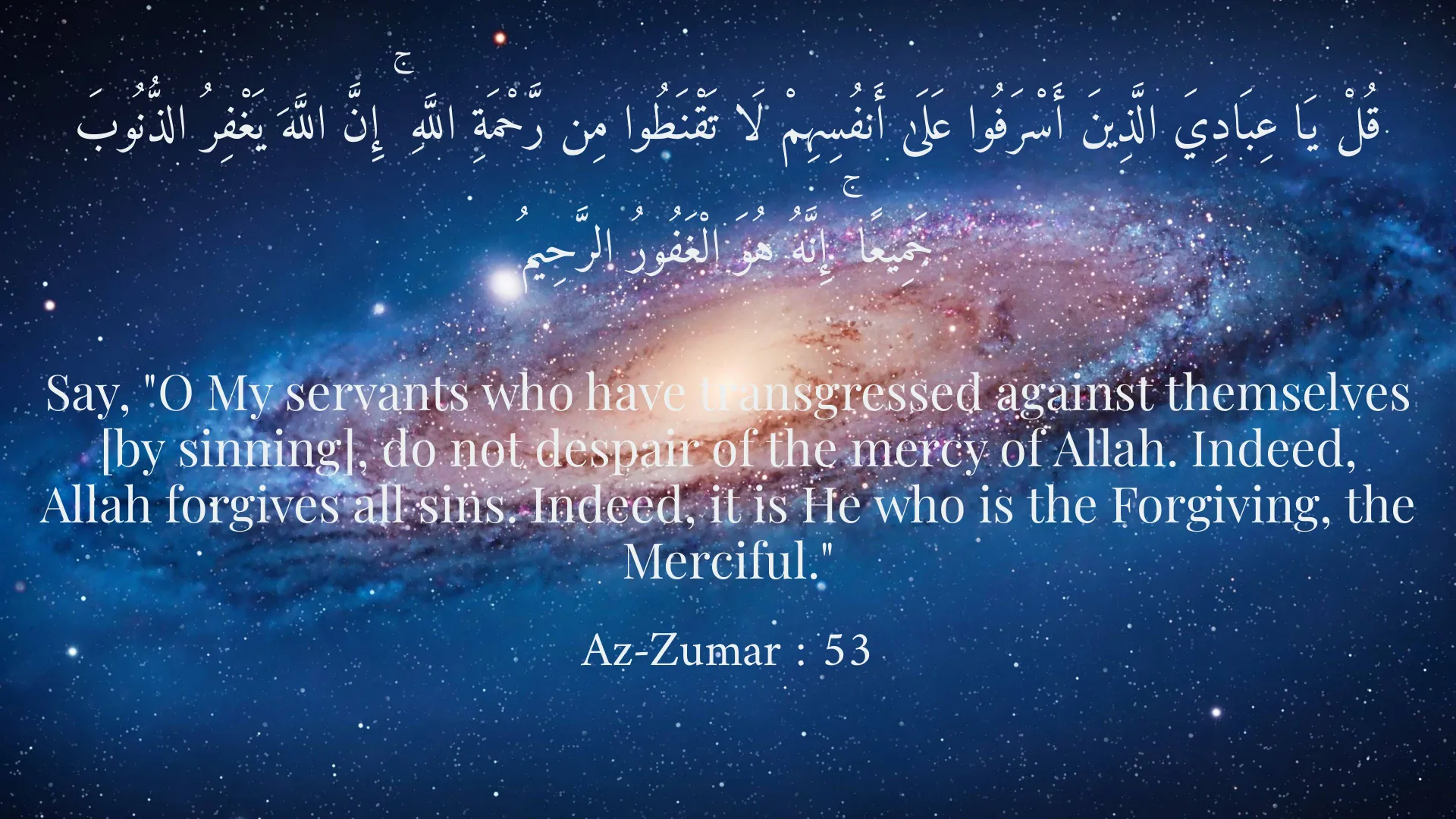
قُلْ يَا عِبَادِيَ الَّذِينَ أَسْرَفُوا عَلَىٰ أَنفُسِهِمْ لَا تَقْنَطُوا مِن رَّحْمَةِ اللَّهِ ۚ إِنَّ اللَّهَ يَغْفِرُ الذُّنُوبَ جَمِيعًا ۚ إِنَّهُ هُوَ الْغَفُورُ الرَّحِيمُ
Say, "O My servants who have transgressed against themselves [by sinning], do not despair of the mercy of Allah. Indeed, Allah forgives all sins. Indeed, it is He who is the Forgiving, the Merciful."
Az-Zumar : 53
قَدْ أَفْلَحَ مَن زَكَّاهَا
He has succeeded who purifies it,
Ash-Shams : 9
وَقَدْ خَابَ مَن دَسَّاهَا
And he has failed who corrupts it.
Ash-Shams : 10
يَا أَيُّهَا الَّذِينَ آمَنُوا اسْتَعِينُوا بِالصَّبْرِ وَالصَّلَاةِ ۚ إِنَّ اللَّهَ مَعَ الصَّابِرِينَ
O you who have believed, seek help through patience and prayer. Indeed, Allah is with the patient.
Al-Baqarah : 153
Short Story
It is narrated in Saadi's Golestan that a young ascetic, outwardly pious and devout, was renowned among people for his goodness and abstemiousness. Whenever he was with others, he spoke of worship and piety and was constantly engaged in remembrance of God. However, in his solitude, he was afflicted by a hidden habit that gave his soul no peace. One day, he approached a wise Shaykh and complained of his inner turmoil, saying: "O Shaykh, outwardly I am a man of God, but inwardly, I suffer from a secret habit that has darkened my being. How can I purify myself?" The Shaykh smiled and said: "O young man, you are like a house whose facade has been decorated with the utmost beauty, but a hidden corner within it is full of cobwebs and dust. When a guest enters the house, they see only the apparent beauty, but the owner of the house suffers from that hidden corner. True purity lies in adorning both the exterior and cleansing the interior of every impurity. So strive to make what you conceal consistent with what you reveal, and know that your Lord is more aware of every hidden thing." The young man took heed of the Shaykh's words and resolved not only to purify his outward self but also his inner being from every impurity, and by trusting in God and constant self-awareness, he attained true tranquility.