Quranic Answer
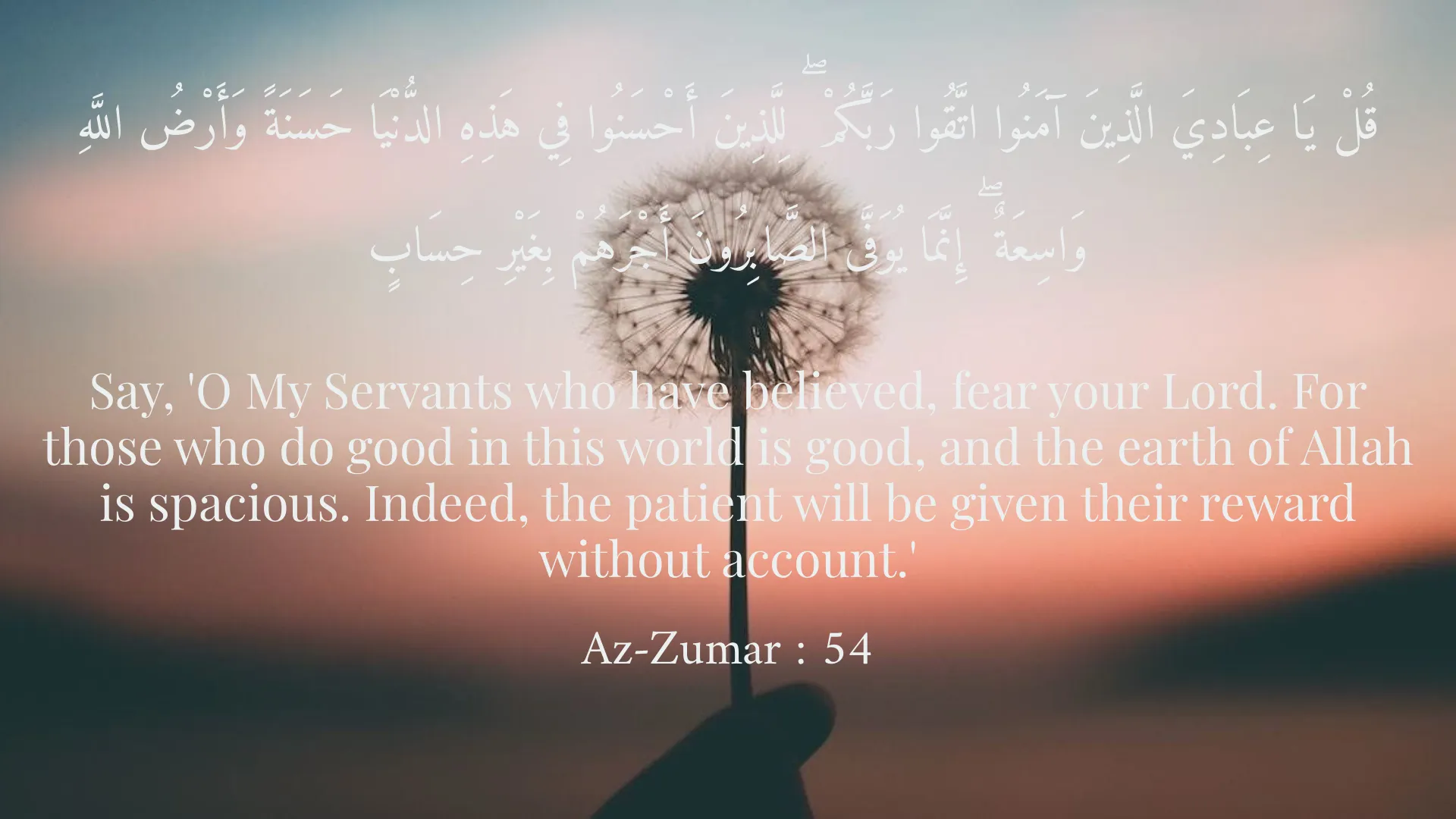
Hope and optimism are central themes that resonate deeply within the verses of the Holy Quran, offering guidance and solace to those who reach out for support during challenging times. The complexities of human existence often lead us to confront situations steeped in despair and trepidation. In the midst of these trials, the teachings of the Quran serve as a beacon of light, illustrating how faith can transform a bleak outlook into one filled with promise and potential. The ultimate message of the Quran is one of resilience, reminding us that life is filled with ebbs and flows, and no negative circumstance is everlasting. In Surah Az-Zumar, verse 54, Allah states: 'Say, 'O My Servants who have believed, fear your Lord. For those who do good in this world is good, and the earth of Allah is spacious. Indeed, the patient will be given their reward without account.' This verse underscores the dual principle of faith and action. Believers are urged not only to place their trust in Allah but also to engage actively in good deeds. The promise of reward for patience serves as a powerful reminder that amidst adversity, there lies an opportunity for growth and a pathway to divine blessings. The text emphasizes the transient nature of hardship, inviting individuals to reflect on the notion that adversity is not a permanent state. This idea fosters a mindset that actively seeks change and improvement, inspiring hope in even the most desperate situations. It reassures the believer that challenges are surmountable and that they are not alone in their struggle; Allah is there to guide and support them through every trial they face. Allah's commitment to respond to the pleas of His followers is reiterated in Surah Al-Baqarah, verse 253: 'Indeed, Allah responds to you when you call upon Him.' This inviting promise instills confidence in the hearts of those grappling with hopelessness. The act of turning to prayer serves as a conduit for solace and clarity, allowing individuals to articulate their fears and desires to their Creator. The power of prayer, as described in the Quran, provides a sense of connection, emotional release and the fortitude necessary to navigate through times of struggle. Moreover, the example of Prophet Younus (Jonah) in the face of darkness exemplifies hope in action. In the depths of despair, as he found himself confined in the belly of a great fish, Younus sought solace in his faith, calling upon Allah for liberation. His sincere supplication was met with divine compassion, leading to his eventual rescue. This narrative serves as a powerful metaphor, illustrating that in moments where we feel engulfed by darkness, turning to God can illuminate our path toward redemption. Younus' story inspires individuals to maintain their faith, underscoring that even in the direst circumstances, hope can arise from hopelessness. Furthermore, the Quran delves deeper into the philosophy of hope, emphasizing the importance of perseverance and patience. These virtues act as stepping stones to overcoming tribulations. Each challenge presents an opportunity to cultivate inner strength, thereby reinforcing belief in a brighter future. The Quran does not ignore the reality of pain and suffering; rather, it acknowledges these experiences as integral parts of the human journey. Through patience, believers are reminded that their trials may refine them, leading to personal transformation, spiritual elevation, and an ultimately more profound appreciation for the gifts of life. Additionally, conversations surrounding the themes of hope and optimism in the Quran extend beyond mere personal assurance to encompass collective responsibility. In times of despair, individuals are encouraged to support one another, fostering communities built on empathy and love. The teachings implore believers to act as pillars of strength and encouragement, reminding others of their intrinsic worth and the enduring light of hope. Through acts of kindness, compassion, and shared faith, communities can flourish, empowering each member to rise above their individual struggles. Practicing hope also entails cultivating a positive mindset, which the Quran encourages through reflection and gratitude. Surah Al-Baqarah, verse 152 speaks to this: 'So remember Me; I will remember you. And be grateful to Me and do not deny Me.' Gratitude has a profound impact on one's perspective, fostering an optimistic outlook that thrives even in adversity. By acknowledging and embracing the blessings present in our lives, we nurture a sense of appreciation that elevates our spirits, making it easier to navigate the complexities of existence. The propensity to focus on the positive aspects of life fosters resilience, encouraging individuals to push through challenges with renewed vigor. As we reflect upon the overarching themes of hope and optimism found within the Quranic texts, it becomes apparent that the divine wisdom offered is timeless. The scriptures timelessly advocate for hope as a means of transcending despair, urging believers to recognize that their circumstances can and will change. In moments of difficulty, it is crucial to remind individuals grappling with hopelessness that they are never truly alone. Allah, as the most compassionate and merciful, is always present, ready to guide them back to the light. In conclusion, the Quran's profound teachings on hope and optimism serve as a guiding compass as we navigate life's inevitable challenges. Harnessing the power of hope—drawing strength from faith, taking action through good deeds, and maintaining a positive mindset—can empower individuals to overcome despair and emerge from adversity stronger than before. The collective messages of patience, prayer, and the reminder of Allah's endless mercy affirm that even in the darkest valleys, the light of hope remains unwavering. Let us take these teachings to heart, embracing hope as our steadfast companion on the journey of life.
Related Verses
قُلْ يَا عِبَادِيَ الَّذِينَ آمَنُوا اتَّقُوا رَبَّكُمْ ۖ لِلَّذِينَ أَحْسَنُوا فِي هَذِهِ الدُّنْيَا حَسَنَةً وَأَرْضُ اللَّهِ وَاسِعَةٌ ۖ إِنَّمَا يُوَفَّى الصَّابِرُونَ أَجْرَهُمْ بِغَيْرِ حِسَابٍ
Say, 'O My Servants who have believed, fear your Lord. For those who do good in this world is good, and the earth of Allah is spacious. Indeed, the patient will be given their reward without account.'
Az-Zumar : 54
اللَّهُ يَسْتَجِيبُ لَكُمْ إِنْ دَعَوْهُ
Indeed, Allah responds to you when you call upon Him.
Al-Baqarah : 253
Short Story
One day, a man named Mahdi went to his friend's house. His friend had been feeling hopeless for a while and was trying to solve his problems alone. Upon hearing his friend's issues, Mahdi said, 'Nothing is eternal, brother! It is always stated in the Quran that Allah supports His servants. You must pray and keep hope in Allah.' Mahdi even mentioned the story of Younus who was saved by Allah while in the belly of a whale. Mahdi's words brought a smile to his friend's face and rekindled hope in his heart.