Quranic Answer
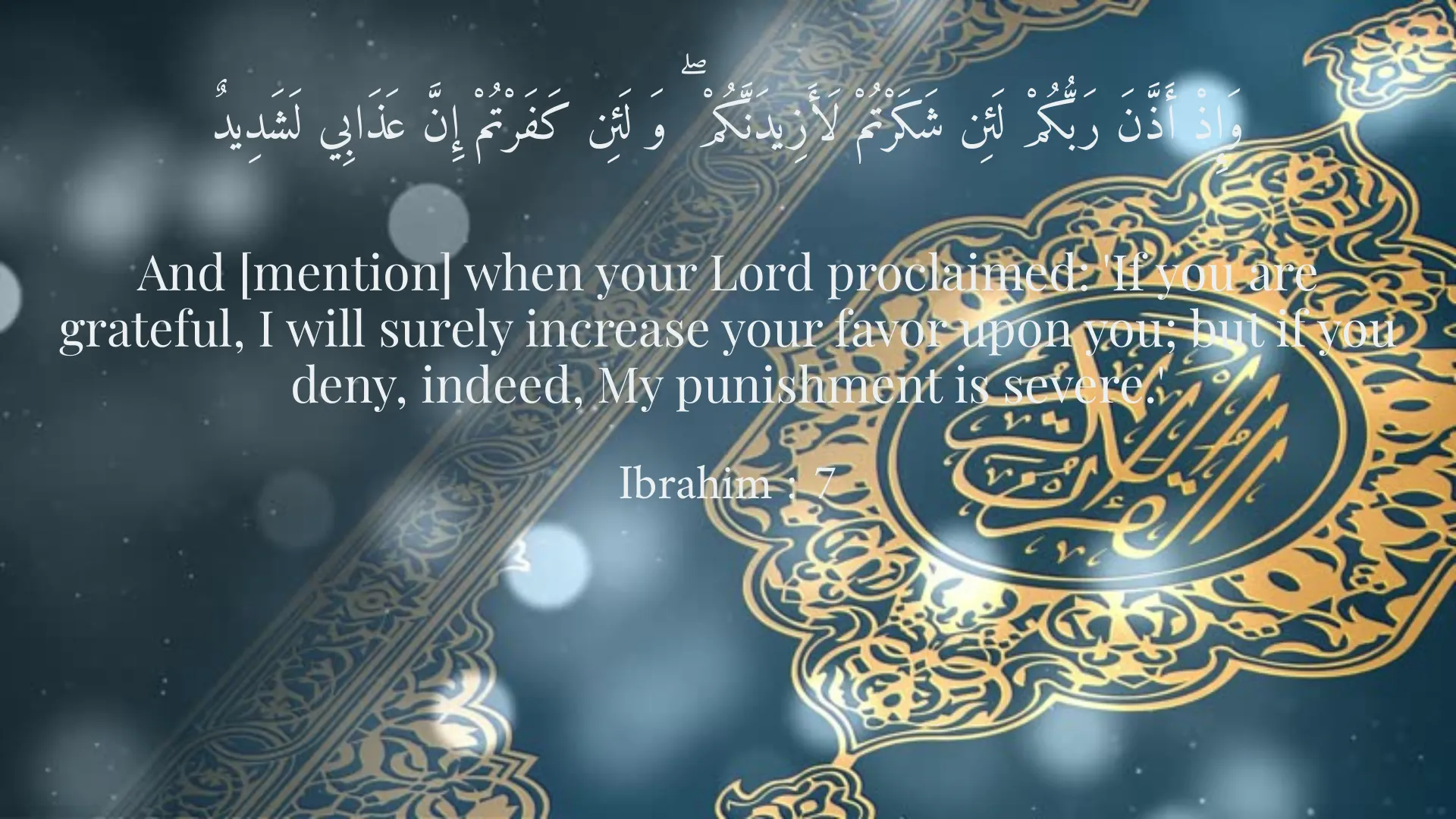
Gratitude is a foundational concept within Islamic teachings, especially as articulated in the Holy Quran. It embodies the essence of appreciating the myriad blessings and favors that Allah has bestowed upon humanity. This appreciation is not merely a passive acknowledgment of gifts received; rather, it transforms into an active form of worship and an ethical stance that demands reflection and response. In this article, we will explore the deep significance of gratitude in Islam, anchored by various Quranic verses that illuminate its importance in the daily lives of believers. ### The Divine Connection: Gratitude as Worship Gratitude, or 'shukr' in Arabic, is recognized as a form of worship that strengthens one's relationship with Allah. The Quran emphasizes this through several verses. A particularly poignant example comes from Surah Ibrahim, verse 7, which states: "And [mention] when your Lord proclaimed: 'If you are grateful, I will surely increase your favor upon you; but if you deny, indeed, My punishment is severe.'" This verse underscores a fundamental principle of faith: the act of gratitude is reciprocal. Allah promises to amplify His blessings in response to the gratefulness expressed by His believers. The verse serves as a reminder that gratitude is not merely a personal condition but a divine exchange that invites greater blessings into one's life. Expressing gratitude, therefore, becomes an essential practice for believers aspiring to live in alignment with divine expectations. ### The Essence of True Gratitude True gratitude necessitates a profound recognition of the blessings one enjoys. It challenges individuals to acknowledge the depths of their fortunes, be they spiritual, material, or relational. For instance, believers are encouraged to reflect upon their day-to-day lives, recognizing even the smallest of favors that they often take for granted. In the story narrated in Surah An-Naml, verse 40, we find a remarkable illustration of this principle through the figure of Prophet Solomon: "Said the one who had knowledge from the Scripture, 'I will bring it to you before your glance returns to you.' And when he saw it positioned before him, he said, 'This is by the grace of my Lord.'" The acknowledgment of the grace of Allah, even in minor blessings, demonstrates an attitude of gratitude that opens the door to even greater favors. This narrative conveys the idea that those who recognize and appreciate Allah's gifts are likely to attract more of them into their lives. ### Gratitude in Daily Life: A Transformative Practice Integrating gratitude into daily life involves a conscious effort to recognize and reflect upon Allah’s blessings regularly. This practice is not limited to spoken words of thanks but extends to actions that demonstrate appreciation. For instance, utilizing one’s skills, resources, and time in a manner that serves the greater good is an expression of gratitude towards the divine gifts one has been granted. In Surah Al-Imran, verse 145, it is noted: "And no soul can die except by permission of Allah, at a decree determined. And whoever desires the reward of this world, We give him thereof; and whoever desires the reward of the Hereafter, We give him thereof." This verse further emphasizes the importance of intention in the practice of gratitude. It instructs believers that life’s rewards can manifest in both worldly and spiritual realms, depending on their desires and efforts. Thus, living a life imbued with gratitude not only cultivates a deeper connection with Allah but also positions individuals to receive the fullness of His blessings in both this life and the next. ### The Ethical Dimensions of Gratitude Gratitude also extends beyond the individual’s relationship with Allah and permeates one’s interactions with others. Gratitude fosters a sense of community and encourages individuals to contribute positively to society. When people express appreciation for their blessings, it motivates them to share resources, time, and kindness with those in need, thereby creating a cycle of generosity and positivity. The Quran advocates for social responsibility, suggesting that gratitude is a catalyst for ethical behavior. ### Conclusion: Embracing a Grateful Life In conclusion, the concept of gratitude in Islam is rich and multifaceted. It transcends mere acknowledgment of blessings, evolving into an essential practice of worship and moral conduct. The Quran consistently imparts the message that gratitude is a path to greater blessings—both materially and spiritually. By recognizing the depth of one’s fortunes, expressing thanks, and using these blessings wisely, individuals can not only enhance their lives but also contribute to the well-being of their communities. As we strive to embody gratitude in our daily lives, let us remember the teachings contained in the Quran. By reflecting on our blessings, we invite more of Allah’s grace, motivate ourselves and others towards ethical living, and ultimately align our lives with divine purpose. Gratitude is not just an attitude—it is a way of engaging with the world that can transform lives and foster peace within oneself and among communities. Thus, let us commit to becoming more grateful, allowing the overflow of our hearts to manifest in our actions, words, and relationships.
Related Verses
وَإِذْ أَذَّنَ رَبُّكُمْ لَئِن شَكَرْتُمْ لَأَزِيدَنَّكُمْ ۖ وَ لَئِن كَفَرْتُمْ إِنَّ عَذَابِي لَشَدِيدٌ
And [mention] when your Lord proclaimed: 'If you are grateful, I will surely increase your favor upon you; but if you deny, indeed, My punishment is severe.'
Ibrahim : 7
قَالَ الَّذِي عِندَهُ عِلْمٌ مِّنَ الْكِتَابِ أَنَا آتِيكَ بِهِ قَبْلَ أَن يَرْتَدَّ إِلَيْكَ طَرْفُكَ ۖ فَلَمَّا رَءَاهُ مُسْتَقِرًّا عِندَهُ قَالَ هَذَا مِن فَضْلِ رَبِّي
Said the one who had knowledge from the Scripture, 'I will bring it to you before your glance returns to you.' And when he saw it positioned before him, he said, 'This is by the grace of my Lord.'
An-Naml : 40
وَمَا كَانَ لِنَفْسٍ أَن تَمُوتَ إِلَّا بِإِذْنِ اللَّهِ كِتَابًا مُؤَجَّلًا ۚ وَمَن يُرِدْ ثَوَابَ الدُّنْيَا نُؤْتِهِ مِنْهَا ۖ وَمَن يُرِدْ ثَوَابَ الْآخِرَةِ نُؤْتِهِ مِنْهَا
And no soul can die except by permission of Allah, at a decree determined. And whoever desires the reward of this world, We give him thereof; and whoever desires the reward of the Hereafter, We give him thereof.
Al-Imran : 145
Short Story
One day, a man named Ali was thinking with concern about his life. He realized that there were blessings from Allah in everything. Inspired by the Quran, he decided to practice gratitude more in his life. He began to reflect on the small things he had each day and noticed that by expressing gratitude, the essence of Allah became ever more pronounced in his life. Over time, his life was filled with peace and blessings.