Quranic Answer
The topic of remorse and returning to Allah is a central theme in the Holy Quran, emphasizing the importance of acknowledging one's sins and seeking forgiveness. In a world filled with distractions and challenges, the ability to reflect on one’s misdeeds, acknowledge them, and strive for improvement is significant. This article delves deep into the verses of the Quran that elucidate the concept of remorse, as well as the necessary steps one should take to embody the principles of repentance and spiritual growth. One of the most poignant discussions regarding remorse in the Quran can be found in Surah At-Tawbah, verse 118. Here, Allah commands His servants to confess their sins and return to Him. This verse clearly outlines the initial step toward true remorse: acknowledgment. To foster genuine repentance, individuals must first recognize their shortcomings. This act of recognition sets the foundation for spiritual growth, as understanding the gravity of one's actions is paramount in the journey toward redemption. Moreover, Allah emphasizes that true remorse is not merely a superficial feeling; it requires sincerity and a commitment to change. Surah Al-Furqan, verse 70, further elaborates on the qualities of believers who embody true remorse. This verse signifies that those who repent sincerely not only seek forgiveness but also distance themselves from sinful habits that led them astray. Consequently, this leads to divine mercy and ultimately spares them from punishment. Here, we see an essential quality of repentance – the intention to alter one's life choices in the service of higher moral and spiritual standards. Another impactful passage can be found in Surah Az-Zumar, verse 53, where Allah extends His mercy to all of humanity. This verse is a comforting reminder of Allah’s infinite capacity for forgiveness. It serves as an encouragement for individuals to feel genuine remorse for their misdeeds. The concept of remorse, therefore, is portrayed not as a hopeless state, but as an opportunity for renewal and reinvigoration in one’s spiritual journey. Allah's reminder of His boundless mercy reassures believers that, despite their shortcomings, there is always a pathway back to Him. This notion of divine mercy fosters hope within individuals and fuels their desire to reconnect with their Creator. To cultivate this sense of remorse and the desire to return to Allah, several practices can be beneficial. Central to this process is the remembrance of Allah (Dhikr). Engaging in constant acknowledgment of Allah’s presence and attributes helps individuals stay mindful of their actions, leading them to feel compelled to act righteously. In the fast-paced world we live in today, where distractions are abound, it is crucial to find strategies to incorporate such remembrance into daily life. Another significant practice is the act of seeking assistance through prayer (Salah) and supplication (Dua). Prayer not only strengthens one’s connection with Allah but also brings solace during times of difficulty, encouraging individuals to reflect inwardly and confront their sins. Supplication, on the other hand, is an intimate conversation with Allah, where one can express remorse and seek guidance on the path to improvement. The power of these acts lies in their ability to foster a heartfelt connection with Allah, thereby nurturing faith and hope. Furthermore, developing a growth mindset is paramount when approaching remorse. This involves understanding that remorse should not be viewed as a sign of failure but rather as a catalyst for transformation and personal growth. Individuals often find themselves stuck in cycles of guilt, which can hinder progression. Instead, viewing remorse as a chance to learn and evolve can empower believers to take proactive steps towards making amends, both with themselves and with Allah. Importantly, being part of a community that encourages spiritual growth can also support this transformation. Engaging with like-minded individuals creates an environment conducive to open discussions about faith, struggles, and the journey of repentance. This shared experience can provide the support and encouragement needed to foster genuine remorse and the action of returning to Allah. Indeed, discussing challenges and sharing the process of remorse can serve as a reminder that individuals are not alone in their journeys and that support exists within the community. In conclusion, the concept of remorse and returning to Allah, as emphasized in the Quran, holds immense significance for believers. It starts with acknowledgment of sins and culminates in genuine repentance bolstered by the understanding of Allah's mercy. Through practices such as remembrance, prayer, supplication, and community support, individuals can nurture their faith and encourage personal growth. True remorse is a new beginning, a chance to redirect one's life towards righteousness and fulfillment. By embracing the principles outlined in the Quran, believers can find solace, hope, and a renewed connection with Allah, fostering a life of purpose and integrity in accordance with their faith.
Related Verses
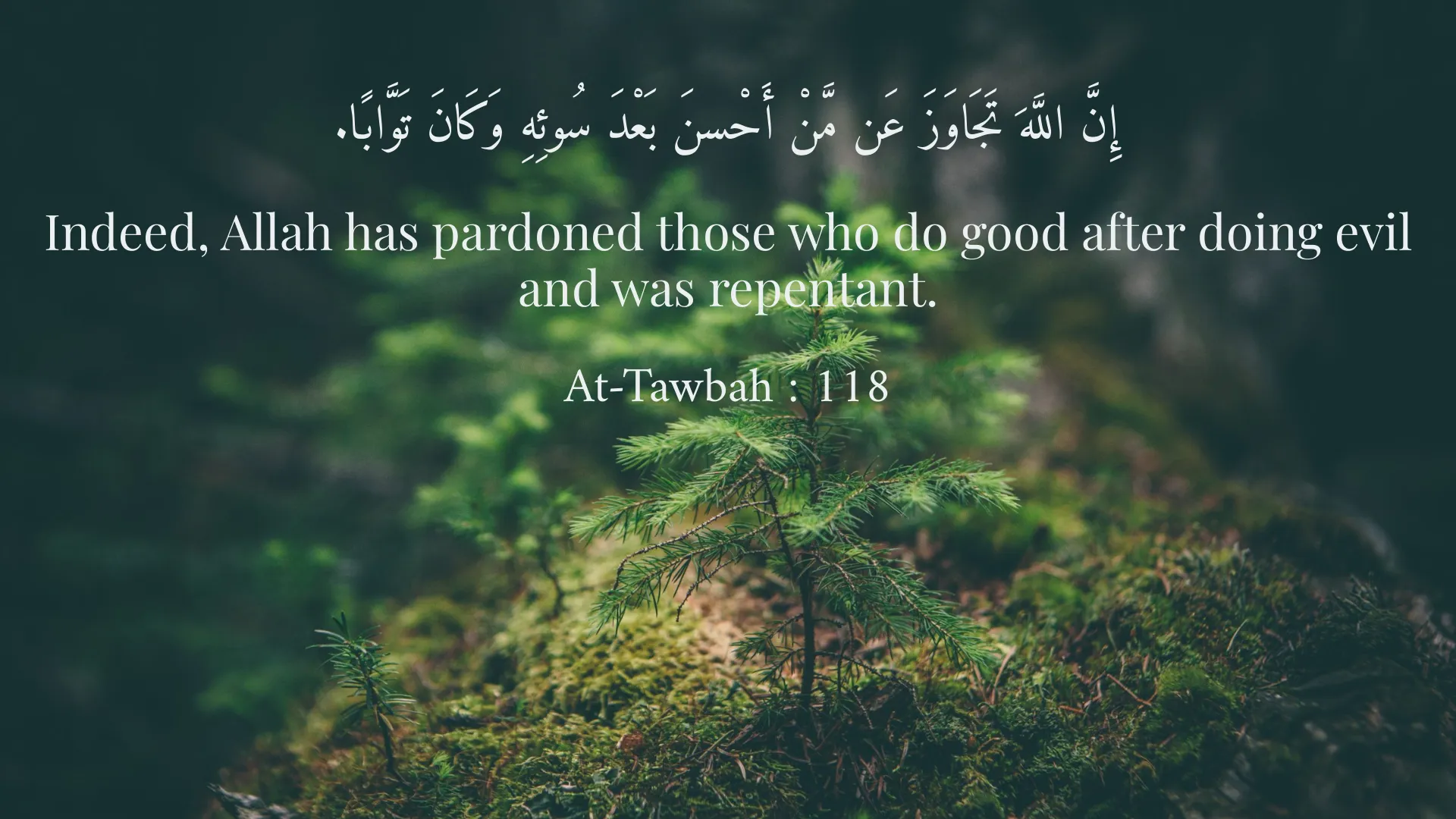
إِنَّ اللَّهَ تَجَاوَزَ عَن مَّنْ أَحْسنَ بَعْدَ سُوئِهِ وَكَانَ تَوَّابًا.
Indeed, Allah has pardoned those who do good after doing evil and was repentant.
At-Tawbah : 118
إِلَّا مَنْ تَابَ وَآمَنَ وَعَمِلَ عَمَلًا صَالِحًا فَأُو۟لَـٰئِكَ يَدْخُلُونَ الْجَنَّةَ وَلَا يُظْلَمُونَ شَيْئًا.
Except for the one who repents, believes, and does righteousness. Those will enter Paradise and will not be wronged at all.
Al-Furqan : 70
يَا عِبَادِيَ الَّذِينَ آمَنتُمُ اتَّقُوا رَبَّكُمْ. لِلَّذِينَ أَحْسَنُوا فِي هَذِهِ الدُّنْيَا حَسَنَةٌ ۖ وَأَرْضُ اللَّهِ وَاسِعَةٌ ۖ إِنَّمَا يُوَفَّى الصَّابِرُونَ أَجْرَهُمْ بِغَيْرِ حِسَابٍ.
O My servants who have believed, fear your Lord. For those who have done good in this world is good, and the earth of Allah is vast.
Az-Zumar : 53
Short Story
Once, a young man named Hamid was remorseful about his sins and sincerely regretted his actions. Every night, he prayed earnestly for Allah's forgiveness and guidance to the right path. One night in his dreams, he found himself sitting beside a large tree, illuminated by a radiant light emanating from it. This light called to him, reminding him of the verses of the Quran. This experience transformed his remorse into a commitment to lead a good and righteous life.