Quranic Answer
Implementing spirituality into one's lifestyle, according to the teachings of the Holy Quran, is not merely a recommendation but a profound necessity for achieving genuine peace, purpose, and lasting felicity. Islamic spirituality is not about withdrawing from the world or adopting an ascetic lifestyle; rather, it emphasizes an active and effective presence in life with a heart constantly connected to the Creator of the universe. The Quran invites us to a balanced life where both worldly affairs and the afterlife are attended to, but always with the remembrance of God and divine purpose at its core. This approach fills life with meaning and tranquility, helping individuals remember their noble purpose of creation at every moment and strive on the path of divine pleasure. The first and most fundamental step in cultivating spirituality is strengthening one's relationship with Allah. This vital connection is established and nurtured through various acts of worship and good deeds. Prayer (Salat), being a pillar of Islam, stands as the most crucial tool for this daily spiritual communion. In Surah Al-Ankabut, Ayah 45, Allah says: "Recite, [O Muhammad], what has been revealed to you of the Book and establish prayer. Indeed, prayer prohibits immorality and wrongdoing, and the remembrance of Allah is greater." Prayer is not just a ritual obligation; it is a profound opportunity for direct conversation with the Almighty, a means of purifying the soul, and a source of profound inner peace. Consistently performing prayers at their prescribed times, with a focused heart and full attention, can serve as the backbone of your spiritual life. Even amidst the busiest schedules, a few minutes of solitude with God can infuse you with renewed energy, clarity, and a sense of direction, helping you navigate life's challenges with greater resilience and hope. This regular connection is like recharging the soul, preparing you for daily challenges. Alongside prayer, constant remembrance (Dhikr) of Allah is an indispensable component of Quranic spirituality. Dhikr transcends mere verbal recitation of praises; it encompasses a state of constant mindfulness and awareness of God's watchful presence over our actions and thoughts. In Surah Ar-Ra'd, Ayah 28, the Quran states: "Those who have believed and whose hearts are assured by the remembrance of Allah. Unquestionably, by the remembrance of Allah hearts are assured." This verse unequivocally highlights that true tranquility resides in remembering God. You can practice Dhikr by reciting Quranic verses, listening to the Quran, engaging in supplication (Du'a), or contemplating God's signs in nature and the vast universe. This continuous presence of mind ensures that your decisions and behaviors remain aligned with divine principles. Remembering God acts as an internal compass, guiding you on the right path and preventing you from succumbing to sins or trivial worldly anxieties. This constant state of divine awareness strengthens you against temptations and empowers you to walk confidently on the path of truth. Reliance upon Allah (Tawakkul) is another significant dimension of spirituality. Life inevitably presents numerous challenges and difficulties. The Quran teaches us that after exerting our utmost effort and planning, we should entrust the outcome to Allah, trusting in His infinite power and wisdom. Surah At-Talaq, Ayah 3, beautifully illustrates this: "And whoever relies upon Allah – He is sufficient for him. Indeed, Allah will accomplish His purpose. Allah has already set for everything a [decreed] extent." Tawakkul alleviates the heavy burden of worries from a person's shoulders, imbuing them with a deep sense of security and serenity. It does not imply passivity or neglecting effort; rather, it means that after giving your best, you should release anxieties about the results and be content with divine decree. This perspective frees individuals from the stress and anxiety associated with uncertain futures, allowing them to live more peacefully in the present and focus on fulfilling their responsibilities with a calm heart and a clear mind, knowing that Allah is the best Disposer of affairs. God-consciousness (Taqwa) is also a fundamental pillar of Quranic spirituality. Taqwa refers to self-restraint and guarding oneself against sins and forbidden acts, but it extends far beyond mere adherence to obligations and avoidance of prohibitions. It encompasses an inner sensitivity to seeking God's pleasure in every moment of life. In Surah Al-Baqarah, Ayah 197, Allah states: "And take provisions, but indeed, the best provision is Taqwa. And fear Me, O you of understanding!" Taqwa helps us to constantly consider God in our choices, words, and actions, and to distance ourselves from anything displeasing to Him. A person endowed with Taqwa feels God's presence even in solitude, and this awareness prevents them from committing errors. This level of self-awareness and self-control leads to profound moral growth and the attainment of the highest human virtues, guiding the individual towards excellent characteristics. Furthermore, serving humanity and showing kindness (Ihsan) is an inseparable part of Quranic spirituality. Islam does not perceive spirituality in isolation but defines it within the fabric of society, aimed at serving human beings. Helping those in need, showing goodness to parents, respecting neighbors' rights, and upholding justice in social interactions are all manifestations of spirituality. The Holy Quran repeatedly emphasizes the importance of Ihsan, as in Surah Al-Baqarah, Ayah 195: "And spend in the way of Allah and do not throw [yourselves] with your [own] hands into destruction [by refraining]. And do good; indeed, Allah loves the doers of good." This Ihsan encompasses excellence in behavior, speech, and deeds, indicating that true spirituality manifests through action and positive impact on others. Every step taken to assist another, every kind word spoken, and every just action performed is a pathway to drawing closer to Allah and deepening one's spirituality. This practical approach to spirituality imbues life with profound meaning, granting the individual a deep sense of satisfaction and purpose that transcends worldly gains, as every good deed is a form of gratitude for divine blessings. Reflection and contemplation on Allah's signs and creation also constitute a vital aspect of spirituality. The Quran invites us to ponder over the heavens and the earth, the alternation of night and day, and the creation of humans and animals. This contemplation leads to a deeper understanding of the Creator's magnificence and strengthens our faith. In Surah Al Imran, Ayah 191, it says: "Those who remember Allah while standing or sitting or [lying] on their sides and contemplate the creation of the heavens and the earth [saying], 'Our Lord, You did not create this in vain; exalted are You [above such a thing]; then protect us from the punishment of the Fire.'" Such profound reflection not only deepens faith but also grants inner peace, elevating an individual beyond trivial worldly concerns and connecting them with the grandeur and beauty of divine creation. Ultimately, implementing spirituality into one's life is a continuous and dynamic process that demands commitment, effort, and perseverance. It does not imply an abrupt and total transformation of life but rather the conscious integration of Quranic teachings into daily decisions, relationships, work, and even leisure activities. With every prayer, every remembrance, every good deed, and every act of reliance on God, we take a step towards a deeper and more meaningful life, where every moment is an opportunity to draw closer to the Divine. This comprehensive and inclusive spirituality rescues human life from monotony and emptiness, illuminating it with divine light and unparalleled purpose. A spiritual life is one where every breath, every glance, and every action is directed towards the Creator and for His pleasure.
Related Verses
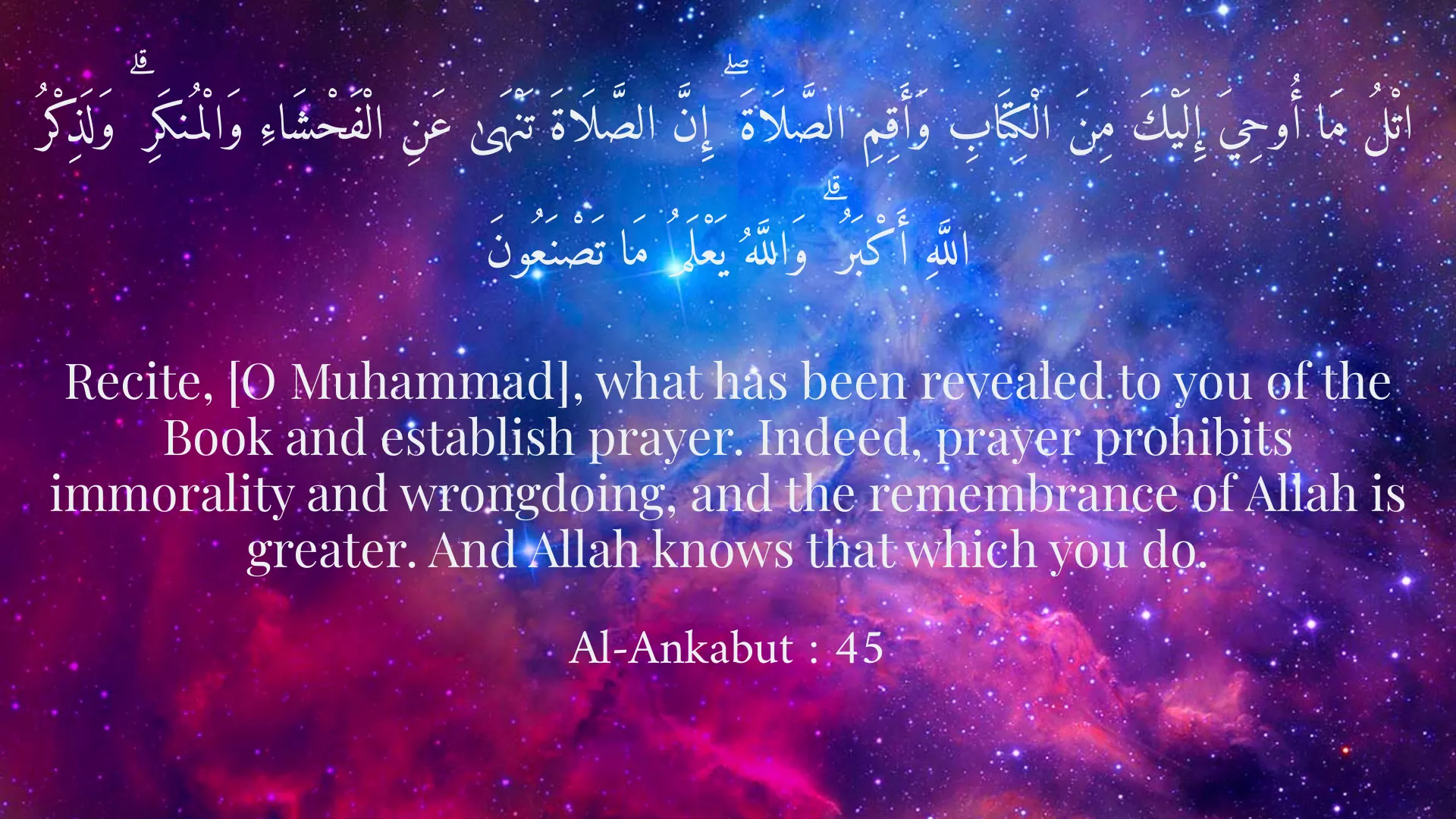
اتْلُ مَا أُوحِيَ إِلَيْكَ مِنَ الْكِتَابِ وَأَقِمِ الصَّلَاةَ ۖ إِنَّ الصَّلَاةَ تَنْهَىٰ عَنِ الْفَحْشَاءِ وَالْمُنكَرِ ۗ وَلَذِكْرُ اللَّهِ أَكْبَرُ ۗ وَاللَّهُ يَعْلَمُ مَا تَصْنَعُونَ
Recite, [O Muhammad], what has been revealed to you of the Book and establish prayer. Indeed, prayer prohibits immorality and wrongdoing, and the remembrance of Allah is greater. And Allah knows that which you do.
Al-Ankabut : 45
الَّذِينَ آمَنُوا وَتَطْمَئِنُّ قُلُوبُهُمْ بِذِكْرِ اللَّهِ ۗ أَلَا بِذِكْرِ اللَّهِ تَطْمَئِنُّ الْقُلُوبُ
Those who have believed and whose hearts are assured by the remembrance of Allah. Unquestionably, by the remembrance of Allah hearts are assured.
Ar-Ra'd : 28
وَمَن يَتَوَكَّلْ عَلَى ٱللَّهِ فَهُوَ حَسْبُهُۥٓ ۚ إِنَّ ٱللَّهَ بَٰلِغُ أَمْرِهِۦ ۚ قَدْ جَعَلَ ٱللَّهُ لِكُلِّ شَىْءٍۢ قَدْرًا
And whoever relies upon Allah – He is sufficient for him. Indeed, Allah will accomplish His purpose. Allah has already set for everything a [decreed] extent.
At-Talaq : 3
Short Story
One day, a wealthy but troubled merchant encountered a ragged, hungry dervish. Despite his impoverished appearance, the dervish had an extraordinary peace emanating from his eyes. The merchant, astonished, asked, "O Dervish, I see you possess neither wealth nor home, yet your heart is more at ease than any king's. What is the secret to this tranquility?" The dervish smiled and replied, "My dear man, my peace stems from not attaching my heart to the world and its fleeting allurements. Every morning when I awaken, I make a pledge to myself to be a servant of God today as well, content with whatever He has provided. Since I know that my sustenance comes from Him and He will not forget me, my heart remains free from the anxieties of tomorrow. You spend your entire life accumulating wealth and status, but I spend every moment accumulating God's pleasure and peace of heart. When spirituality takes root in the heart, the world and its commotions no longer divert you from your path. It is as the verse says, 'Indeed, by the remembrance of Allah hearts are assured.'" The merchant was deeply moved by the dervish's words and understood that the true treasure lies not in overflowing coffers, but in a tranquil heart devoted to the Divine.