Quranic Answer
Self-improvement and reforming one's soul are among the most crucial objectives and teachings of the Holy Quran. But how can we embark on this journey without falling into the trap of undue and destructive self-blame? The Quran presents a path where admitting mistakes, sincere repentance, and moving forward constructively replace self-reproach and despair. These divine teachings instruct us that errors are a natural part of the human experience, and what truly matters is our reaction to them. By our very nature, humans possess a conscience, and this conscience sometimes holds us accountable for our mistakes. However, the fundamental difference between constructive self-accountability and destructive self-blame lies in the focus on outcome and hope. Islam invites us to review past actions, not to wallow in a swamp of regret, but to learn from them, repent, and take a new step forward. This process must be undertaken with compassion towards oneself and with reliance on Allah's vast mercy, not with merciless judgment that can paralyze one's will and halt personal growth. The first and most fundamental principle is Tawbah (repentance) and returning to Allah. The Holy Quran repeatedly emphasizes divine mercy and forgiveness, inviting humanity to repent. In Islam, Tawbah is not merely a verbal acknowledgment; it is a profound internal process encompassing sincere regret for past actions, a firm resolve to abandon sin, and, where possible, making amends for past wrongdoings or restoring the rights of others. In Surah Az-Zumar, verse 53, Allah states: "Say, 'O My servants who have transgressed against themselves [by sinning], do not despair of the mercy of Allah. Indeed, Allah forgives all sins. Indeed, it is He who is the Forgiving, the Merciful.'" This verse explicitly tells us that even if we have committed numerous sins, we must not lose hope in Allah's boundless mercy. Despair itself is a satanic trap that hinders individuals from self-correction and improvement, preventing them from breaking free from their past. True Tawbah not only obliterates sins but can transform them into good deeds, as mentioned in Surah Al-Furqan, verse 70: "Except for those who repent, believe and do righteous work. For them Allah will change their evil deeds into good ones. And Allah is ever Forgiving and Merciful." This profound concept provides immense motivation to free oneself from self-blame, as it demonstrates that no matter how dark the past may seem, a sincere return to Allah and diligent effort in good deeds promises a bright future full of new opportunities. This hope is the cornerstone of self-improvement without a lingering sense of perpetual regret and guilt. The second principle involves adopting a constructive view of mistakes. The Quran advocates for Muhasaba (self-accountability), but this differs significantly from destructive self-blame. In Surah Al-Hashr, verse 18, we read: "O you who have believed, fear Allah and let every soul look to what it has put forth for tomorrow - and fear Allah. Indeed, Allah is Acquainted with what you do." This verse encourages us to look towards the future and consider what we are sending forth for it. The purpose of this introspection is not to wallow in past failures, but to learn from them to build a better future. Quranic self-accountability implies reviewing and evaluating one's actions to identify weaknesses and strengths, and subsequently planning for improvement. This is a forward-looking approach that, instead of dwelling on "Why did I do that?" and becoming trapped, focuses on "How can I become better?" This perspective allows us to view mistakes as valuable opportunities for learning, growth, and correction, rather than reasons for self-abasement and reproach. This positive outlook empowers individuals to accept their flaws realistically and to take steps to rectify them, without becoming enslaved by perpetual guilt. The third crucial point is perseverance and patience on the path of reform. The journey of self-improvement is not achieved overnight, and it may involve challenges and setbacks. The Quran calls upon believers to be steadfast in the path of goodness and righteousness and to seek Allah's help through patience and prayer (Surah Al-Baqarah, verse 153: "O you who have believed, seek help through patience and prayer. Indeed, Allah is with the patient."). This means that even if we stumble again, we should not lose hope or excessively blame ourselves. Every lapse is an opportunity for renewed repentance and greater effort. The essential thing is not to stop moving forward and to rise again every time we fall. This perseverance demonstrates good faith in Allah and reliance on His power to assist His servants. Self-blame often leads to paralyzing the will and halting progress. Conversely, embracing our humanity, acknowledging the possibility of error, and making renewed efforts with reliance on Allah is the way to break free from this deadlock. Continuous self-reproach not only hinders improvement but also endangers one's mental well-being. Therefore, practicing self-forgiveness, just as Allah forgives His servants, is a vital step on this path. Finally, cultivating a positive and hopeful mindset is of paramount importance. The Quran consistently calls believers to hope in Allah's mercy and to rely on Him. Shaytan (Satan) attempts to immobilize humans through despair and hopelessness and instigate futile self-blame, but the Quran teaches us that a door to divine mercy and forgiveness is always open, and no sin is too great to be forgiven, except shirk (associating partners with Allah). Instead of focusing on flaws and imperfections of the past, we should concentrate on our pure intention for reform, the efforts we have made, and our belief in Allah's ability to assist us. True self-knowledge, illuminated by Quranic teachings, helps us not only to recognize our strengths but also to address our weaknesses with compassion and, at the same time, earnestness—compassion to avoid destructive self-blame and earnestness for genuine and lasting reform. This outlook enables us to learn from every misstep, grow, and step forward with stronger resolve towards the human perfection Allah has ordained for us. This path is one of mercy, growth, and hope, not one of self-reproach and despair.
Related Verses
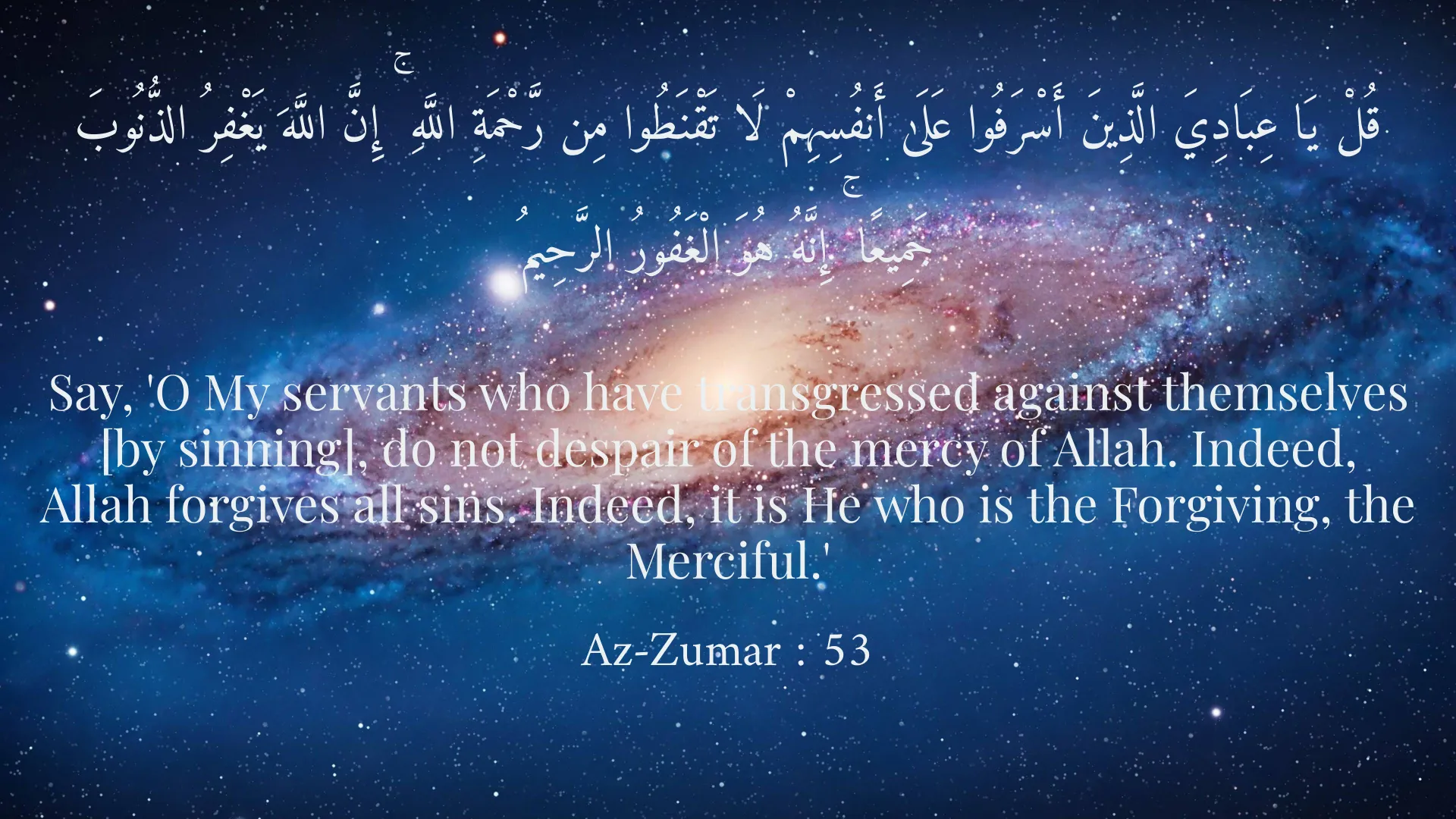
قُلْ يَا عِبَادِيَ الَّذِينَ أَسْرَفُوا عَلَىٰ أَنفُسِهِمْ لَا تَقْنَطُوا مِن رَّحْمَةِ اللَّهِ ۚ إِنَّ اللَّهَ يَغْفِرُ الذُّنُوبَ جَمِيعًا ۚ إِنَّهُ هُوَ الْغَفُورُ الرَّحِيمُ
Say, 'O My servants who have transgressed against themselves [by sinning], do not despair of the mercy of Allah. Indeed, Allah forgives all sins. Indeed, it is He who is the Forgiving, the Merciful.'
Az-Zumar : 53
إِلَّا مَن تَابَ وَآمَنَ وَعَمِلَ عَمَلًا صَالِحًا فَأُولَٰئِكَ يُبَدِّلُ اللَّهُ سَيِّئَاتِهِمْ حَسَنَاتٍ ۗ وَكَانَ اللَّهُ غَفُورًا رَّحِيمًا
Except for those who repent, believe and do righteous work. For them Allah will change their evil deeds into good ones. And Allah is ever Forgiving and Merciful.
Al-Furqan : 70
يَا أَيُّهَا الَّذِينَ آمَنُوا اتَّقُوا اللَّهَ وَلْتَنظُرْ نَفْسٌ مَّا قَدَّمَتْ لِغَدٍ ۖ وَاتَّقُوا اللَّهَ ۚ إِنَّ اللَّهَ خَبِيرٌ بِمَا تَعْمَلُونَ
O you who have believed, fear Allah and let every soul look to what it has put forth for tomorrow - and fear Allah. Indeed, Allah is Acquainted with what you do.
Al-Hashr : 18
Short Story
One day, a benevolent man, yet burdened by his past mistakes, approached Sheikh Saadi. With a sigh, he lamented, 'O Master, for years I have carried the heavy burden of regret and cannot forgive myself. How can I be free and mend myself, when I deem myself unworthy of forgiveness?' Sheikh Saadi, with a kind smile, replied, 'My dear man, the door of repentance and Allah's mercy is always open. Have you ever seen a farmer sow seeds, and then stand over the land, blaming himself for every weed that grew in the past? No! He diligently pulls out the weeds and waters the good seeds. The past is like a seed you have planted, but the present and future are the soil now in your hands. Instead of tearfully reproaching the mud of yesterday, plant flowers of knowledge and good deeds today. God is more merciful than for you to blame yourself.' Upon hearing these words, the man felt a lightness in his heart. From that day forward, instead of drowning in the past, he focused on self-improvement with reliance on God and striving for good deeds, and tasted the sweetness of peace.