Quranic Answer
The Holy Quran serves as a divine guide for millions of Muslims around the world, addressing various themes pertinent to human experience, including repentance and the profound act of returning to God. Central to Islamic teachings is the emphasis on self-reflection, moral accountability, and the merciful nature of God, which encapsulates the essence of spiritual growth and the pursuit of a virtuous life. Through an exploration of several Quranic verses, particularly Surah At-Tawbah and Surah Al-Baqarah, we can appreciate the importance of learning from one's mistakes and actively seeking God’s forgiveness. Repentance, or Tawbah in Arabic, is a significant theme in the Quran. Surah At-Tawbah, verse 51, articulates a powerful message directed towards believers: 'Say, O My servants who have believed, fear your Lord. For those who do good in this world is good, and the earth of Allah is spacious. Indeed, the patient will be given their reward without account.' This verse underlines the concept that, despite lapses in judgment, God invites His servants to return to Him with a sincere heart. Reflecting on one’s actions is crucial for personal growth. The process of repentance begins with sincere remorse for past actions. This feeling of regret for sins committed is more than just an emotional response; it is an essential part of the spiritual journey. It requires deep introspection and the courage to confront one’s shortcomings. Were there particular circumstances or relationships that led to committing these sins? Are there behavioral flaws that need addressing? By identifying these underlying issues, individuals can pave the way for meaningful change. Surah Al-Baqarah, verse 218, reinforces this notion by stating: 'Indeed, those who have believed and those who have emigrated and fought in the cause of Allah - those hope for the mercy of Allah. And Allah is Forgiving and Merciful.' The verse highlights that faith acts as a catalyst for hope, while God's merciful nature encourages believers to strive for self-improvement and seek forgiveness. The combination of faith and proactive efforts amplifies the likelihood of receiving divine mercy. Moreover, the understanding of God's attributes as Forgiving and Merciful in the Quran forms the foundation of hope for redemption. It encourages believers that making mistakes does not irreparably sever one’s relationship with God. Instead, it serves as an opportunity for growth and humility. This belief fosters resilience within individuals, inspiring them to learn from their sins without being consumed by despair or guilt. The Quran also illustrates various stories of prophets and their interactions with God, revealing the delicate balance between divine punishment and mercy. For example, the narrative of Prophet Jonah (Yunus) emphasizes the importance of repentance during challenging times. After finding himself in distress, Jonah turned back to God, demonstrating that the act of turning to God in moments of trouble can yield incredible mercy and forgiveness. Such stories serve as lessons, reflecting that falling short of one’s values is a common human experience, but seeking God's grace enables a fresh start. Additionally, the emphasis on patience in Surah At-Tawbah is critical, as it points towards the inner fortitude required to endure the consequences of one’s actions. Patience isn't simply about waiting; it reflects an attitude of resilience and acceptance of God’s divine plan. Those who practice patience during trials—be it due to past actions or present challenges—often find themselves rewarded in ways they could not have anticipated. The unaccounted rewards indicate that God recognizes and values the sincere efforts of His servants, providing an immense source of comfort and encouragement. The practice of repentance is not confined merely to a single act but rather represents an ongoing commitment to self-improvement and repentance. Each individual’s journey towards God is unique, requiring a tailored approach to personal reflection and reform. The Quranic teachings encourage believers to constantly assess their actions and intentions, striving to align themselves more closely with God’s commands. Furthermore, developing healthy relationships within one’s community can significantly impact one’s spiritual well-being. Engaging with others who also seek repentance fosters a supportive environment that encourages mutual growth and accountability. In acknowledging our flaws together, individuals can collectively work on becoming better versions of themselves. Each interaction holds potential lessons, especially regarding compassion, forgiveness, and understanding of the human condition. As we explore the depths of our spirituality, it is crucial to recognize that every struggle brings forth a lesson. Embracing discomfort is part of the growth process, as it often reveals hidden strengths and capacities to overcome life's obstacles. The Quran gently nudges us towards this reality, continuously offering hope and a reminder that the path toward redemption is accessible to all. As we conclude, it is essential to remember that Islam offers a holistic approach to repentance. It combines belief, action, and perseverance, urging individuals to acknowledge their mistakes and seek God's forgiveness actively. The teachings conveyed through the Quran, particularly in Surah At-Tawbah and Surah Al-Baqarah, resonate deeply, providing spiritual guidance that is both practical and profound. For those willing to embark on this journey of self-discovery and improvement, the doors to God's mercy are always open, encouraging us not just to repent, but to learn, evolve, and flourish in our spiritual paths.
Related Verses
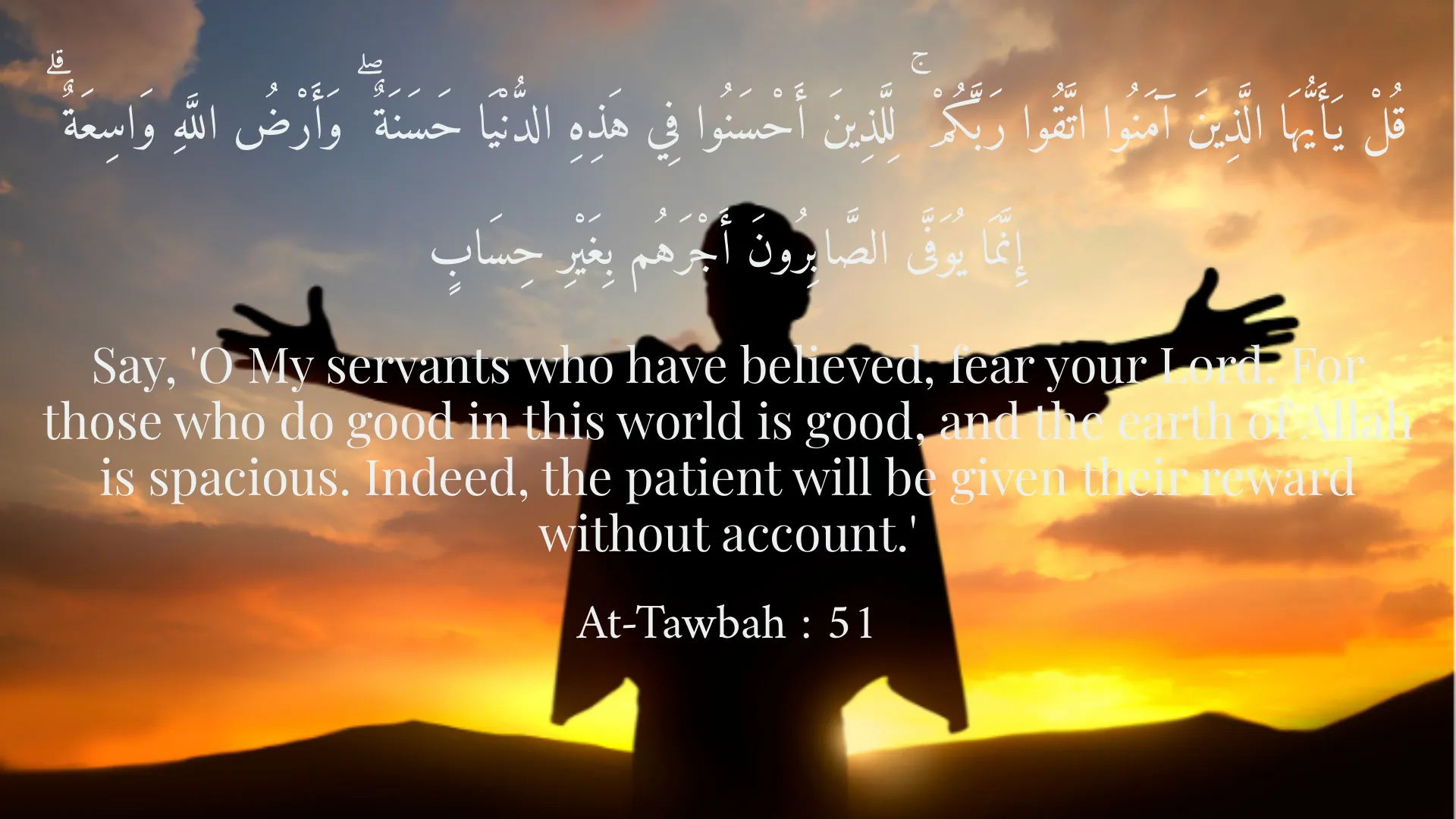
قُلْ يَأَيُّهَا الَّذِينَ آمَنُوا اتَّقُوا رَبَّكُمْ ۚ لِلَّذِينَ أَحْسَنُوا فِي هَذِهِ الدُّنْيَا حَسَنَةٌ ۖ وَأَرْضُ اللَّهِ وَاسِعَةٌ ۗ إِنَّمَا يُوَفَّى الصَّابِرُونَ أَجْرَهُم بِغَيْرِ حِسَابٍ
Say, 'O My servants who have believed, fear your Lord. For those who do good in this world is good, and the earth of Allah is spacious. Indeed, the patient will be given their reward without account.'
At-Tawbah : 51
إن الذين آمنوا والذين هاجروا وجاهدوا في سبيل الله أولئك يرجون رحمة الله، وكان الله غفورًا رحيمًا.
Indeed, those who have believed and those who have emigrated and fought in the cause of Allah - those hope for the mercy of Allah. And Allah is Forgiving and Merciful.
Al-Baqarah : 218
Short Story
One day, a young man named Hasan was walking through the streets when he suddenly recalled his past mistakes. He decided to go to the mosque and seek forgiveness from God. There, in a good spirit, he prayed and realized that God's mercy is boundless. After that, he began helping others and staying away from sins, noticing the positive changes in his life.