Quranic Answer
Letting go of the past, especially from mistakes, regrets, or painful experiences, is a profound and universal challenge that many individuals grapple with. While the exact phrase "letting go of the past" might not be explicitly used in the sublime teachings of the Holy Quran, it provides a comprehensive and powerful framework for confronting the past and moving forward. This framework is built upon concepts such as repentance (tawbah), seeking forgiveness (istighfar), hope in divine mercy, performing righteous deeds (amal salih), and reliance on God (tawakkul), each playing a vital role in the process of liberation and inner peace. The first and perhaps most crucial step in this journey is the concept of "Tawbah" (repentance). In the Quran, repentance signifies a sincere return to God after committing a sin or mistake. This return is not merely superficial regret; it encompasses heartfelt remorse for what has passed, an immediate cessation of the undesirable action, and a firm resolve not to revert to it in the future. If the rights of others (Huquq al-Nas) have been violated, true repentance also necessitates making amends or seeking their forgiveness. Allah, in numerous verses, promises to accept the repentance of those who sincerely turn to Him. For instance, in Surah Az-Zumar, verse 53, He says: "Say, 'O My servants who have transgressed against themselves [by sinning], do not despair of the mercy of Allah. Indeed, Allah forgives all sins. Indeed, it is He who is the Forgiving, the Merciful.'" This verse opens a boundless door of hope, assuring humanity that no sin is too great to be forgiven, provided the repentance is from the heart. The guilt emanating from the past can be paralyzing, hindering one's progress towards a better future; sincere repentance lightens this burden of guilt and allows for a fresh start. The next step is "Istighfar," which is seeking forgiveness from Allah. Istighfar is not merely verbal; it is a state of humility and acknowledgment of servitude before divine greatness. Persistent engagement in Istighfar purifies the heart and helps an individual free themselves from the shackles of the past. The Holy Quran emphasizes that good deeds erase past transgressions. In Surah Hud, verse 114, we read: "...Indeed, good deeds do away with evil deeds. That is a reminder for those who remember." This verse offers a practical and hopeful solution for letting go of the past: instead of drowning in regret and remorse, channel your energy into performing righteous and virtuous deeds. Every good deed you perform not only carries divine reward but also reduces the psychological burden of past sins, helping you shift your gaze from what is behind to what lies ahead. "Hope in divine mercy" and "reliance on God (Tawakkul)" are two other fundamental pillars in this process. The Quran repeatedly forbids believers from despair. Despair is one of Satan's greatest snares, trapping individuals in their past. In contrast, hope in God's grace and forgiveness is the key to liberation from this prison. When a person believes in Allah's vast mercy, they understand that the past, however dark, can be rectified through repentance and righteous actions. Tawakkul, or reliance on God, means complete trust in divine wisdom and letting go of worries about the future and regrets about the past. When an individual entrusts their affairs to God, a burden is lifted from their shoulders, and they realize that Allah is the best helper and guide. Furthermore, "patience (Sabr)" and "prayer (Salah)" are introduced in the Quran as crucial tools for confronting difficulties and achieving inner peace. In Surah Al-Baqarah, verse 153, Allah states: "O you who have believed, seek help through patience and prayer. Indeed, Allah is with the patient." Letting go of the past is a time-consuming process that requires perseverance and steadfastness. Prayer, as the pillar of faith and the ascension of the believer, provides a direct connection with God and is a source of spiritual strength and tranquility. Through prayer and supplication (dua), one can share their problems and psychological burdens of the past with God and seek His assistance. Finally, it is essential to remember that the past, while it may contain lessons, should not become a prison for the present and future. The Holy Quran, by emphasizing individual responsibility for one's actions (each soul is in pledge for what it has earned) while simultaneously opening the door to repentance and forgiveness, enables individuals to renew themselves daily. With an eye toward the future and a firm resolve to do good, one can traverse the path to salvation. The purpose of life is growth and development, and the past should not hinder this movement. Through reliance, repentance, righteous deeds, and patience, one can not only let go of the past but also learn from it and step towards a brighter and more fruitful future. This Quranic approach is not just a religious solution but a profound psychological pathway to mental well-being and lasting peace.
Related Verses
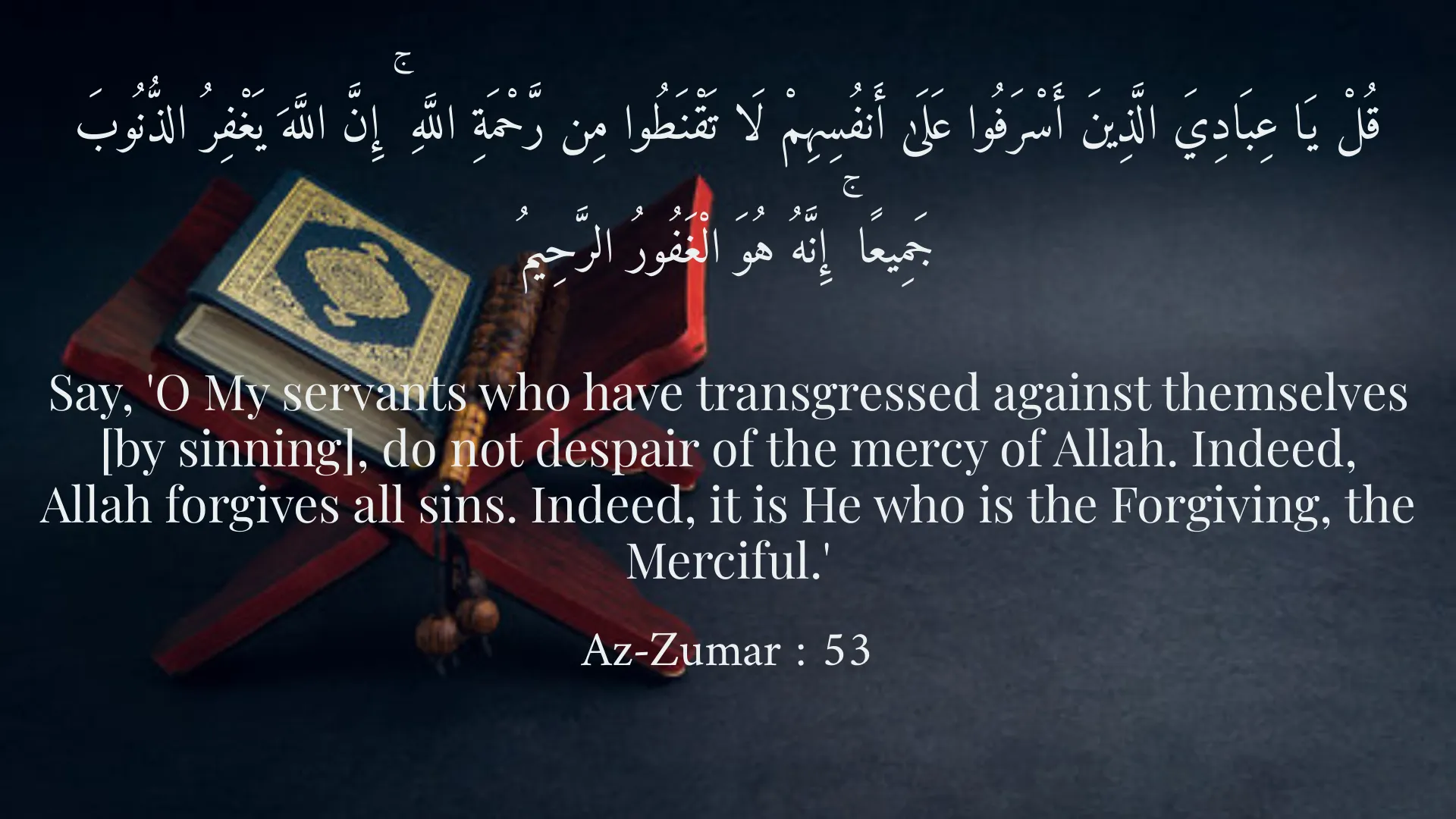
قُلْ يَا عِبَادِيَ الَّذِينَ أَسْرَفُوا عَلَىٰ أَنفُسِهِمْ لَا تَقْنَطُوا مِن رَّحْمَةِ اللَّهِ ۚ إِنَّ اللَّهَ يَغْفِرُ الذُّنُوبَ جَمِيعًا ۚ إِنَّهُ هُوَ الْغَفُورُ الرَّحِيمُ
Say, 'O My servants who have transgressed against themselves [by sinning], do not despair of the mercy of Allah. Indeed, Allah forgives all sins. Indeed, it is He who is the Forgiving, the Merciful.'
Az-Zumar : 53
وَأَقِمِ الصَّلَاةَ طَرَفَيِ النَّهَارِ وَزُلَفًا مِّنَ اللَّيْلِ ۚ إِنَّ الْحَسَنَاتِ يُذْهِبْنَ السَّيِّئَاتِ ۚ ذَٰلِكَ ذِكْرَىٰ لِلذَّاكِرِينَ
And establish prayer at the two ends of the day and at the approach of the night. Indeed, good deeds do away with evil deeds. That is a reminder for those who remember.
Hud : 114
يَا أَيُّهَا الَّذِينَ آمَنُوا اسْتَعِينُوا بِالصَّبْرِ وَالصَّلَاةِ ۚ إِنَّ اللَّهَ مَعَ الصَّابِرِينَ
O you who have believed, seek help through patience and prayer. Indeed, Allah is with the patient.
Al-Baqarah : 153
Short Story
Once upon a time, there lived a man named Salim who constantly suffered from a heavy burden on his shoulders. This burden was the regret of his past mistakes, which tormented him daily and prevented him from tasting peace. He went to a wise sage, one of the city's elders, and said, "O Sage, how can I free myself from this heavy chain? My past casts a dark shadow over every step, hindering me from the light of hope." The sage replied with a kind smile, "O Salim, lighten the burden of your past with the good deeds of today. Have you not seen how clear water washes away every impurity? Likewise, purify your heart with repentance and righteous actions. The past is a staircase to higher levels, not a prison for eternal confinement. Every step you take on the path of goodness, the dust of regret will fall from your heart. Raise your hands in supplication, seek forgiveness from God, and with every good breath, plant a seed of hope in the garden of your life. You will see how not only your past lets go of you, but you yourself will learn from it and fly towards a bright and fruitful future." Upon hearing these words, Salim felt as if he had received new life. He resolved to begin each day with repentance and good deeds, and with every good act, a burden was lifted from his shoulders. After some time, his face shone with inner peace and contentment, and the shadow of the past could no longer overpower him.