Quranic Answer
Living a purposeful life is a concept that resonates deeply with many individuals across various cultures and belief systems. It revolves around having a clear vision, setting specific goals, and taking deliberate actions to achieve them. The quest for purpose is not merely an existential inquiry, but a fundamental aspect of human experience that has been explored through philosophy, spirituality, and psychology. At its core, living a purposeful life implies a commitment to our beliefs, values, and aspirations, which ultimately shape the trajectory of our actions and decisions. One of the profound sources of guidance for living a purposeful life is the Holy Quran, a text revered by Muslims around the world. The Quran places significant emphasis on the concepts of intention and purpose in our actions. For example, in Surah Al-Baqarah, verse 177, it is stated that righteousness encompasses far more than simply adhering to social norms; it involves a deep-seated faith in Allah, as well as beliefs in the Day of Judgment and doing good deeds. This verse inherently suggests that our goals should be aligned with our religious beliefs and moral principles. Essentially, righteousness becomes a guiding beacon that shapes the way we define and pursue our goals. Moreover, alignment with religious teachings is further reinforced in Surah Al-Imran, verse 19, which declares, 'Indeed, the religion in the sight of Allah is Islam.' This reinforces the notion that living a purposeful life transcends individual desires; it is integrally tied to the principles of Islam. The Quran teaches us that our lives should be a reflection of our faith, reminding us that the pursuit of purpose should include adhering to the tenets of Islam and cultivating a moral character consistent with these teachings. In the contemporary context, we can draw inspiration from the lives of the Prophets and righteous figures, particularly Prophet Muhammad and Imam Ali. Their lives exemplify the ultimate manifestation of purpose-driven living. Prophet Muhammad, known for his exemplary character, fulfilled his divine mission through unwavering faith and dedicated service to humanity. Likewise, Imam Ali's commitment to justice, equity, and guidance showcases the essence of a purposeful life aligned with divine teachings. By studying these lives, we not only learn valuable lessons about the pursuit of goals but also about embodying virtues such as compassion, integrity, and resilience. Setting measurable and attainable goals is another powerful strategy to lead a purposeful life. Achievable milestones enable individuals to experience a sense of progress and accomplishment. According to Surah Al-Ankabut, verse 69, Allah states, 'And those who strive for Us, We will guide them to Our ways.' This verse illustrates the importance of effort and perseverance in the pursuit of our aspirations. Striving towards our goals is not merely about reaching the end; it is significantly about the journey itself. It reinforces the idea that through diligence and sincere efforts, we can expect divine guidance and assistance along the way. In practical terms, living purposefully requires the formulation of a suitable plan that aligns with our core values and beliefs. This begins with a clear vision of what we aim to achieve. Taking time for self-reflection can allow us to understand what truly matters to us. Whether it is personal growth, service to others, or fulfillment through creativity, identifying our passions is crucial. After establishing our vision, the next step is to break it into smaller, manageable goals. For instance, if someone has a desire to contribute to their community through volunteer work, they may start by committing to a few hours of service each week. This not only sets a foundation for achieving larger goals but also encourages a habit of consistency and accountability. Furthermore, it is essential to revisit these goals periodically. Life is dynamic, and as we evolve, so may our aspirations. Engaging in regular self-assessment can ensure that we adapt our goals to reflect our growth, circumstances, and changing priorities. This adaptability is a vital component in maintaining a purposeful life, allowing us to remain aligned with our faith and values even as the world around us shifts. Additionally, nurturing healthy relationships plays a pivotal role in our pursuit of a purposeful life. Surrounding ourselves with supportive and like-minded individuals enriches our experience and provides us with encouragement and accountability. The teachings of the Quran highlight the significance of community and fostering bonds with others to enhance our spiritual journey. In conclusion, living a purposeful life is an ongoing journey that requires commitment, self-awareness, and alignment with our beliefs. The wisdom found in the Holy Quran serves as a guide, helping us to navigate our aspirations through intention and righteous action. By embodying the lessons exemplified by the Prophets and incorporating the principles of Islam in our daily lives, we can cultivate a life filled with purpose and fulfillment. As we strive towards our goals, let us maintain the faith that our efforts will yield divine guidance, ensuring that our journey leads us closer to a meaningful and purposeful existence.
Related Verses
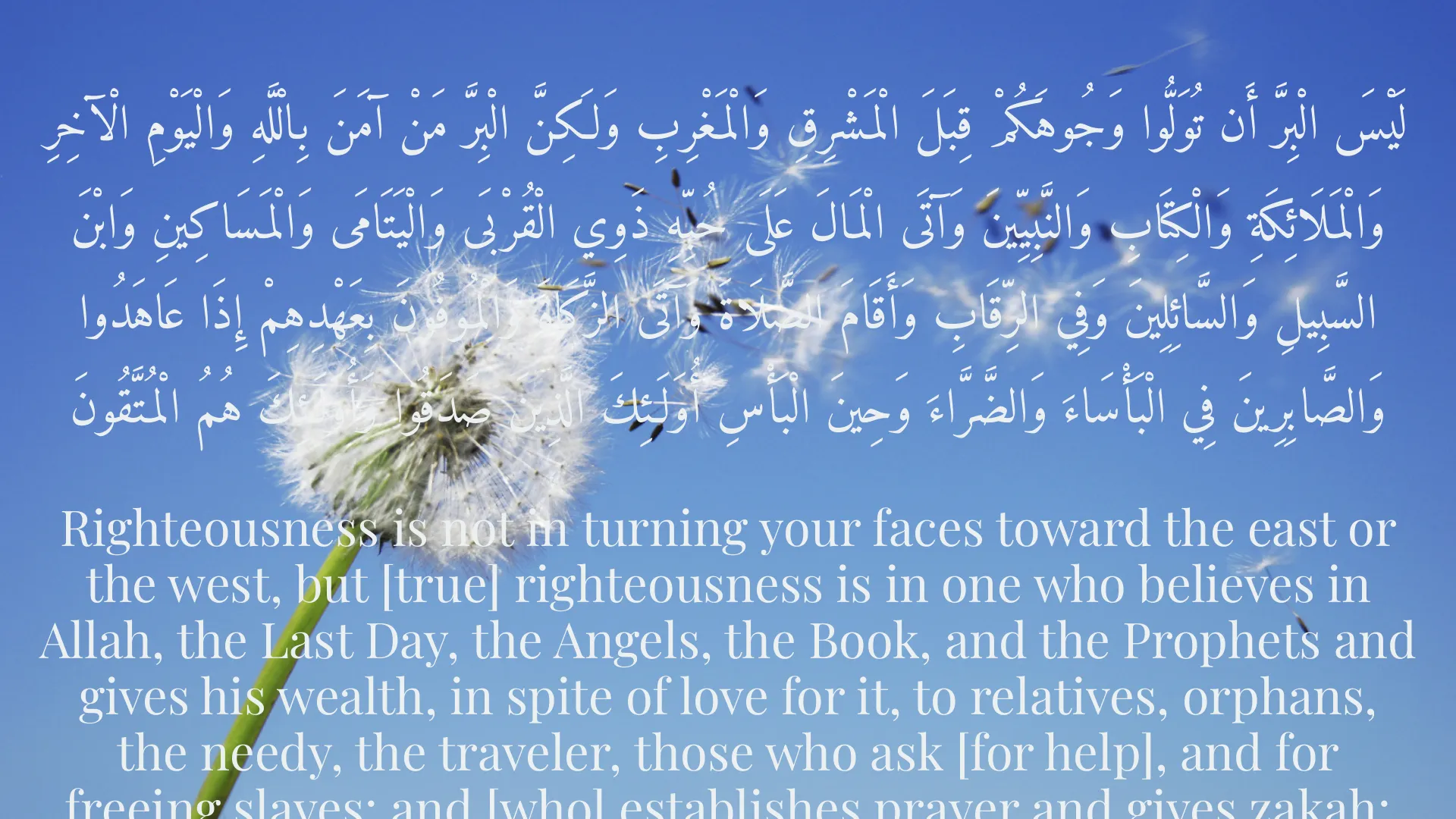
لَيْسَ الْبِرَّ أَن تُوَلُّوا وَجُوهَكُمْ قِبَلَ الْمَشْرِقِ وَالْمَغْرِبِ وَلَكِنَّ الْبِرَّ مَنْ آمَنَ بِالْلَّهِ وَالْيَوْمِ الْآخِرِ وَالْمَلَائِكَةِ وَالْكِتَابِ وَالنَّبِيِّينَ وَآتَى الْمَالَ عَلَى حُبِّهِ ذَوِي الْقُرْبَى وَالْيَتَامَى وَالْمَسَاكِينِ وَابْنَ السَّبِيلِ وَالسَّائِلِينَ وَفِي الرِّقَابِ وَأَقَامَ الصَّلَاةَ وَآتَى الزَّكَاةَ وَالْمُوفُونَ بِعَهْدِهِمْ إِذَا عَاهَدُوا وَالصَّابِرِينَ فِي الْبَأْسَاءَ وَالضَّرَّاءَ وَحِينَ الْبَأْسِ أُوَلَـئِكَ الَّذِينَ صَدَقُوا وَأُوَلَـئِكَ هُمُ الْمُتَّقُونَ
Righteousness is not in turning your faces toward the east or the west, but [true] righteousness is in one who believes in Allah, the Last Day, the Angels, the Book, and the Prophets and gives his wealth, in spite of love for it, to relatives, orphans, the needy, the traveler, those who ask [for help], and for freeing slaves; and [who] establishes prayer and gives zakah; [and who] fulfills their promise when they promise; and [who] are patient in poverty and hardship and during battle. Those are the ones who have been true, and it is those who are the righteous.
Al-Baqarah : 177
إِنَّ الدِّينَ عِندَ اللَّهِ الإِسلامُ ۗ وَمَا اخْتَلَفَ الَّذِينَ أُوتُوا الْكِتَابَ إِلَّا مِن بَعْدِ مَا جَاءَهُمُ الْعِلْمُ ۗ وَمَن يَكْفُرْ بِآيَاتِ اللَّهِ فَإِنَّ اللَّهَ سَرِيعُ الْحِسَابِ
Indeed, the religion in the sight of Allah is Islam. And those who were given the Scripture did not become divided except after knowledge had come to them. And whoever disbelieves in the verses of Allah - then indeed, Allah is Swift in account.
Al-Imran : 19
وَالَّذِينَ جَاهَدُوا فِينَا لَنَهْدِيَنَّهُمْ سُبُلَنَا ۗ وَإِنَّ اللَّهَ لَمَعَ الْمُحْسِنِينَ
And those who strive for Us, We will guide them to Our ways. And indeed, Allah is with the doers of good.
Al-Ankabut : 69
Short Story
One day, a man named Mahdi was searching for a purpose in his life. He often questioned himself why he woke up every morning. After contemplating for a while, he decided to refer to the Quran. It was then that he stumbled upon verses emphasizing the significance of good deeds and pure intentions. Determined to lead a purposeful life, he started with small acts of kindness in his daily routine. Gradually, positive changes began to unfold in his life, and he found a greater sense of satisfaction.