Quranic Answer
Living happily without sin is one of humanity's greatest challenges, with profound implications for every individual's life experience. The pursuit of happiness, in an ethical and moral framework, requires a conscious effort and an understanding of the spiritual elements that guide us. One of the most authentic sources that offer profound insights into leading a good life is the Holy Quran. Through its verses, we are reminded of our purpose and the blueprint for a harmonious existence aligned with the teachings of Islam. In Surah Al-Mu’minun, verses 1-11, Allah outlines the characteristics of true believers, who are the epitome of virtuous living. The opening verse, ‘Indeed, successful are the believers,’ sets the tone for understanding what it means to be a believer in its truest sense. These verses go on to describe the attributes of these believers: they are humble in their prayers, persistent in their devotion, and watchful over their personal conduct. This illustrates the foundational role of prayer in a believer's life. Prayer is not merely a ritual; it is an essential mode of connecting with the divine, nurturing a sense of accountability, and inherently guiding one away from sin. Regular and mindful prayer cultivates a disciplined lifestyle, imbued with mindfulness and awareness of God. Hence, one of the most effective strategies to live happily involves fostering a close relationship with God through consistent prayers and devotion. Incorporating the remembrance of Allah into our lives is another vital principle for achieving happiness. Surah Ar-Ra’d, verse 28 states, 'Indeed, in the remembrance of Allah do hearts find rest.' This verse highlights how the act of remembering and reflecting on God fosters peace and tranquility within the heart. The active practice of remembrance, or Dhikr, serves as an antidote to stress, anxiety, and sin. When individuals draw closer to God and reflect on His attributes and blessings, they create a mindset and atmosphere conducive to personal happiness. Furthermore, this reflection naturally leads to an aversion to sinful behavior, steering an individual towards a more righteous path. Additionally, maintaining healthy relationships with others is paramount to our overall happiness. The Quran encourages believers to engage in charitable acts and to help those in need. In Surah Al-An’am, verse 160, Allah states, 'And whoever does a good deed will see its reward, and the quality of their life will improve.' Engaging in good deeds not only benefits the recipient but also leads to a sense of fulfillment and satisfaction in the giver. Acts of kindness create a cycle of positivity that enhances social bonds, promotes community well-being, and establishes a harmonious society. The act of giving opens one’s heart, strengthens relationships, and fosters an environment of love and camaraderie among individuals. Moreover, looking after the rights and needs of others aligns with the divine command, thereby enhancing the quality of an individual's life and drawing them ever closer to God. The notion of healing one’s heart and soul can substantially lead to happiness. It is essential to realize that neglecting the emotional and spiritual aspects of our lives can lead to internal turmoil and dissatisfaction. Engaging in good actions contributes not only to personal happiness but also to the well-being of society as a whole. When individuals care for one another, they collectively enhance their societal fabric, creating a supportive community that nurtures happiness and contentment. Conversely, neglecting religious duties and distancing oneself from the remembrance of God can lead to adverse outcomes. Surah Ta-Ha, verse 124 states, 'And whoever turns away from My remembrance, indeed, he will have a narrow life.' This verse starkly emphasizes the ramifications of neglecting one’s spiritual duties. A life with lesser connection to God is often filled with worries and lacks true satisfaction. When individuals become preoccupied with worldly distractions and forget their divine purpose, they may find themselves drawn towards sin and dissatisfaction. Thus, the Quran serves as a poignant reminder of the need to align our hearts and actions with divine guidance, for neglecting them leads to an experience void of true joy. The path to a happy and sin-free life is undoubtedly challenging, but it is achievable through steadfast faith, continuous remembrance of God, and commitment to good deeds. It requires cultivating an environment that promotes spiritual awareness, emotional intelligence, and social responsibility. We must strive to embody the attributes as described in the Quran, adhering to the principles of compassion, justice, and integrity. In conclusion, living a genuinely happy life devoid of sin is an object of significant importance for humanity at large. The Holy Quran acts as our guide, illuminating the way toward a fulfilling and meaningful existence. It teaches us that true happiness springs from a constant relationship with God, remembrance, good deeds, and care for others. As we embrace these divine principles wholeheartedly, we unlock the doors to a life of joy, contentment, and liberation from sin. Let us endeavor, through our faith and actions, to align ourselves with these teachings, recognizing them as the keys to a truly happy life.
Related Verses
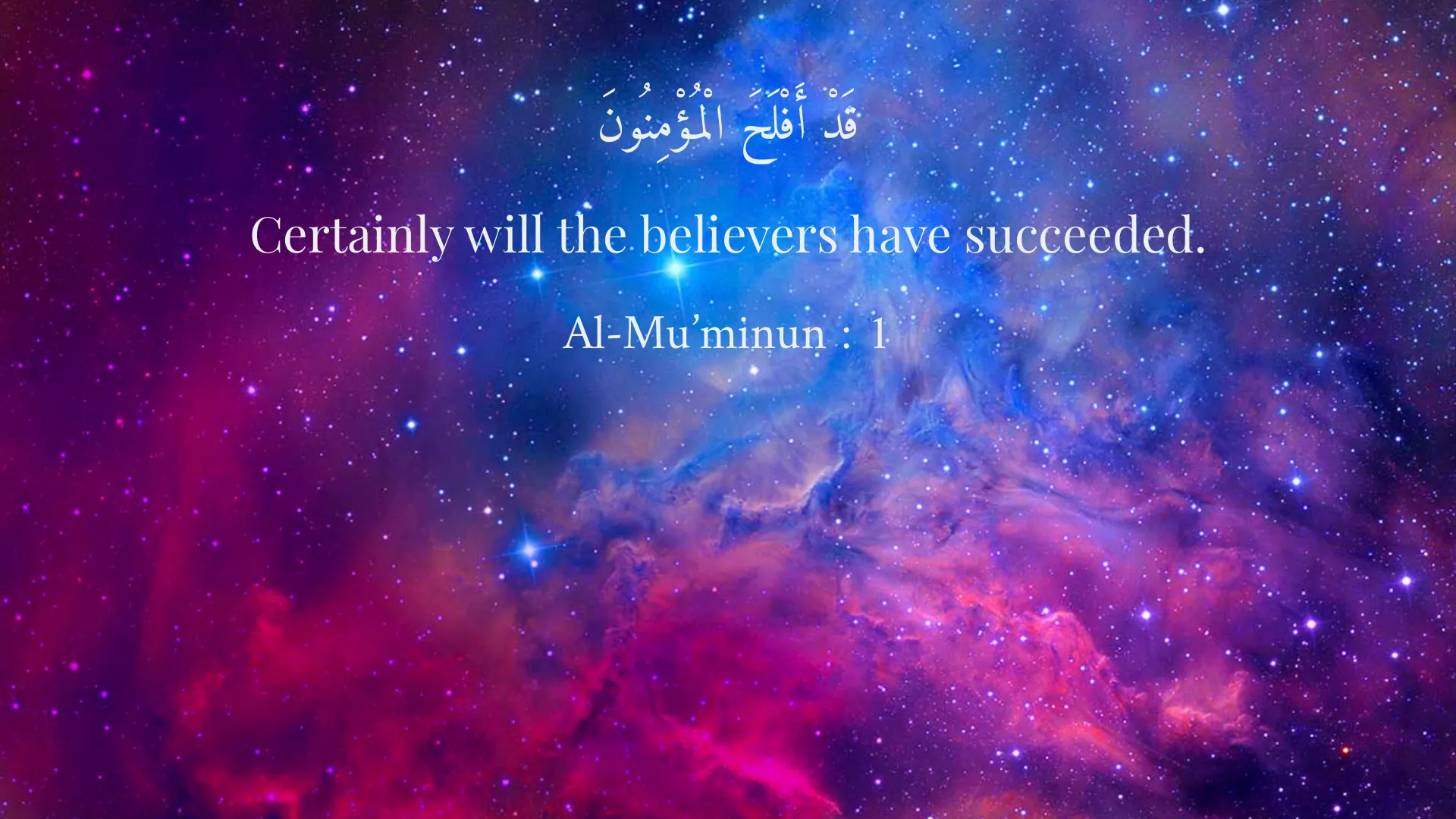
قَدْ أَفْلَحَ الْمُؤْمِنُونَ
Certainly will the believers have succeeded.
Al-Mu’minun : 1
أَلَا بِذِكْرِ اللَّهِ تَطْمَئِنُّ الْقُلُوبُ
Unquestionably, by the remembrance of Allah hearts are assured.
Ar-Ra’d : 28
وَمَن أَعْرَضَ عَنْ ذِكْرِي فَإِنَّ لَهُ مَعِيشَةً ضَنْكًا
And whoever turns away from My remembrance - indeed, he will have a depressed life.
Ta-Ha : 124
Short Story
Once upon a time, in a small village lived a man named Hasan. He was always worried about the future and couldn't find peace. One day, he spoke to the village elder. The elder told him that to live happily, one must first remember God and do good. Hasan began praying and engaging in good deeds like helping those in need. Over time, he not only ceased to worry but became the happiest person in the village.