Quranic Answer
The remembrance of God, often referred to as 'Dhikr' in Islamic tradition, holds immense importance in our daily lives and serves as a critical element in dealing with the myriad challenges and problems that we face. In a fast-paced and often tumultuous world, retaining a strong connection to the divine can provide individuals with solace, strength, and purpose. The Quran, which serves as the holy book for Muslims, contains numerous verses that emphasize the significance of remembering God actively and consistently throughout our lives. By understanding the importance of this practice, we are better equipped to navigate life's difficulties with grace and resilience. One of the most profound verses that highlight the importance of remembrance can be found in Surah Ar-Ra'd, verse 28, which states: "Indeed, by the remembrance of Allah do hearts find rest." This singular verse encapsulates the essence of what it means to remember God. In moments of distress, worry, or uncertainty, the practice of Dhikr allows individuals to find tranquility. The very act of turning one's thoughts and heart towards Allah fosters a sense of peace that enables one to confront life's trials with a clear mind and a calm spirit. Through spiritual reflection, one can achieve a serene state of being, where external chaos becomes less overwhelming and internal peace prevails. Furthermore, the Quran emphasizes reciprocity in the relationship between God and humanity. In Surah Al-Baqarah, verse 152, it states: "So remember Me; I will remember you." This passage illustrates the reciprocal nature of the relationship between God and the believer. When an individual genuinely engages in the remembrance of God, they cultivate a spiritual connection that is mutually enriching. This connection serves not only to bring individuals closer to their Creator but also empowers them to derive strength and wisdom from their faith. It creates a bond of love and understanding that assures believers that they are never alone in their struggles; God is always present, watching over them, and providing guidance. Incorporating the remembrance of God into our lives can be both simple and profound. To live a life filled with the consciousness of God, one can begin by engaging in regular prayer, known as 'Salah,' upon waking and before sleep. Each of these prayers serves as an opportunity to connect with Allah, express gratitude, seek guidance, and reflect on one's actions. Additionally, throughout the day, individuals can immerse themselves in the teachings of the Quran and various Dhikrs, which include phrases, supplications, and remembrances that glorify God. These practices help to keep God at the forefront of our minds, allowing for a continuous dialogue with the divine that nurtures our spiritual growth. Moreover, by reflecting on the beauty of God's creation, one can derive invaluable lessons from nature and the world around them. The intricate details of a blooming flower, the vastness of the ocean, or the peaceful silence of a starlit night can remind us of Allah's artistry and mastery. Each moment spent in reflection of these wonders can serve as a reminder of the divine presence that governs everything, reinforcing the connection between the Creator and His creation. Nature becomes a vast canvas for contemplation, rich with opportunities for believers to connect the dots of their lives with their spirituality. The concept of remembering God transcends mere verbal recitation; it also encompasses living in accordance with His commandments and embodying His teachings in our daily actions. The best approach to remembering God is to engage in these practices with pure intention, focusing on maintaining sincerity and devotion. This earnest dedication to remembering Allah in thought, word, and deed helps to cultivate a life that is directed toward peace and happiness. When believers align their actions with the teachings of Islam, they experience a profound sense of fulfillment and purpose that radiates into every aspect of their lives. Moreover, the remembrance of God is not limited to formal rituals or scheduled prayers. Instead, it can be weaved into the fabric of everyday life. Simple acts such as expressing gratitude before a meal, contemplating the meaning of an experience, or offering kindness toward others can all serve as forms of Dhikr. By training ourselves to view the world through the lens of gratitude and reverence for the Creator, even mundane tasks become imbued with spiritual significance. Practicing mindfulness in our daily lives is another way to enhance our remembrance of God. This can involve taking moments to pause and reflect during the hustle and bustle of life, finding space to breathe deeply, and recentering our thoughts on the divine. Mindfulness practices can create a pathway for increased awareness of God's presence in one's life, leading to a deeper appreciation for the blessings and challenges alike. Furthermore, the remembrance of God can facilitate communal bonds among believers. Participating in group prayers, community gatherings, or religious study groups provides opportunities for shared remembrance and mutual support. These communal aspects of Dhikr reinforce a collective spiritual journey, allowing individuals to draw strength from one another. In unity, they can share their struggles and triumphs, reminding one another of the inherent value of turning toward God in both good times and bad. In a world rife with distractions, the intentional act of remembering God might seem daunting. However, through persistent effort and delightful engagement in these spiritual practices, individuals can create a rhythm of remembrance that permeates their lives. It offers a way to remain grounded, focused, and emotionally resilient amidst life's unpredictability. As individuals continuously refine their practice of Dhikr, they unlock deeper layers of faith that enhance their connection to God, paving the way for greater peace and happiness. Ultimately, the remembrance of God is an ongoing spiritual journey, one that is marked by deep introspection, sincere intention, and genuine commitment. It serves as a compass guiding believers toward a fulfilling and purposeful life. Incorporating the teachings of the Quran and engaging in consistent prayer helps foster a nurturing environment that supports individual growth and cultivates meaningful relationships with others. In embracing the act of remembering God, we illuminate our hearts, enrich our spirits, and find comfort in the divine embrace that awaits us each day.
Related Verses
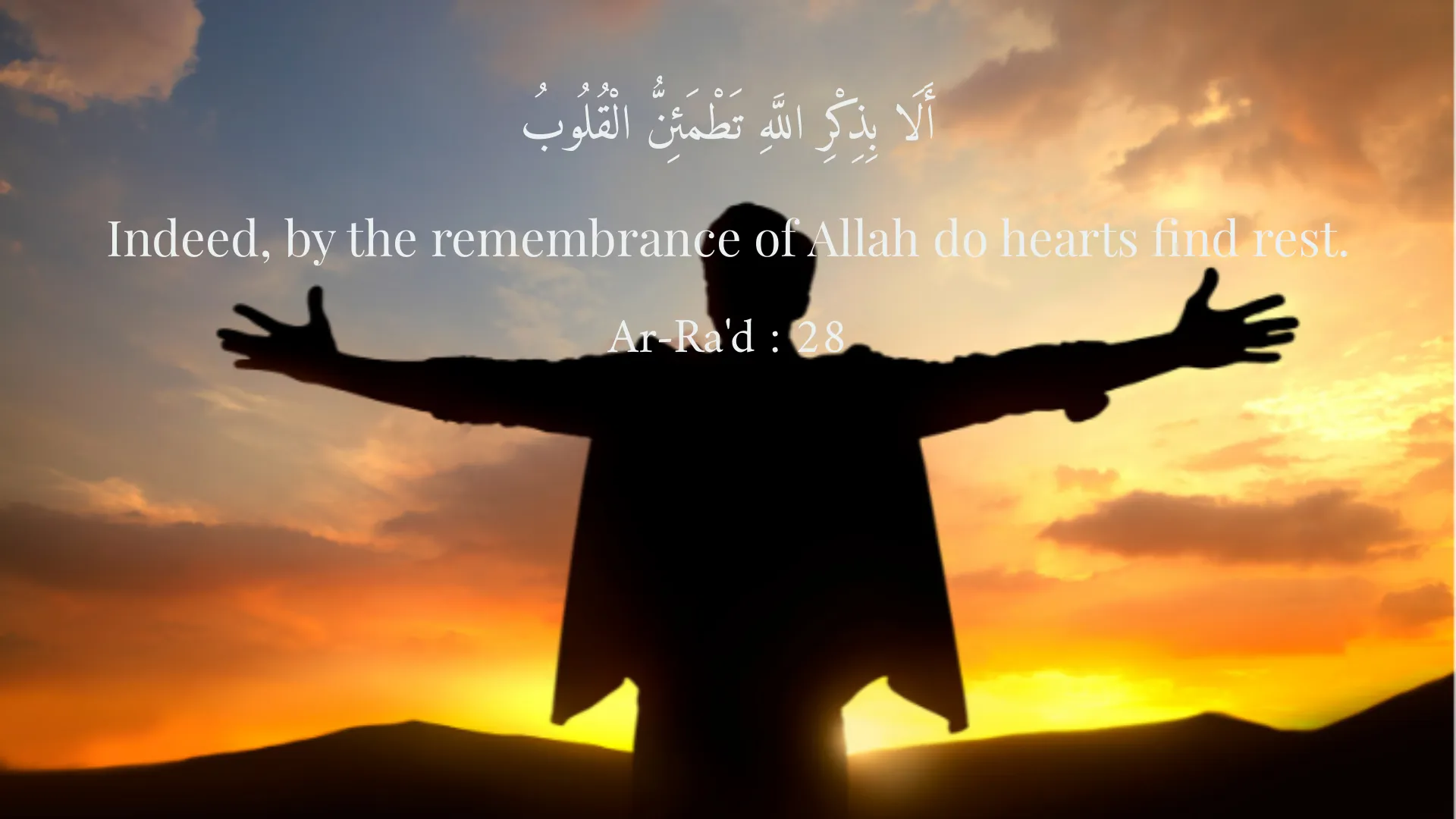
أَلَا بِذِكْرِ اللَّهِ تَطْمَئِنُّ الْقُلُوبُ
Indeed, by the remembrance of Allah do hearts find rest.
Ar-Ra'd : 28
فَاذْكُرُونِي أَذْكُركُمْ
So remember Me; I will remember you.
Al-Baqarah : 152
Short Story
One day, a man named Ahmad was walking in the park, reflecting on the remembrance of God. He felt a bit sad and unmotivated lately. He decided to visit a local mosque to engage in dhikr and worship. After spending hours in prayer and supplication, he felt an incredible sense of peace and joy in his heart. This experience reminded him that he should always keep Allah in his heart and live with His remembrance.