Quranic Answer
Maintaining hope for the future is a fundamental aspect of the human experience that transcends cultural and religious boundaries. It is a beacon of light in times of darkness and a source of strength during moments of trial. In the realm of spirituality, particularly within the context of the Holy Quran, the importance of hope is underscored as an essential ingredient in the human spirit's journey. The Quran provides profound insights into the nature of hope, urging believers to cultivate and nurture this vital trait throughout their lives. This essay explores the significance of hope as taught in the Holy Quran, emphasizing its relevance in our daily lives and its role in fostering resilience. The Quran explicitly encourages believers to maintain hope in God's mercy. A poignant example can be found in Surah Az-Zumar (Chapter 39, Verse 53), which states: 'Say, 'O My servants who have believed, fear your Lord. For those who do good in this world is good, and the earth of Allah is spacious. Indeed, the patient will be given their reward without account.' This verse encapsulates a powerful message: no matter how dire one's circumstances may seem, a believer is never devoid of hope. It reminds us that God's mercy is vast and encompassing, and that better days are always ahead for those who persevere in goodness. Within this context, the verse serves not only as a reminder of the transient nature of challenges but also as an invitation to trust in the divine plan, irrespective of current hardships. Moreover, the emphasis on patience, as mentioned in the above verse, is crucial. Patience is the capacity to endure difficult situations while maintaining faith that relief and reward will come. In our fast-paced society, where instant gratification often reigns supreme, the call for patience can be easily overlooked. However, the Quran places great importance on the virtue of patience and indicates that it is often rewarded abundantly. By fostering patience, individuals are better equipped to face challenges with resilience, embedding a deeper sense of hope in their hearts for what lies ahead. Surah Al-Baqarah (Chapter 2, Verse 286) further reinforces this message: 'Allah does not burden a soul beyond that it can bear.' This enlightening verse speaks to the human experience of challenges and adversities. It emphasizes that God is aware of each individual's capabilities and limits. By assigning challenges that one can bear, believers are encouraged to recognize their intrinsic strength and the assistance available through divine support. Understanding this principle can empower individuals to confront life's adversities with the reassurance that they possess the potential to overcome their struggles. The cultivation of hope goes beyond mere belief in divine mercy; it encompasses an active engagement in life's journey, accepting challenges as integral parts of growth and learning. Life is inherently filled with ups and downs, and recognizing that no situation is permanent is vital for fostering a resilient mindset. Embracing each challenge as an opportunity for personal growth enhances one's perspective, allowing individuals to approach future uncertainties with optimism and a proactive attitude. Practicing patience and turning to prayer for support is another thread interwoven throughout the Quran's teachings. Prayer serves as a direct line of communication with the Almighty, allowing believers to express their hopes, fears, and uncertainties. It instills a sense of peace and assurance that one is not navigating life's challenges alone. In times of despair, prayer can act as a powerful source of solace, enabling individuals to redirect their focus from their immediate struggles to a broader vision filled with possibility. Fostering hope is not just an individual pursuit; it extends to our relationships with others and our communities. By maintaining a hopeful perspective, one can inspire and uplift those around them. The Quran encourages believers to embody hope and resilience, impact positively those they encounter, and contribute to the collective spirit of optimism. In doing so, individuals become vessels of hope, illuminating the path for others who may be struggling to find their way. Moreover, as we look towards the future, it becomes crucial to acknowledge that life is ripe with opportunities for innovation and progress. The Quran encourages believers to seek knowledge, develop their skills, and actively pursue their aspirations. As we endeavor towards personal betterment and contribute to our communities, we cultivate an enduring sense of hope that fuels our aspirations and drives us forward amidst challenges. In conclusion, maintaining hope for the future is a fundamental tenet of the Holy Quran. It allows individuals to navigate life's trials with grace and resilience, trusting in the divine wisdom and mercy that governs their circumstances. With teachings that emphasize patience, prayer, and the acceptance of life's challenges, the Quran provides a comprehensive framework for fostering hope in our lives. By embracing this mindset, we not only secure our personal well-being but also contribute positively to our communities, creating an uplifting atmosphere where hope reigns supreme. The journey of life is not always easy, but with hope lighting the way, it becomes a path filled with possibility, growth, and promise.
Related Verses
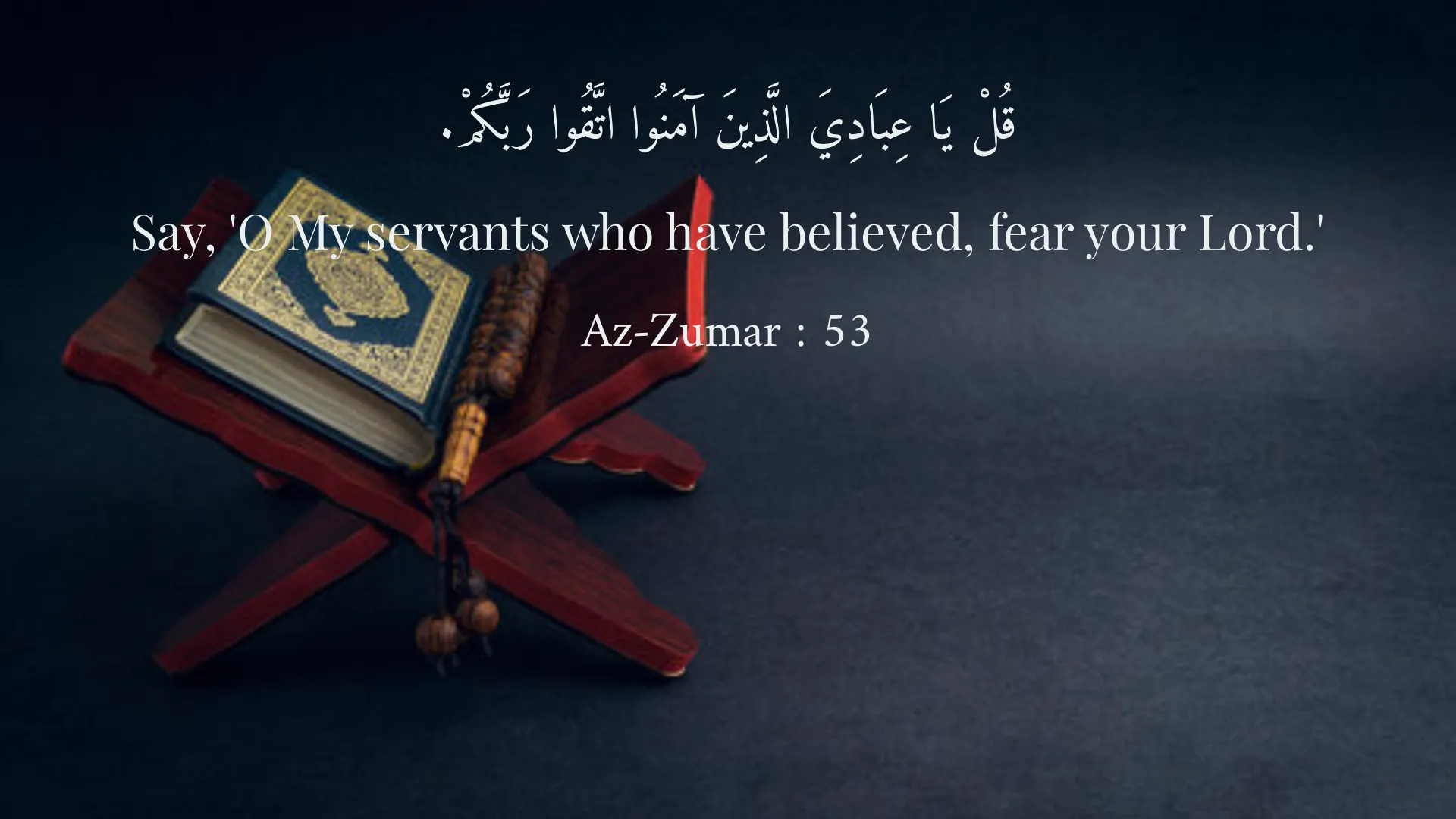
قُلْ يَا عِبَادِيَ الَّذِينَ آمَنُوا اتَّقُوا رَبَّكُمْ.
Say, 'O My servants who have believed, fear your Lord.'
Az-Zumar : 53
لَا يُكَلِّفُ اللَّهُ نَفْسًا إِلَّا وُسْعَهَا.
Allah does not burden a soul beyond that it can bear.
Al-Baqarah : 286
Short Story
Once upon a time, there was a man named Ali who faced many challenges in life. He decided to turn to prayer and supplication, living each day with renewed hope. By reflecting on the verses of the Quran and remembering God's mercy, he found new hope and overcame his difficulties.