Quranic Answer
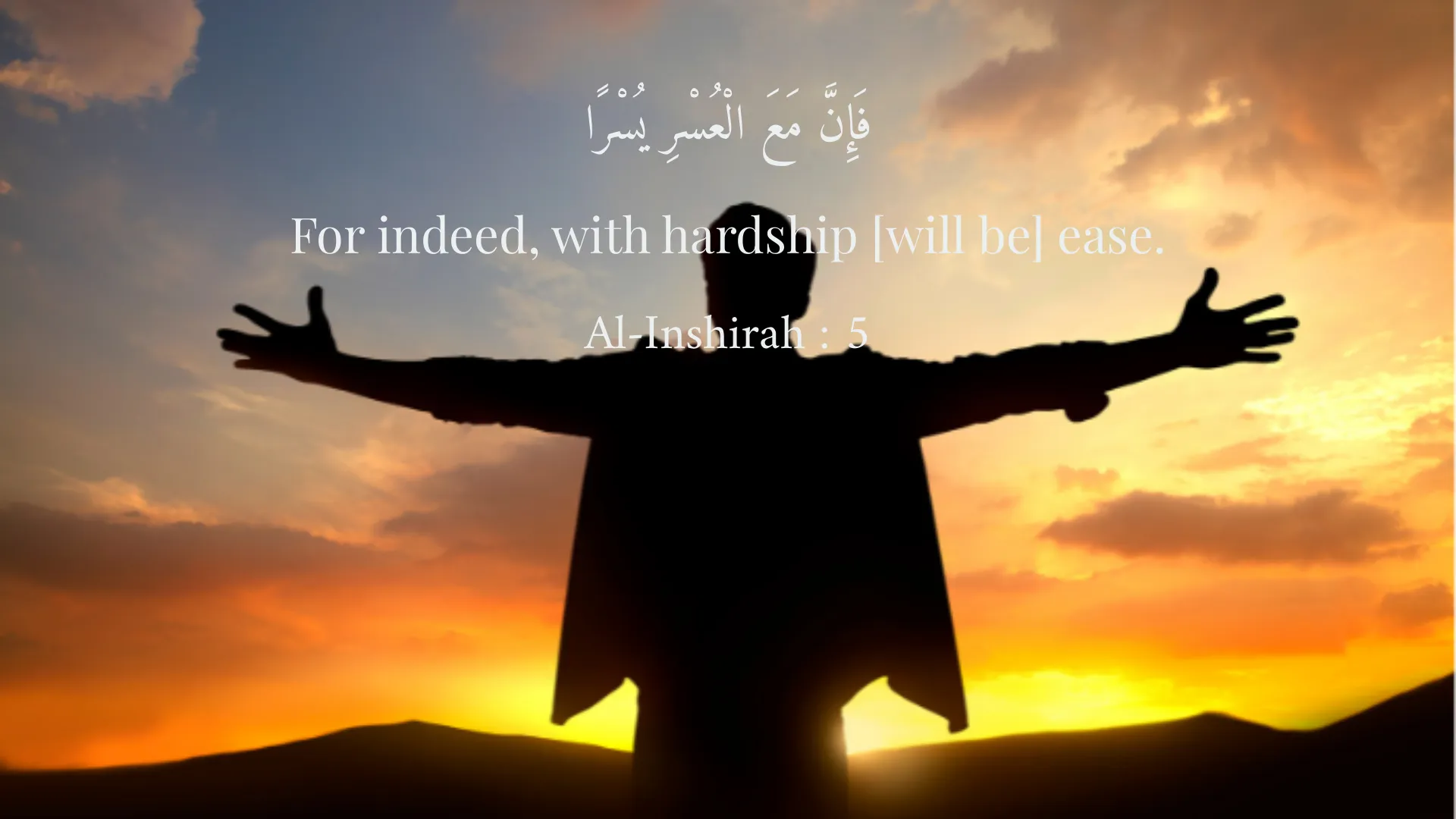
In the meandering journey of life, moments inevitably arrive when a shadow of despair seems to settle upon the heart and soul. Difficult circumstances, successive problems, and overwhelming challenges can wear down one's spirit, pushing them towards the abyss of hopelessness. However, within the luminous teachings of the Holy Quran, there is an ever-bright lamp for humanity in times of darkness, guiding them towards the path of hope and steadfastness. Maintaining hope in challenging times is not merely an ethical recommendation but a fundamental principle of faith, deeply rooted in monotheism and the understanding of God. The Holy Quran teaches us that this world is a realm of trials and tests. Every hardship and ease, every pain and comfort, is part of divine wisdom, aiming to cultivate the soul and elevate the human being. In Surah Al-Ankabut, verse 2, Allah states: "Do people think that they will be left alone because they say, 'We believe,' and will not be tested?" This verse clearly indicates that difficulties are inevitable and are an integral part of the journey of faith. Therefore, the first step towards maintaining hope is to accept this reality: that problems are a natural part of life and are considered among the divine norms. Believing in this principle grants the believer a deeper perspective on life, where they see hardships not as punishment but as opportunities for purification and drawing closer to Allah, thereby strengthening their ability to be patient and hopeful. One of the most central Quranic concepts that firmly holds the rope of hope during hardships is the concept of "Tawakkul upon Allah," or complete reliance on God. Tawakkul means absolute trust in Allah, entrusting all affairs to Him, and knowing that He is the best planner and supporter. When a person understands that a power higher than themselves—the All-Wise, All-Powerful Allah—is watching over them and that all matters are in His hands, the heavy burden of worries is lifted from their shoulders. In Surah At-Talaq, verse 3, we read: "And whoever relies upon Allah - then He is sufficient for him. Indeed, Allah will accomplish His purpose. Allah has already set for everything a [decreed] extent." This verse promises deep tranquility: if you rely on Him, Allah is sufficient for you. This means that Allah never abandons His servants and will facilitate their affairs, even if no apparent solution is visible. This profound trust transforms despair into hopeful expectation, knowing that Allah's plan is always perfect, even if our limited perception cannot grasp it immediately. It leads to a state of contentment and submission, removing anxiety about the future and fear of the unknown. "Sabr" (patience) is another steadfast pillar for maintaining hope. In the Quran, patience is not merely passive endurance but active perseverance in the face of difficulties, self-control, and steadfastness on the path of truth. Allah repeatedly invites believers to patience in the Quran and promises immense rewards for those who are patient. In Surah Al-Baqarah, verse 153, He says: "O you who have believed, seek help through patience and prayer. Indeed, Allah is with the patient." This verse highlights that patience and prayer are two powerful arms for confronting difficulties. Patience is the key to relief, and Allah clearly declares that He is "with the patient." This "divine companionship" is itself the greatest source of hope and tranquility, for when Allah is with you, what could possibly make you despair? This divine presence assures the believer that they are not alone in their struggles; Allah is watching, supporting, and guiding them through every trial, making the burden lighter and the path clearer, and instilling within the self the determination to face challenges. One of the most hope-inspiring and central verses in the Quran, specifically addressing the issue of ease after hardship, are verses 5 and 6 of Surah Al-Inshirah (Ash-Sharh): "For indeed, with hardship [will be] ease. Indeed, with hardship [will be] ease." The repetition of this statement doubles its emphasis and certainty, reassuring anxious hearts that difficulties are never eternal and that relief and ease will surely follow. This verse reminds humanity that the current situation, no matter how difficult or hopeless it may seem, is temporary, and change is inherent to the nature of this world. This divine promise is like refreshing water to thirsty lips, quenching the thirst of despair and providing new strength to continue the journey. Crucially, the Arabic word "ma'a" (مَعَ) in this verse means "with" or "alongside," not "after." This implies that ease is inherent within the hardship itself, or comes immediately with it, and one only needs to perceive and find it. This nuance deepens the hope; it’s not that the difficulty must end for ease to come, but rather, within the difficulty itself, there are threads of ease and a path towards it. This understanding empowers the believer to seek out opportunities and solutions even amidst the challenges, knowing that relief is intertwined with the struggle, making them more determined and optimistic. "Dhikr" (remembrance of Allah) is also a crucial factor in maintaining tranquility and hope. The Quran states: "Those who have believed and whose hearts are assured by the remembrance of Allah. Unquestionably, by the remembrance of Allah hearts are assured." (Surah Ar-Ra'd, verse 28). In moments of crisis and pressure, the mind's preoccupation with worries and negative scenarios can be overwhelming. However, turning to Dhikr, prayer (du'a), recitation of the Quran, and contemplation of divine majesty brings peace to the heart. This tranquility is the foundation for maintaining hope, as a person with a serene heart can approach problems more logically and optimistically. Constant remembrance serves as an anchor, pulling the heart away from the stormy seas of anxiety and mooring it in the calm harbor of divine presence. It shifts focus from the finite nature of problems to the infinite power and mercy of Allah, transforming fear into comfort and doubt into certainty. Furthermore, the Quran teaches us to learn from the past and hope for a brighter future. The stories of the Prophets in the Quran are full of lessons in patience, steadfastness, and reliance in the face of immense calamities. Prophet Yusuf (Joseph) was in a well and prison for years, yet he never despaired of Allah's mercy and eventually reached a position of great honor. Prophet Ayub (Job) was tested with severe illness and poverty, but through his patience and gratitude, he attracted divine mercy. These stories serve as powerful role models, showing us that even in the darkest moments, one can hold onto divine light and hope. They exemplify the truth that trials, though painful, are temporary and often prelude to greater blessings and divine elevations. Ultimately, maintaining hope in difficult circumstances is an active choice and a faithful approach. This choice is built upon a deep belief in the infinite power, wisdom, and mercy of Allah. By relying on Him, being patient in the face of trials, persevering in worship and remembrance, and recalling divine promises of ease after hardship, we can keep the lamp of hope burning brightly within our hearts, even in the most turbulent moments of life. This hope not only helps us navigate through crises but also paves the way for our spiritual growth and elevation, strengthening our faith. Let us remember that every darkness precedes dawn, and the end of a dark night is always light. With this conviction, we can view every difficulty as a stepping stone to higher peaks, and with a heart assured of the Lord's mercy, step towards a brighter future.
Related Verses
فَإِنَّ مَعَ الْعُسْرِ يُسْرًا
For indeed, with hardship [will be] ease.
Al-Inshirah : 5
إِنَّ مَعَ الْعُسْرِ يُسْرًا
Indeed, with hardship [will be] ease.
Al-Inshirah : 6
يَا أَيُّهَا الَّذِينَ آمَنُوا اسْتَعِينُوا بِالصَّبْرِ وَالصَّلَاةِ ۚ إِنَّ اللَّهَ مَعَ الصَّابِرِينَ
O you who have believed, seek help through patience and prayer. Indeed, Allah is with the patient.
Al-Baqarah : 153
الَّذِينَ آمَنُوا وَتَطْمَئِنُّ قُلُوبُهُم بِذِكْرِ اللَّهِ ۗ أَلَا بِذِكْرِ اللَّهِ تَطْمَئِنُّ الْقُلُوبُ
Those who have believed and whose hearts are assured by the remembrance of Allah. Unquestionably, by the remembrance of Allah hearts are assured.
Ar-Ra'd : 28
Short Story
In Sa'di's Bustan, it is narrated that a wise man observed an old man who, despite his poverty and destitution, was always smiling and grateful. The wise man asked, "O wise elder, how do you remain joyful in these difficult circumstances?" The old man replied, "My son, my heart is tied to the promise of the Lord, who said: 'Indeed, with hardship [will be] ease.' I know that these sufferings, like spring clouds, are fleeting, and after every darkness, there is light. So why should I despair when I have the Most Merciful Helper?" The wise man took heed of his words and understood that hope lies not in abundance of blessings, but in attachment to divine grace.