Quranic Answer
In moments of solitude, which can sometimes be challenging and difficult, preserving and strengthening one's faith becomes one of the greatest blessings and a true path to inner peace. The Holy Quran, a divine book full of wisdom and light, offers profound and practical guidance for those seeking spiritual refuge in their quiet moments. Solitude does not necessarily mean isolation; rather, it can be an unparalleled opportunity for a deeper, more sincere connection with the Almighty, away from worldly clamor and distractions. Faith, in essence, is a light that illuminates the path even in the darkest solitude, freeing the heart from anxiety and apprehension. To preserve and strengthen this divine light during periods of loneliness, one can rely on several fundamental Quranic principles, each capable of transforming the human inner world. Firstly, and perhaps most importantly, the cornerstone of maintaining faith in solitude is the 'remembrance of Allah' (Dhikr). The Quran explicitly emphasizes the significance of Dhikr, stating: "Those who have believed and whose hearts are assured by the remembrance of Allah. Unquestionably, by the remembrance of Allah hearts are assured." (Surah Ar-Ra'd, 13:28). In solitude, this remembrance fills the void of any companionship and keeps the divine presence alive within a person. Dhikr is not merely limited to uttering phrases like 'Subhanallah' (Glory be to Allah), 'Alhamdulillah' (Praise be to Allah), 'La ilaha illallah' (There is no god but Allah), and 'Allahu Akbar' (Allah is the Greatest); it encompasses every thought, action, or intention that reminds one of Allah and His infinite power. Reciting supplications (Duas), glorifications (Tasbihat), and various litanies (Awrad) are also considered Dhikr and can soothe the heart. When a person struggles with temptations and doubts in their solitude, continuous Dhikr acts as a shield, protecting them from the onslaught of negative thoughts and despair. Practicing consistent Dhikr, even for a few minutes throughout the day, gradually strengthens one's connection with the unseen world and makes the presence of Allah more palpable in every moment of their life. This sense of divine presence transforms loneliness into profound tranquility and connection. Secondly, a fundamental principle is 'establishing regular prayers' (Salah). Prayer is the pillar of religion and the believer's ascension. In solitude, prayer is not just a religious obligation but an intimate and direct conversation with the Creator. The Quran states: "O you who have believed, seek help through patience and prayer. Indeed, Allah is with the patient." (Surah Al-Baqarah, 2:153). The five daily prayers provide structure and order to one's day, preventing them from being consumed by mundane routines and a sense of emptiness. Each prayer is a fresh opportunity to renew one's covenant with Allah, express servitude, and seek assistance. In every bowing (rukūʿ) and prostration (sujūd), a person can lay bare their heart's burdens before the Divine threshold and rise with a feeling of lightness and hope. In solitude, when there is no one to confide in, prayer becomes the best confidant and the closest path to communicate with the Listener from whom no word is hidden. This continuous connection transforms the feeling of loneliness into companionship and reassurance, reminding the individual that they are never truly alone, as Allah is always with them. Thirdly, a Quranic solution for maintaining faith in solitude is 'contemplation and reflection upon the verses of the Holy Quran' (Tadabbur). The Quran is not only a book of guidance but also a source of comfort and heartfelt assurance. When a person finds themselves in solitude, they can have the Quran as their best friend and guide. Reading the verses and striving to deeply understand their meanings (Tadabbur) opens a window of wisdom and knowledge to the individual. "And We send down from the Quran that which is a healing and mercy for the believers..." (Surah Al-Isra, 17:82). This healing is not only for physical ailments but also effective for spiritual and psychological illnesses such as despair, anxiety, and sorrow. In solitude, when one's mind might be preoccupied with negative thoughts, turning to the Quran and reflecting on divine promises, stories of the prophets, and descriptions of Paradise and Hell, can strengthen faith and provide a broader, more hopeful perspective on life. The Quran teaches what the purpose of creation is, how one should live, and how to achieve eternal happiness. Each verse is a message, as if sent directly from Allah, and this sense of personal connection transforms solitude into a fruitful spiritual retreat. Fourth, a crucial principle is 'trust in Allah' (Tawakkul). Tawakkul means complete and unconditional reliance on Allah in all matters of life. "And whoever relies upon Allah - He is sufficient for him. Indeed, Allah will accomplish His purpose. Allah has already set for everything a [decreed] extent." (Surah At-Talaq, 65:3). In solitude, one might be overwhelmed by feelings of insecurity or fear of the future. Tawakkul eradicates these fears because a person knows they are under the absolute support and sufficiency of Allah. This trust empowers them to face challenges and maintain their inner peace. Even if external circumstances seem unfavorable, Tawakkul in Allah assures that divine goodness and wisdom will ultimately prevail. This deep conviction prevents despair and hopelessness in solitude and helps a person continue their life with a positive and trusting outlook. Finally, 'patience and steadfastness' (Sabr) are also vital foundations for preserving faith in solitude. Solitude can be an opportunity to test one's patience. The Quran repeatedly emphasizes the virtue of patience and Allah's companionship with the patient (Al-Baqarah, 2:153). During these times, one might face temptations to stray from the path of religion or feel a sense of meaninglessness in life. Patience in the face of these temptations and steadfastness in performing acts of worship and adhering to moral principles strengthen faith. Furthermore, utilizing solitude for 'reflection and contemplation' (Tafakkur) on creation and the signs of Allah in the universe can deepen faith and provide a broader understanding of the Creator's majesty and one's place in the world. These reflections elevate one beyond daily trivialities and guide towards greater truths. In summary, solitude is not a void but can be a sacred space for nurturing faith. By focusing on the remembrance of Allah, establishing prayers, contemplating the Quran, trusting in Him, and showing steadfastness, one can transform moments of solitude into opportunities for spiritual growth and a deeper connection with the Almighty. These actions not only preserve faith but transform it into a stable source of peace, strength, and meaning in life, so that you never feel alone, because Allah's presence is always with you, bringing tranquility to your heart.
Related Verses
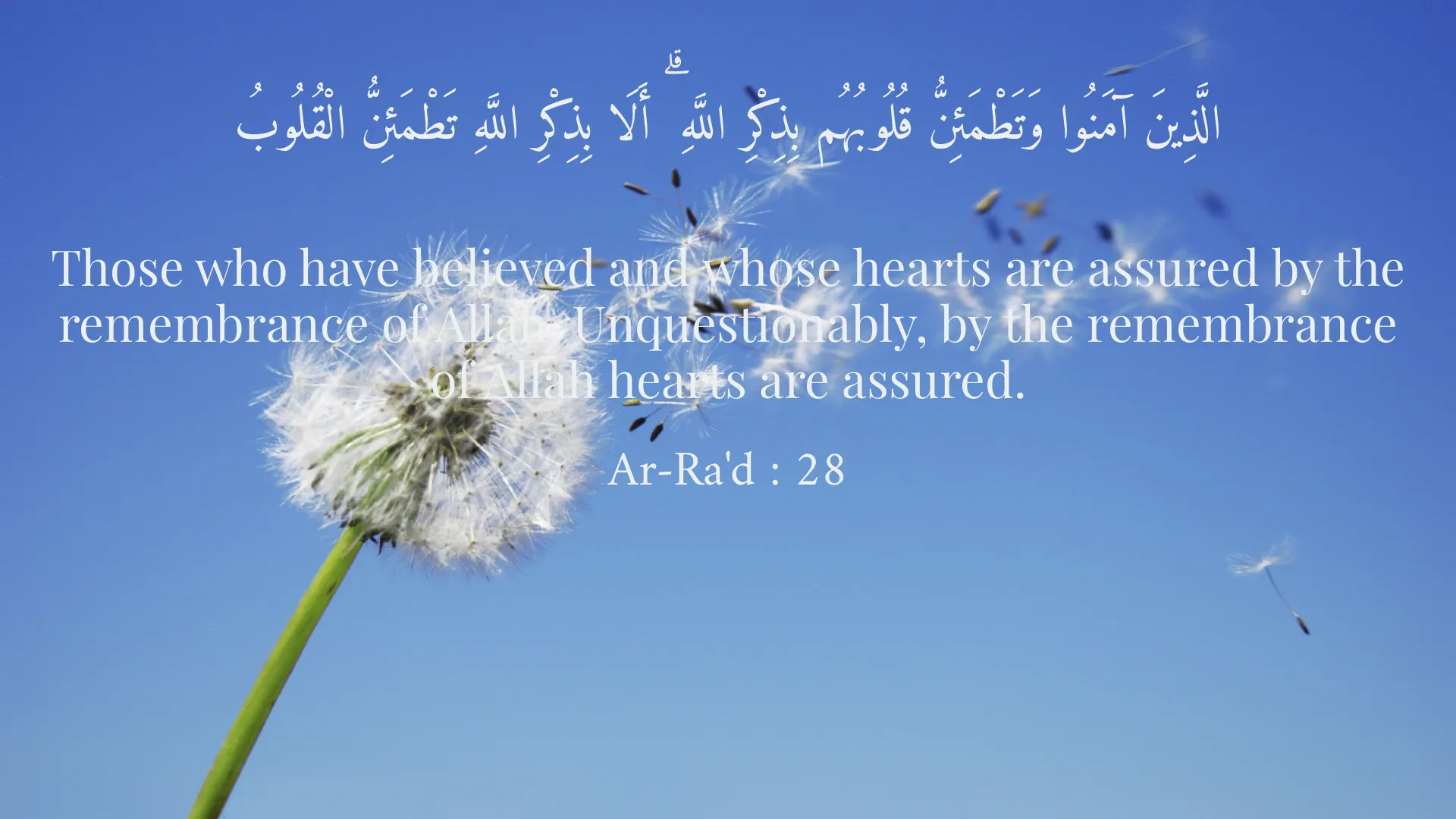
الَّذِينَ آمَنُوا وَتَطْمَئِنُّ قُلُوبُهُم بِذِكْرِ اللَّهِ ۗ أَلَا بِذِكْرِ اللَّهِ تَطْمَئِنُّ الْقُلُوبُ
Those who have believed and whose hearts are assured by the remembrance of Allah. Unquestionably, by the remembrance of Allah hearts are assured.
Ar-Ra'd : 28
يَا أَيُّهَا الَّذِينَ آمَنُوا اسْتَعِينُوا بِالصَّبْرِ وَالصَّلَاةِ ۚ إِنَّ اللَّهَ مَعَ الصَّابِرِينَ
O you who have believed, seek help through patience and prayer. Indeed, Allah is with the patient.
Al-Baqarah : 153
وَمَن يَتَوَكَّلْ عَلَى اللَّهِ فَهُوَ حَسْبُهُ ۚ إِنَّ اللَّهَ بَالِغُ أَمْرِهِ ۚ قَدْ جَعَلَ اللَّهُ لِكُلِّ شَيْءٍ قَدْرًا
And whoever relies upon Allah - He is sufficient for him. Indeed, Allah will accomplish His purpose. Allah has already set for everything a [decreed] extent.
At-Talaq : 3
Short Story
It is narrated that in a vast desert, there lived a pious and reclusive dervish who had spent many years away from people. One day, a weary traveler arrived and, seeing him alone, asked with surprise: "O man of God, do you not feel lonely in this immense desert, without any companion or sympathizer? How do you endure such solitude?" The dervish replied with a calm and serene smile: "How can I be alone when I am constantly with the Companion who created this entire desert and everything in it? Whenever my heart inclines towards Him and my tongue turns to His remembrance, it is as if the whole world accompanies me. I am never alone, for He who is closer to me than my jugular vein is always with me, and His name brings peace to hearts. This solitude of mine is filled with His remembrance and overflowing with His presence, and such a presence makes me independent of everything else." This tale, much like those found in Saadi's works, teaches us that true companionship comes from within and through a deep connection with the Divine.