Quranic Answer
Despair is a state of helplessness and a feeling of ineffectiveness that can paralyze a person, plunging them into a vortex of stagnation and lethargy. From the perspective of the Holy Quran, despair is not only an undesirable state but also considered a form of disbelief in the boundless mercy of Allah. The Quran explicitly warns believers against despair and offers numerous ways to overcome it, all centered around reliance on Allah (Tawakkul), patience (Sabr), hope (Raja'), and a deep connection with the Almighty. To combat despair, the first step is to understand the truth that despair is an instigation from Satan, and Allah Almighty never abandons His servant; the doors of His mercy are always open. Satan strives to divert humans from the right path, and one of his most potent tools is to instill despair and hopelessness so that people give up effort and hope. Therefore, the primary remedy is to fight this satanic whisper and strengthen one's belief in the infinite power and mercy of Allah. The Holy Quran teaches us to always be hopeful of Allah's mercy and never to despair of it. In Surah Az-Zumar, verse 53, Allah Almighty says: "Qul ya 'ibadiyal-lazina asrafu 'ala anfusihim la taqnatu min rahmatillahi innal-laha yaghfiruz-zunuba jami'an innahu Huwal-Ghafurur-Rahim" which means: "Say, 'O My servants who have transgressed against themselves [by sinning], do not despair of the mercy of Allah. Indeed, Allah forgives all sins. Indeed, it is He who is the Forgiving, the Merciful.'" This verse is a guiding light for every heart plunged into the darkness of despair. The message of this verse is very clear: even if you have committed many sins or are surrounded by numerous problems, never despair of Allah's mercy and forgiveness. This verse is not only about the forgiveness of sins but carries a comprehensive message for all types of despair, whether due to sins or life's problems. Belief in this verse alone can be a turning point in the life of any despairing individual. The second and very important remedy is to seek refuge in patience and prayer. In Surah Al-Baqarah, verse 153, Allah says: "Ya ayyuhallazina amanoo ista'inoo bis-sabri was-salat; innal-laha ma'as-sabireen" which means: "O you who have believed, seek help through patience and prayer. Indeed, Allah is with the patient." Patience means steadfastness in the face of difficulties, enduring hardships, and perseverance in the delay of supplications being answered. Prayer is a direct and immediate connection with the Creator of the universe; a safe haven where one can share all worries and problems with Allah and seek His help. Persistence in prayer and resorting to patience calms the heart and provides the necessary spiritual strength to continue one's journey. When a person stands in prayer with reliance on Allah and a calm heart, they feel that a mighty force supports them, and their loneliness vanishes. Furthermore, the Holy Quran emphasizes that ease and relief follow every hardship. In Surah Al-Inshirah, verses 5 and 6, we read: "Fa inna ma'al-'usri yusra. Inna ma'al-'usri yusra" which means: "For indeed, with hardship [will be] ease. Indeed, with hardship [will be] ease." These two verses bring tidings of hope and tranquility to sorrowful hearts. Allah emphasizes twice that ease comes with hardship, not merely after it. This literary structure indicates that ease is embedded within hardship, not just a result after its conclusion. This concept changes our perspective on problems; every difficulty holds the seed of ease, and every challenge is an opportunity for growth and relief. Understanding this truth removes despair and instills, instead, the expectation of good and hope for the future. Moreover, the remembrance of Allah (Dhikr) is a powerful factor in soothing hearts and dispelling despair. In Surah Ar-Ra'd, verse 28, it states: "Allazina amanu wa tatma'innu qulubuhum bizikrillahi. Ala bizikrillahi tatma'innul-quloob" which means: "Those who have believed and whose hearts are assured by the remembrance of Allah. Unquestionably, by the remembrance of Allah hearts are assured." When a person's heart is engaged in the remembrance of Allah, negative and despairing thoughts gradually fade away. Dhikr establishes a continuous connection with the source of power and tranquility, reminding a person that they are always under the protection of an infinite power. This constant reminder prevents drowning in despairing thoughts and empowers individuals to look at life and its challenges with a more positive and hopeful outlook. Supplication (Du'a) also plays a vital role in overcoming despair. Du'a is an expression of humility and need before the Lord and signifies complete reliance on Him. Allah says in the Quran: "Wa iza sa alaka 'ibadi 'anni fa inni qarib; ujibu da'watad-da'i iza da'ani fal-yastajibu li wal-yu'minu bi la'allahum yarshudoon" (Al-Baqarah: 186) which means: "And when My servants ask you, [O Muhammad], concerning Me - indeed I am near. I respond to the invocation of the supplicant when he calls upon Me. So let them respond to Me [by obedience] and believe in Me that they may be guided." This verse itself is a great source of hope, assuring people that Allah always listens to the prayers of His servants and responds to them. Ultimately, to be free from despair, we must change our perspective on this world and the Hereafter. Worldly problems are fleeting and transient, but the reward for patience and gratitude in the Hereafter is eternal. When a person understands that every hardship brings them closer to Allah and leads to the forgiveness of sins and elevation of their rank, their view of problems changes, and despair gives way to hope and contentment. Faith in divine decree (Qadar) and the belief that whatever happens to a person contains good within it are fundamental pillars in fighting despair. Let us remember that worldly life is a test, and the purpose of these tests is the growth and spiritual elevation of the human soul. Therefore, whenever despair approaches us, by remembering Allah, patience, prayer, and hope in divine promises, we can repel it and continue on the path of life with a confident heart and a tranquil spirit.
Related Verses
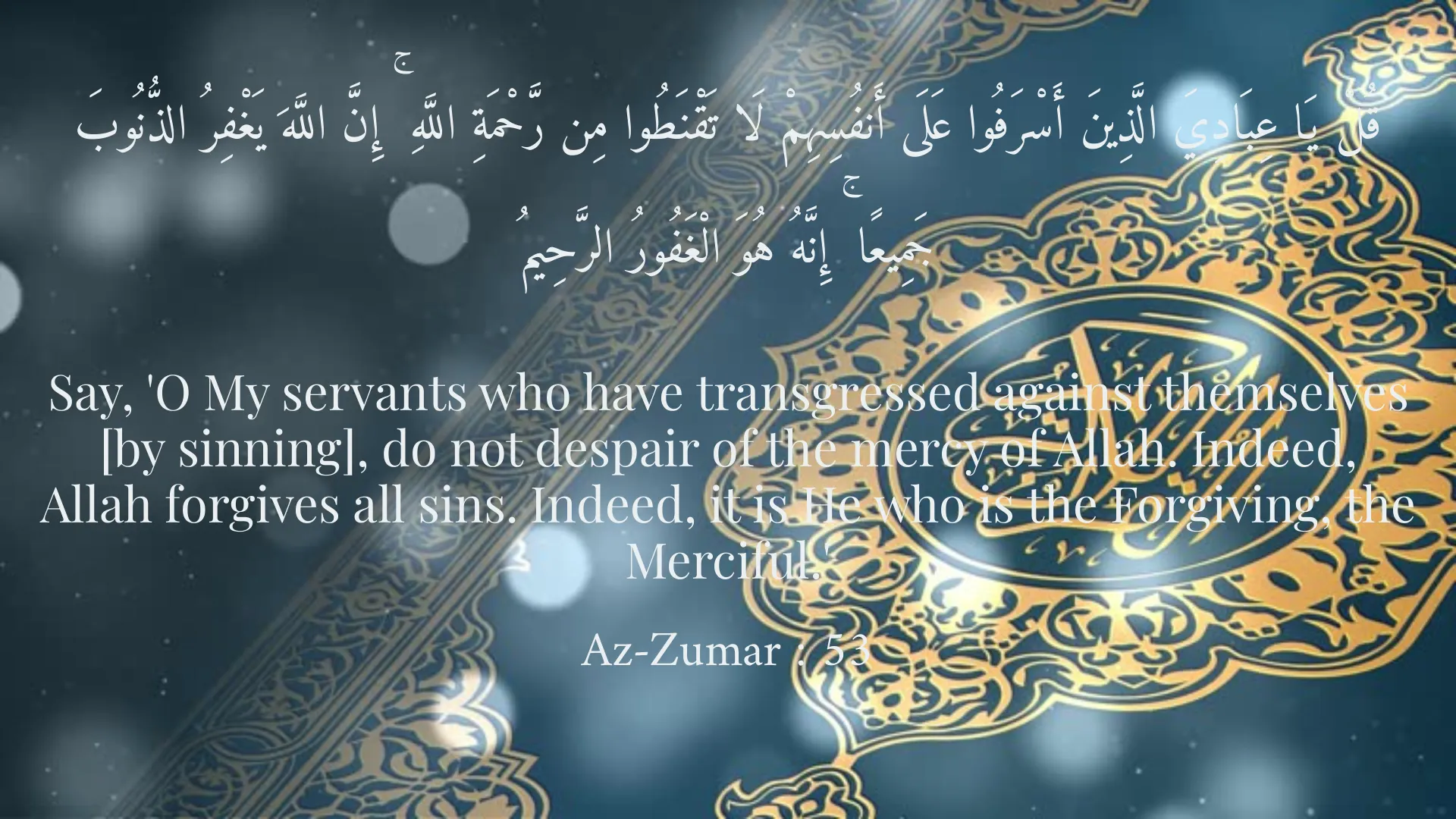
قُلْ يَا عِبَادِيَ الَّذِينَ أَسْرَفُوا عَلَى أَنفُسِهِمْ لَا تَقْنَطُوا مِن رَّحْمَةِ اللَّهِ ۚ إِنَّ اللَّهَ يَغْفِرُ الذُّنُوبَ جَمِيعًا ۚ إِنَّهُ هُوَ الْغَفُورُ الرَّحِيمُ
Say, 'O My servants who have transgressed against themselves [by sinning], do not despair of the mercy of Allah. Indeed, Allah forgives all sins. Indeed, it is He who is the Forgiving, the Merciful.'
Az-Zumar : 53
يَا أَيُّهَا الَّذِينَ آمَنُوا اسْتَعِينُوا بِالصَّبْرِ وَالصَّلَاةِ ۚ إِنَّ اللَّهَ مَعَ الصَّابِرِينَ
O you who have believed, seek help through patience and prayer. Indeed, Allah is with the patient.
Al-Baqarah : 153
فَإِنَّ مَعَ الْعُسْرِ يُسْرًا
For indeed, with hardship [will be] ease.
Al-Inshirah : 5
إِنَّ مَعَ الْعُسْرِ يُسْرًا
Indeed, with hardship [will be] ease.
Al-Inshirah : 6
Short Story
I have heard that in ancient times, there was a merchant who had amassed great wealth through travel and trade. But one day, his ship sank in a violent storm, and he lost everything he owned. Drowning in despair, he sat by the seashore and wept bitterly. A wise man passing by saw him and asked, 'O young man, why are you so distressed?' The merchant recounted his story and complained of his destitution and hopelessness. The wise man smiled and said, 'My friend, worldly possessions are like ocean waves; they are here today and gone tomorrow. Have you forgotten that you have a God who has been and always will be the Provider since the beginning of time? You have your health, you have the knowledge of trade, and you have learned experiences from this journey. These are assets that no storm can take from you. Place your trust in God and start anew, for you will never return empty-handed from His threshold.' The merchant was comforted by his words, lifted his head, and with determination and reliance, he returned to work and effort. In a short time, he not only regained his lost wealth but lived his life with a brighter heart and a more assured spirit than before.